Evidence
What the evidence shows
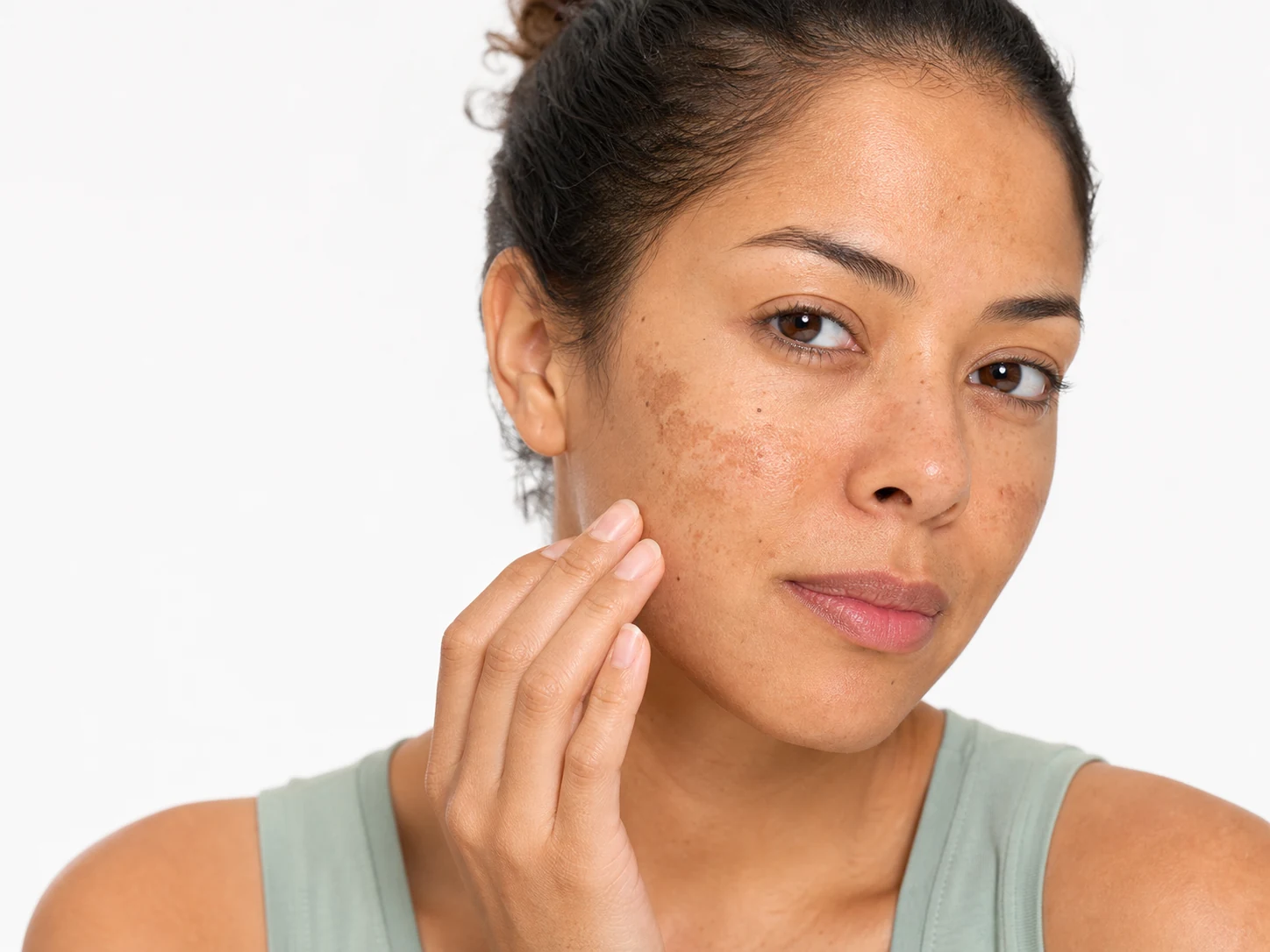
Facial hyperpigmentation needs gentle but consistent treatment. The face's thinner skin means it's more easily irritated - and irritation can trigger even more pigmentation.
Facial Studies
Research confirms effectiveness of vitamin C, niacinamide, and retinoids on facial skin.Gentle Approach
Studies emphasize the importance of gentle treatment for facial skin.Clinical Consensus
Dermatologists recommend combination therapy for facial hyperpigmentation.
Use this section to decide
Does this advice apply to me?
Find the concern or goal closest to yours, then use the fit signal to decide how much weight to give this guide.If your goal is
Best ApproachUsually relevant- Fit signal
- Often useful
Gentle but consistent
If your goal is
Key IngredientsUse caution- Fit signal
- Limited evidence
Vitamin C, niacinamide, retinoids
If your goal is
Essential StepUsually relevant- Fit signal
- Often useful
Daily facial sunscreen
If your goal is
Evidence LevelUsually relevant- Fit signal
- Often useful
Strong
Research notes already in this guide
- Studies show vitamin C and niacinamide are effective for facial hyperpigmentation.
- Research confirms retinoids improve facial pigmentation through cell turnover.
- Sunscreen has been shown to prevent recurrence of facial pigmentation.
- Dermatologists recommend combination therapy for facial hyperpigmentation.
Expected results
Results and timeframe
Results take 4-12 weeks of consistent use.
Practical use
How to use it
Gentle cleanser
Remove impurities without stripping the facial barrier.
Vitamin C or niacinamide serum (AM)
Inhibit melanin production or transfer for the day ahead.
Moisturizer
Support the facial barrier and deliver hydration.
Sunscreen
SPF 30+ every morning - essential for facial pigmentation.
Retinoid (PM)
Speed cell turnover to remove pigmented cells faster.
Safety
Side effects and cautions
- Using harsh products on facial skin
Facial skin is thinner - choose gentle formulations.
- Skipping sunscreen on "cloudy" days
UV penetrates clouds - sunscreen is needed daily.
- Applying facial products too aggressively
Gentle application reduces irritation risk.
Fit
Who should be careful
- Those expecting immediate results
Worth noting
Small details that can change the answer
- Facial Barrier. Facial skin has a thinner stratum corneum than body skin, meaning more absorption and more sensitivity.
- Sebaceous Glands. The face has more sebaceous glands, which can interact with pigmentation treatments.
- UV Exposure. Facial skin receives significantly more UV exposure than covered skin.
- Treatment Penetration. Ingredients penetrate more deeply on the face, requiring careful concentration and introduction.
Facial skin is thinner and more sensitive, requiring gentle treatment.
A consistent daily routine is essential for facial hyperpigmentation.
Morning: vitamin C or niacinamide + sunscreen. Evening: retinoid.
Sunscreen is non-negotiable for facial hyperpigmentation.
Definition
What makes facial hyperpigmentation different?
Facial hyperpigmentation is often more visible and emotionally distressing than pigmentation elsewhere. It's also more prone to recurrence because of ongoing sun exposure. Treatment requires a consistent, gentle approach.
- More visible due to constant exposure
- Thinner facial skin is more sensitive
- Higher recurrence risk without maintenance
Benefits
Additional tips for facial hyperpigmentation
These extra steps can help with facial pigmentation.
- Use a separate sunscreen specifically for the face - it's more likely to be worn daily.
- Consider a tinted sunscreen for additional visible light protection.
- Use spot treatments on stubborn dark spots, not just all-over products.
- Be extra gentle around the eyes and mouth where skin is thinnest.
Questions
Frequently asked questions
Can I use the same hyperpigmentation treatment on my face and body?
Facial skin is more sensitive - use gentler formulations on the face.
How often should I exfoliate facial hyperpigmentation?
1-2 times per week with a gentle exfoliant; over-exfoliation worsens pigmentation.
Is facial hyperpigmentation harder to treat than body pigmentation?
It can be more visible and recurrence-prone, but it responds to similar treatments.
Can I use prescription treatments for facial hyperpigmentation?
Yes, but always under a dermatologist's supervision for facial skin.
References
Sources
The notes below are drawn from the evidence already cited in this guide. They are not a complete bibliography.
- Studies show vitamin C and niacinamide are effective for facial hyperpigmentation.
- Research confirms retinoids improve facial pigmentation through cell turnover.
- Sunscreen has been shown to prevent recurrence of facial pigmentation.
- Dermatologists recommend combination therapy for facial hyperpigmentation.