Evidence
What the evidence shows
The single most important thing to know about facial heat rash is this: it is not acne. Treating it like acne - with harsh cleansers, exfoliants, and drying agents - is the surest way to make it worse.
Use this section to decide
Does this advice apply to me?
Find the concern or goal closest to yours, then use the fit signal to decide how much weight to give this guide.If your goal is
Primary causeUse caution- Fit signal
- Limited evidence
Blocked sweat ducts
If your goal is
Best treatmentUsually relevant- Fit signal
- Often useful
Cool + gentle + simple
If your goal is
What to avoidUse caution- Fit signal
- Limited evidence
Actives, scrubs, heavy creams
If your goal is
Typical recoveryUse caution- Fit signal
- Limited evidence
3-5 days
Expected results
Results and timeframe
If it doesn't improve in a week or shows signs of infection, see a doctor.
Practical use
How to use it
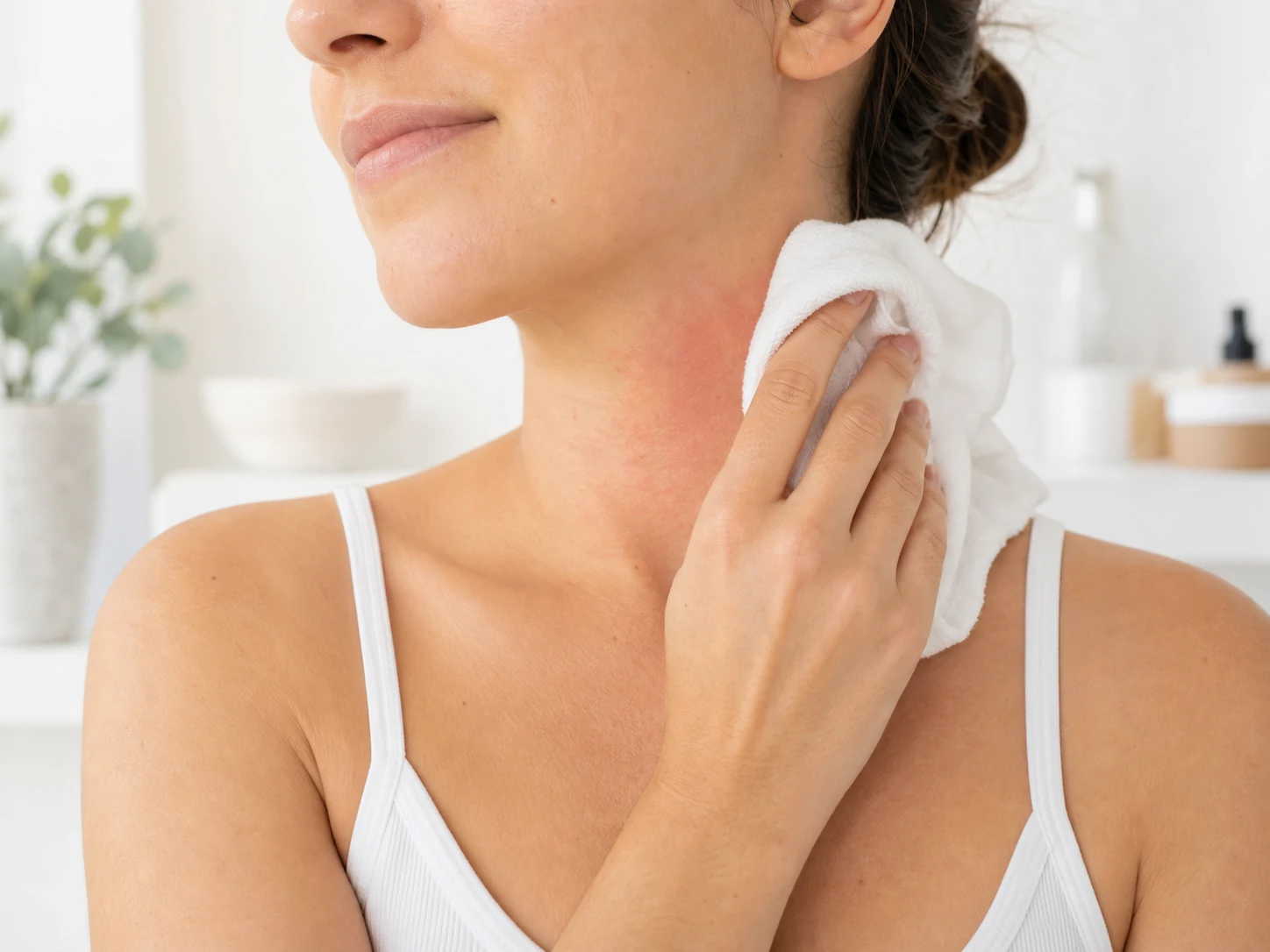
Cool down immediately
Apply a cool compress and get to a cooler environment to reduce heat and inflammation.
Simplify your routine
Stop all active ingredients and heavy products. Use only a gentle cleanser and lightweight moisturizer.
Let it breathe
Skip makeup, keep hair off your face, and avoid anything that traps heat against your skin.
Safety
Side effects and cautions
- Using salicylic acid or benzoyl peroxide
Heat rash is not acne - these treatments will dry and irritate the skin, making the rash worse.
- Scrubbing or exfoliating
Physical exfoliation will damage the delicate skin and can spread inflammation.
- Applying heavy moisturizers
Thick creams trap heat and moisture, prolonging the rash. Use lightweight, water-based products only if needed.
- Signs of infection (pain, swelling, discharge)
Uncommon · See a doctor promptly
- Rash not improving after 7 days
Occasional · Consult a healthcare provider
- Worsening despite home care
Occasional · Seek professional evaluation
Fit
Who should be careful
- Cases with infection, severe symptoms, or accompanying fever
Worth noting
Small details that can change the answer
- Common Facial Spots. Heat rash commonly appears on the forehead, cheeks, hairline, and upper neck - anywhere sweat tends to pool.
- Not Acne. Heat rash is caused by blocked sweat ducts, not clogged pores from oil or dead skin.
- Delicate Skin. Facial skin is thinner and more sensitive than skin on the body, requiring gentler treatment.
- Product Sensitivity. Heavy or occlusive skincare products are common culprits for facial heat rash.
Facial heat rash is caused by blocked sweat ducts, not clogged pores.
Treat it with cooling, gentle cleansing, and lightweight moisture.
Never use acne treatments, exfoliants, or scrubs on heat rash.
Avoid makeup and heavy creams that trap heat.
Definition
What is facial heat rash?
Facial heat rash, medically known as miliaria, occurs when sweat ducts in the face become blocked, causing sweat to leak into the surrounding tissue and trigger inflammation. The result is a cluster of small, red bumps that often feel prickly or itchy. It's most common in hot, humid weather but can also be triggered by heavy skincare products that trap heat and moisture.
- Often appears on forehead, cheeks, hairline, and neck
- May cause a prickling or stinging sensation
- Not caused by bacteria or oil - it's a mechanical blockage
Explanation
Why facial heat rash needs different care
The skin on your face is structurally different from skin elsewhere - it's thinner, has more nerve endings, and is more prone to irritation. Heat rash on the face also presents a visibility issue that makes us want to "fix" it aggressively. But facial heat rash responds to gentle cooling and moisture control, not the drying, exfoliating, or antibacterial approaches that work for acne. Using harsh products on heat rash is like using bleach on a sunburn - it treats the wrong problem with the wrong tool.
Risks
When facial heat rash needs a doctor
Facial heat rash usually resolves with home care, but there are times when you should see a healthcare provider:
- The rash does not improve after 7 days of appropriate care
- The area becomes painful, swollen, or warm to the touch
- You develop a fever or generally feel unwell
- The bumps develop crusts, weep fluid, or show signs of infection
- The rash spreads rapidly or worsens with home care
Questions
Frequently asked questions
Can I use aloe vera on facial heat rash?
Yes, pure aloe vera gel can be soothing and cooling, but make sure it's fragrance-free and doesn't contain added alcohol.
How long does heat rash on the face take to go away?
With proper care, it often improves within 2-3 days and usually clears within a week.
Can sunscreen cause heat rash on the face?
Heavy, occlusive sunscreens can sometimes contribute by trapping heat. A lightweight, non-comedogenic sunscreen is a better option.
Should I use hydrocortisone cream on facial heat rash?
Only very mild hydrocortisone (0.5-1%) and only for a few days. Avoid prolonged use on the face without a doctor's guidance.