Evidence
What the evidence shows
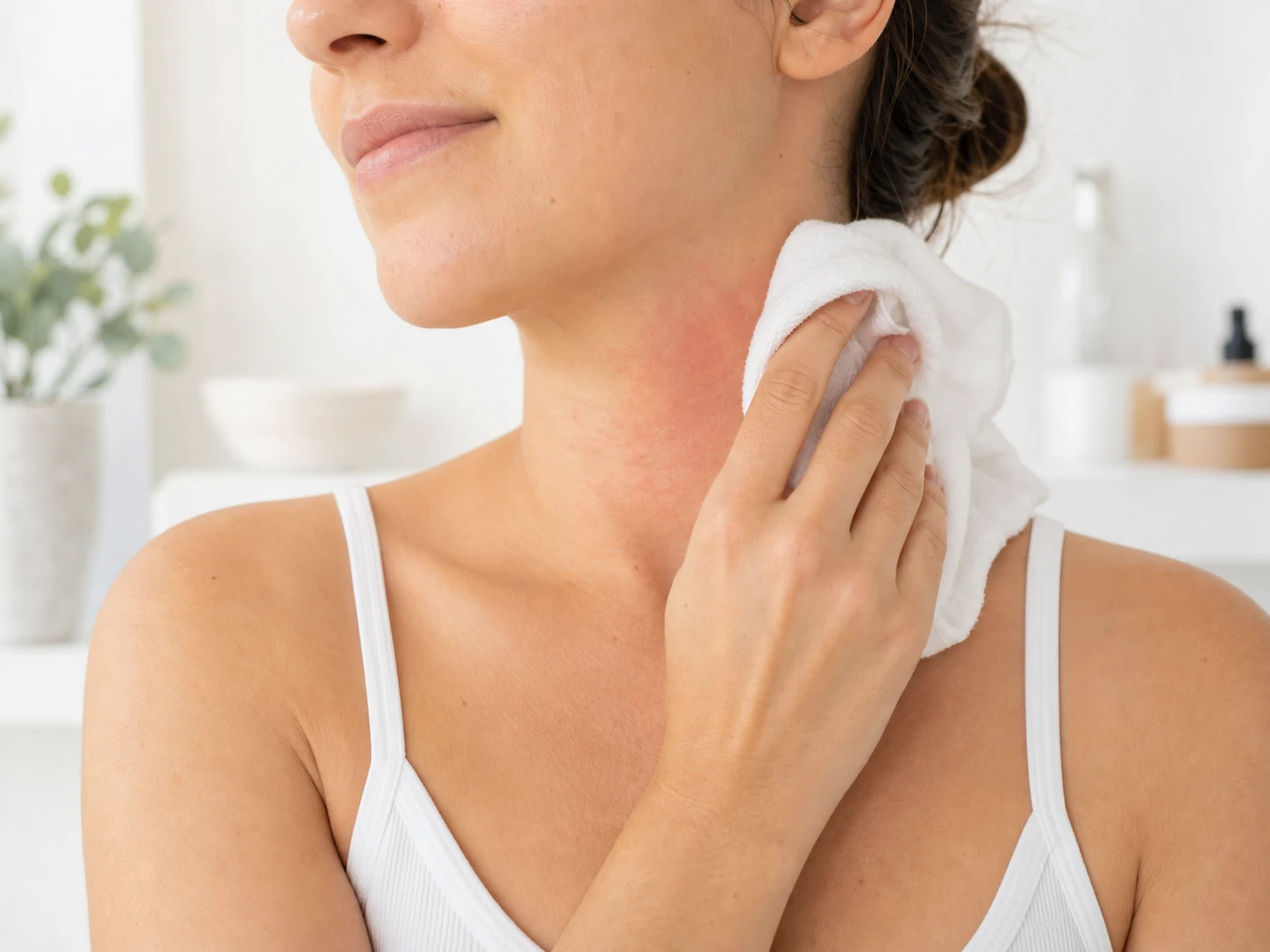
The most effective treatment for heat rash is prevention of further sweating. The rash clears fastest when you stop the cycle of heat, sweating, and duct blockage. Treat the environment first, and the rash will often improve on its own.
Rash is mild and just appears?
Start with cooling and drying.Rash is itchy and uncomfortable?
Add cool compresses for soothing relief.Rash has pus or fever?
Seek medical attention.
Use this section to decide
Does this advice apply to me?
Find the concern or goal closest to yours, then use the fit signal to decide how much weight to give this guide.If your goal is
Primary approachUsually relevant- Fit signal
- Often useful
Cool the skin
If your goal is
Secondary approachUsually relevant- Fit signal
- Often useful
Keep skin dry
If your goal is
AvoidUse caution- Fit signal
- Limited evidence
Heavy creams, oils
If your goal is
When to seek helpDepends- Fit signal
- Possible fit
Signs of infection
Expected results
Results and timeframe
Seek medical attention if signs of infection develop or if the rash doesn't improve.
Practical use
How to use it
Cool the skin immediately
Move to a cool environment and apply cool compresses to the rash.
Keep the affected area dry
Pat the area dry gently and avoid activities that cause sweating.
Monitor the rash's progress
If the rash doesn't improve within 3-4 days, or if signs of infection develop, consult a healthcare provider.
Safety
Side effects and cautions
- Applying corticosteroid cream to heat rash
Corticosteroid creams can actually worsen heat rash by further blocking sweat ducts.
- Using baby powder on heat rash
While it seems logical to dry the skin, some powders can block sweat ducts. Use caution.
- Continuing exercise in hot conditions while treating heat rash
Stop activities that cause sweating until the rash clears to prevent worsening.
Fit
Who should be careful
- Rashes showing signs of infection, or cases with fever
Worth noting
Small details that can change the answer
- Cooling Effect. Cooling the skin reduces sweating and inflammation, directly addressing the heat rash.
- Drying Benefits. Dry skin is less likely to develop blockages than moist skin, making drying a key treatment step.
- Clothing Material. Cotton and other natural fibers allow better air circulation than synthetic materials, which can trap heat.
- Treatment Duration. With proper treatment, most heat rash cases resolve within 3-7 days.
Heat rash treatment focuses on cooling the skin and keeping it dry.
Avoid heavy creams, ointments, and oils that can further block sweat ducts.
Wear loose, breathable clothing to allow air circulation.
Most heat rash clears within 3-7 days with proper home care.
Dos Donts
Do's and don'ts for heat rash treatment
Do
Cooling reduces inflammation and itching.
Allows air to circulate and helps keep the skin dry.
Prevents further sweat duct blockages.
Avoid
These can block sweat ducts and worsen the rash.
Scratching can break the skin and cause infection.
More sweating means more trapped sweat and worse rash.
Risks
Risks of incorrect heat rash treatment
While heat rash is generally harmless, incorrect treatment can make it worse or lead to complications.
- Using heavy creams or oils can worsen the blockage and extend the rash's duration
- Scratching can cause secondary bacterial infections requiring medical treatment
- Ignoring signs of infection can lead to more serious skin infections
- Continuing to sweat without cooling can cause the rash to spread or worsen
Clinical Guidance
When to seek medical attention
- If the rash doesn't improve after 3-4 days of home care
- If the rash shows signs of infection (pus, spreading redness, pain)
- If fever develops in addition to the rash
- If you have severe itching that disrupts sleep or daily activities
- If you're not sure what the rash is
Questions
Frequently asked questions
Can I use aloe vera on heat rash?
Aloe vera can be soothing and cooling, but choose a lightweight gel rather than a heavy cream to avoid blocking ducts.
Should I use calamine lotion on heat rash?
Calamine lotion can help soothe itching, but use it sparingly and avoid it if you have sensitive skin.
Can heat rash be treated with antibiotics?
Antibiotics are only needed if the rash becomes infected. Most heat rash doesn't require antibiotics.
How long does heat rash take to clear with treatment?
With proper cooling and drying, most heat rash clears within 3-7 days. More severe cases may take longer.