Evidence
What the evidence shows
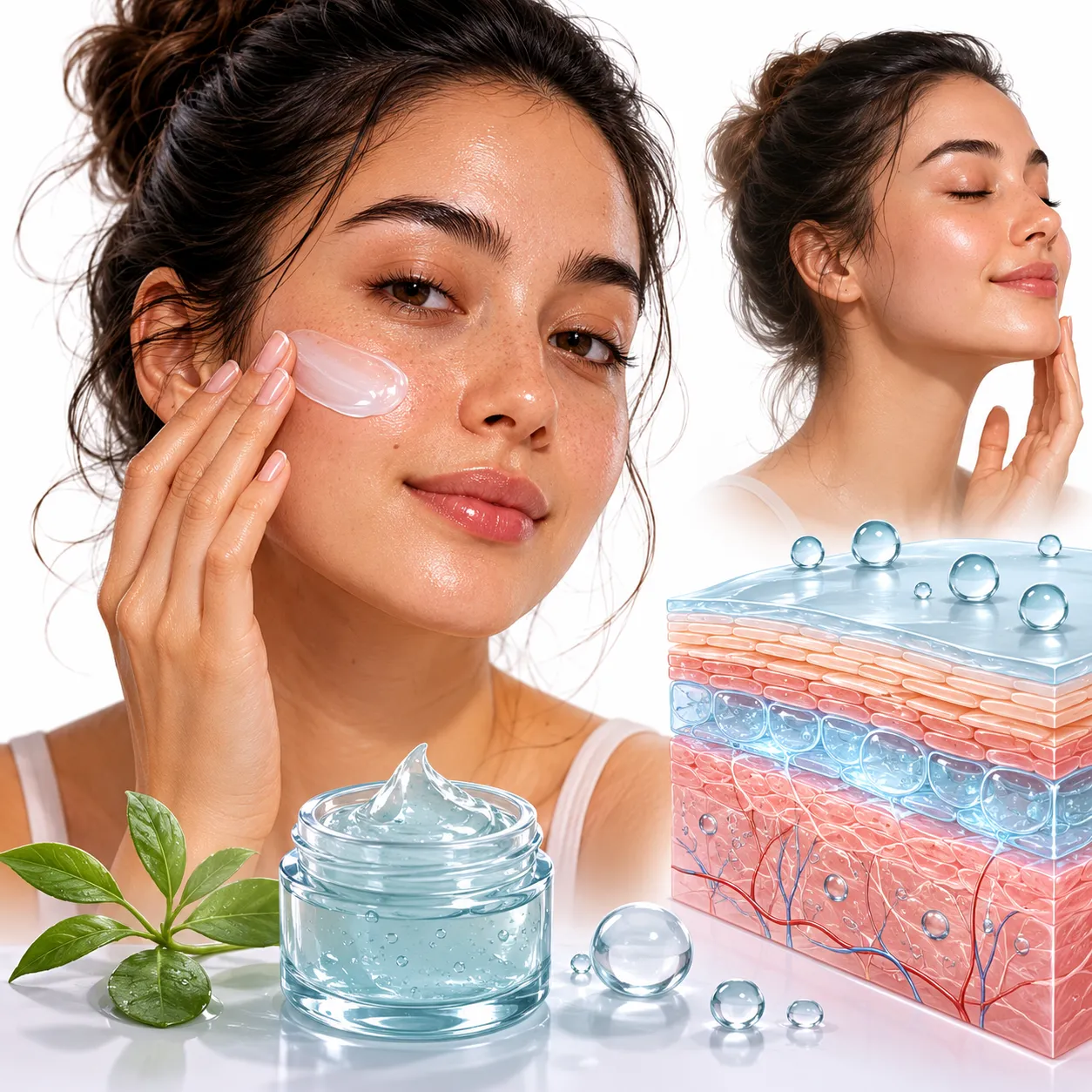
Oily skin is often dehydrated, not over-hydrated. The overproduction of oil is a response to a lack of water, not an excess of it.
Use this section to decide
Does this advice apply to me?
Find the concern or goal closest to yours, then use the fit signal to decide how much weight to give this guide.If your goal is
Key mechanismUsually relevant- Fit signal
- Often useful
Prevents compensatory oil production
If your goal is
Best textureUsually relevant- Fit signal
- Often useful
Gel or water-based
If your goal is
Key attributeUse caution- Fit signal
- Limited evidence
Oil-free, non-comedogenic
If your goal is
EvidenceUsually relevant- Fit signal
- Often useful
Good
Research notes already in this guide
- Studies show that well-hydrated skin produces less sebum over time.
- Moisturizers with niacinamide have been shown to reduce sebum production.
- The mechanism of reactive seborrhea is well-documented in dermatology.
Explanation
How it works
The path moisturizer takes to balance oily skin.
Hydrates the skin
A water-based moisturizer replenishes the skin's water content.
Supports the barrier
Well-hydrated skin has a stronger, more functional barrier.
Signals to reduce oil
The skin no longer perceives a need for compensatory oil production.
Balances over time
Consistent use leads to a more balanced oil production.
Expected results
Results and timeframe
Apply to damp skin and use consistently for best results.
Practical use
How to use it
Choose an oil-free, non-comedogenic moisturizer
Look for "gel," "water-based," or "oil-free" on the label.
Apply to damp skin
After cleansing, pat dry and apply moisturizer to slightly damp skin.
Use consistently
Consistent use is key to breaking the cycle of compensatory oil production.
Safety
Side effects and cautions
- Skipping moisturizer entirely
Use a lightweight, oil-free moisturizer to prevent compensatory oil production.
- Using a heavy cream
Choose a water-based gel or lotion that won't clog pores.
- Applying to dry skin
Apply to damp skin to maximize hydration absorption.
Fit
Who should be careful
- Those with very dry skin who need richer formulas
Worth noting
Small details that can change the answer
- Reactive Seborrhea. Dehydrated skin can produce up to 50% more sebum than well-hydrated skin.
- Barrier Function. A compromised barrier in oily skin can lead to increased sensitivity and inflammation.
- Hydration vs. Oil. Oily skin can be dehydrated, meaning it lacks water, not oil.
- Niacinamide Benefit. Niacinamide in moisturizers can help regulate sebum production.
Oily skin needs moisturizer to prevent compensatory oil production.
Dehydrated oily skin produces more oil to compensate for lack of water.
Choose an oil-free, non-comedogenic water-based moisturizer.
Skipping moisturizer can actually make oily skin worse.
Science
The biology of oily skin
Oily skin is characterized by overactive sebaceous glands, which produce more sebum than necessary. This is often driven by hormones, genetics, or environmental factors. However, the skin's hydration level also plays a role. When the skin is dehydrated, it can trigger a compensatory mechanism that increases sebum production to compensate for the perceived lack of protection.
- Sebum
- An oily, waxy substance produced by the sebaceous glands to lubricate and protect the skin.
- Reactive Seborrhea
- A condition where the skin produces excess sebum in response to dehydration or barrier disruption.
Benefits
What moisturizer does for oily skin
A well-chosen moisturizer offers several benefits for oily skin beyond just hydration.
- Reduces compensatory oil production over time
- Supports the skin barrier, reducing sensitivity
- Hydrates without adding oil to the skin
- Creates a smoother canvas for makeup and sunscreen
- Prevents over-drying from harsh cleansers
Questions
Frequently asked questions
Can moisturizer make oily skin worse?
Yes, if you use a heavy, comedogenic moisturizer. Choose oil-free, non-comedogenic formulas.
Is gel or cream better for oily skin?
Gel moisturizers are generally better as they're lighter and less likely to clog pores.
How often should I moisturize oily skin?
At least twice daily, morning and night, to maintain consistent hydration.
Can I use a moisturizer with niacinamide?
Yes, niacinamide can help regulate sebum production and is beneficial for oily skin.
References
Sources
The notes below are drawn from the evidence already cited in this guide. They are not a complete bibliography.
- Studies show that well-hydrated skin produces less sebum over time.
- Moisturizers with niacinamide have been shown to reduce sebum production.
- The mechanism of reactive seborrhea is well-documented in dermatology.