Evidence
What the evidence shows
PIH is the skin's pigment response to inflammation. The best treatment is two-part: prevent it by managing inflammation, and fade it with brightening ingredients once it appears.
Ingredient Evidence
Vitamin C, niacinamide, and retinoids have strong evidence for PIH.Combination Evidence
Combination therapy is more effective than single ingredients.Clinical Consensus
Dermatologists recommend combination approaches for PIH.
Use this section to decide
Does this advice apply to me?
Find the concern or goal closest to yours, then use the fit signal to decide how much weight to give this guide.If your goal is
Vitamin CDepends- Fit signal
- Possible fit
Strong melanin inhibitor
If your goal is
NiacinamideDepends- Fit signal
- Possible fit
Excellent transfer blocker
If your goal is
RetinoidsDepends- Fit signal
- Possible fit
Speeds pigment removal
If your goal is
SunscreenUsually relevant- Fit signal
- Often useful
Essential for success
If your goal is
PreventionUsually relevant- Fit signal
- Often useful
Most effective strategy
Research notes already in this guide
- Studies show vitamin C and niacinamide are effective for PIH.
- Research confirms retinoids accelerate fading of post-inflammatory marks.
- Sunscreen has been shown to prevent PIH from worsening and recurring.
- Dermatologists recommend combination therapy for PIH.
Explanation
How it works
Prevent further inflammation
Treat the underlying acne or skin condition to stop new PIH from forming.
Inhibit melanin production
Use vitamin C or azelaic acid to reduce melanin production.
Block melanin transfer
Use niacinamide to prevent melanin from reaching the skin's surface.
Speed pigment removal
Use retinoids to accelerate cell turnover and remove pigmented cells.
Expected results
Results and timeframe
PIH takes 8-16 weeks to fade with consistent treatment.
Practical use
How to use it
Prevent new PIH
Treat acne or inflammation early and avoid picking.
Use brightening ingredients
Apply vitamin C, niacinamide, and a retinoid consistently.
Use sunscreen daily
SPF 30+ every day to prevent marks from darkening.
Safety
Side effects and cautions
- Picking or squeezing pimples, which creates more inflammation and PIH
Leave pimples alone and treat them gently.
- Using aggressive products on PIH and causing more inflammation
Gentle treatment is better - irritation worsens pigmentation.
- Expecting quick results
PIH takes 8-16 weeks to show significant improvement.
Fit
Who should be careful
- Textural scars
Worth noting
Small details that can change the answer
- PIH Mechanism. Inflammation stimulates melanocytes to produce excess melanin.
- Skin Tone Factor. PIH is more common and more persistent in darker skin types.
- Prevention Key. Early treatment of inflammation can prevent PIH from forming.
- Treatment Duration. PIH typically takes 3-12 months to fade with appropriate treatment.
PIH is a pigment response to inflammation, not a structural scar.
The best treatment is a combination of prevention and fading strategies.
Use vitamin C, niacinamide, retinoids, and sunscreen daily.
Prevention is key - treat inflammation early and avoid picking.
Definition
What is post-inflammatory hyperpigmentation?
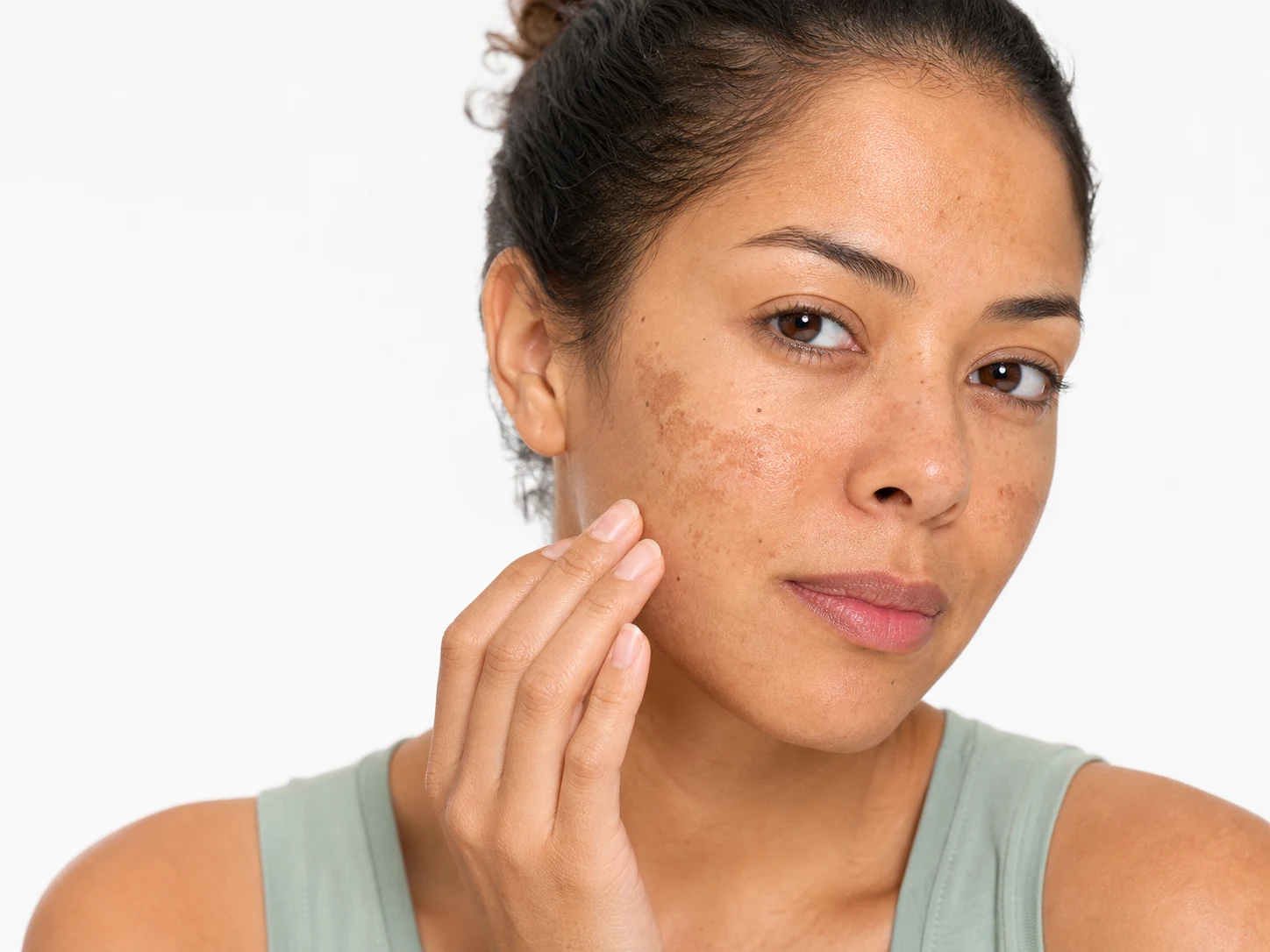
PIH is a flat area of darkened skin that appears after inflammation. It's caused by excess melanin production in response to inflammatory signals from conditions like acne, eczema, or injury. Unlike scars, PIH is pigment, not texture.
- Flat, pigmented marks
- Caused by inflammation
- More common in darker skin
- Can fade over time
Questions
Frequently asked questions
How long does post-inflammatory hyperpigmentation take to fade?
With treatment, PIH typically fades significantly in 8-16 weeks.
Does post-inflammatory hyperpigmentation go away on its own?
It can fade slowly over months to years, but treatment speeds the process.
Is PIH the same as acne scars?
No - PIH is pigment (flat marks), scars are texture (indentations or raised areas).
Can I get PIH from any kind of inflammation?
Yes - any skin inflammation, including bug bites, rashes, and burns, can cause PIH.
References
Sources
The notes below are drawn from the evidence already cited in this guide. They are not a complete bibliography.
- Studies show vitamin C and niacinamide are effective for PIH.
- Research confirms retinoids accelerate fading of post-inflammatory marks.
- Sunscreen has been shown to prevent PIH from worsening and recurring.
- Dermatologists recommend combination therapy for PIH.