Evidence
What the evidence shows
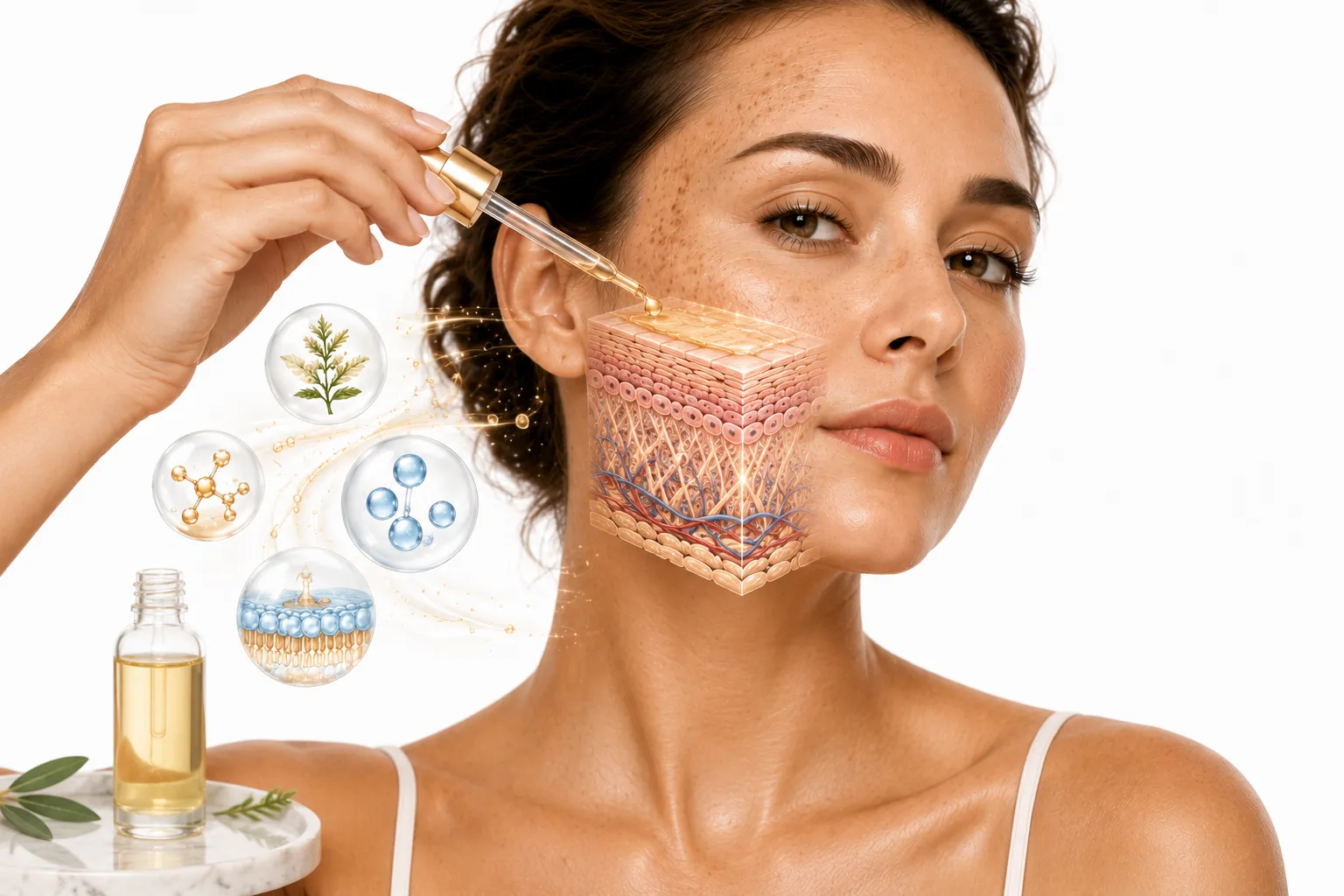
Bio-Oil's usefulness for sun damage borrows from its original purpose, supporting scar and texture appearance, rather than from evidence specific to photoaging or sun-induced pigmentation.
Fades sun spots?
Limited evidenceImproves texture?
YesCan replace sunscreen?
No
Use this section to decide
Does this advice apply to me?
Find the concern or goal closest to yours, then use the fit signal to decide how much weight to give this guide.If your goal is
Main benefitUsually relevant- Fit signal
- Often useful
Hydration, texture
If your goal is
Pigment correctionDepends- Fit signal
- Possible fit
Limited evidence
If your goal is
Collagen effectUse caution- Fit signal
- Limited evidence
None
If your goal is
Best usedUse caution- Fit signal
- Limited evidence
As a moisturizing layer
Practical use
How to use it
Use it as a nightly moisturizing layer
Apply after other treatment serums to support hydration.
Pair with targeted ingredients
Add vitamin C or retinol separately for more direct sun-damage repair.
Adjust based on skin type
Use sparingly on oily or acne-prone skin where a lighter texture may work better.
Safety
Side effects and cautions
- Expecting Bio-Oil to fade sun spots the way vitamin C does
Its evidence for pigment correction is much more limited; pair it with more targeted ingredients.
- Using it as a sunscreen substitute
Bio-Oil provides no meaningful UV protection on its own.
- Applying a heavy layer to oily or acne-prone skin
Use sparingly or opt for a lighter moisturizer if the oil feels too heavy.
Fit
Who should be careful
- Anyone seeking targeted pigment or collagen repair
Worth noting
Small details that can change the answer
- Moisturizing Blend. Bio-Oil combines plant oils and vitamin E to support skin hydration.
- Originally Formulated for Scars. Its primary evidence base is for scars and stretch marks, not sun damage specifically.
- Mild Antioxidant Content. Vitamin E offers modest antioxidant properties, though less studied for sun damage than vitamin C.
- Texture-Focused Benefit. Its main crossover benefit for sun-damaged skin is improved hydration and surface texture.
Bio-Oil offers modest hydration and texture benefits relevant to sun-damaged skin.
Its vitamin E content adds mild antioxidant support, though less studied than vitamin C.
It lacks strong, dedicated evidence for treating sun damage or pigmentation specifically.
It works best as a supportive moisturizing layer rather than a primary treatment.
It provides no meaningful UV protection and should not replace sunscreen.
Explanation
What Bio-Oil actually does for sun-damaged skin
Bio-Oil's moisturizing blend supports hydration and can make sun-damaged skin's texture appear smoother and more supple. Its vitamin E content adds a modest antioxidant effect, though this is not the product's primary strength or main area of evidence.
Benefits
Where Bio-Oil genuinely helps
For sun-damaged skin, Bio-Oil's realistic benefits include:
- Improved surface hydration and suppleness
- Smoother-feeling, less rough texture
- Mild antioxidant support from vitamin E
- A pleasant, easy addition to a nightly routine
Risks
Where expectations should be tempered
Bio-Oil's popularity for sun damage outpaces its dedicated evidence base for that specific use.
- Limited direct research on sun damage or photoaging specifically
- No meaningful effect on deeper collagen loss
- Oil-based formula may feel heavy for oily or acne-prone skin
Community Experience
What people commonly report
These reflect individual, anecdotal experiences rather than clinical evidence.
Many users report smoother-feeling skin and improved hydration with regular use.
positiveSome users note the oil feels too heavy for daytime use under makeup or sunscreen.
mixedQuestions
Frequently asked questions
Can Bio-Oil fade sun spots?
It may offer mild support through its antioxidant content, but its evidence for pigment correction is limited compared to ingredients like vitamin C.
Is Bio-Oil good for daily use on sun-damaged skin?
Yes, for most skin types, though those with oily or acne-prone skin may prefer a lighter product.
Can I use Bio-Oil with retinol?
Yes, it can be layered over retinol at night to add moisture and support the barrier.
Does Bio-Oil protect against further sun damage?
No, it offers no meaningful UV protection and should be paired with daily sunscreen.