Evidence
What the evidence shows
The distinction between a pigment change and a texture change is the most important thing to understand about post-acne marks - because it determines whether you need a brightener or a resurfacing treatment.
Is the area flat when you run your finger over it?
Flat = likely hyperpigmentation; textured = likely a scar.Is the mark dark or red?
Color suggests hyperpigmentation (flat surface).Is there an indentation or raised area?
Texture suggests a scar (structural change).Has it been there for a long time without changing?
Scars are more likely to be permanent without treatment.
Use this section to decide
Does this advice apply to me?
Find the concern or goal closest to yours, then use the fit signal to decide how much weight to give this guide.If your goal is
HyperpigmentationUse caution- Fit signal
- Limited evidence
Flat, color-based
If your goal is
Acne ScarsDepends- Fit signal
- Possible fit
Textured, structural
If your goal is
CauseUse caution- Fit signal
- Limited evidence
Melanin excess vs. collagen damage
If your goal is
TreatmentUsually relevant- Fit signal
- Often useful
Topicals vs. professional
If your goal is
Key InsightUsually relevant- Fit signal
- Often useful
Not the same thing
Practical use
How to use it
Identify what you have
Look at the mark - is it flat (pigmentation) or textured (scar)?
Treat pigmentation with topicals
Use niacinamide, vitamin C, or retinoids for flat pigmented marks.
See a professional for scars
For textural scars, consult a dermatologist about microneedling, lasers, or other interventions.
Safety
Side effects and cautions
- Calling all post-acne marks "scars"
Differentiate between pigmented marks (PIH) and textural scars.
- Using scar treatments on hyperpigmentation
Scar treatments like lasers are overkill for pigmented marks.
- Expecting topical treatments to fix textural scars
Topicals can help, but scars often need professional treatments.
Fit
Who should be careful
- None - this is foundational knowledge
Worth noting
Small details that can change the answer
- Hyperpigmentation Type. Post-inflammatory hyperpigmentation (PIH) is flat and pigmented.
- Scar Type. Atrophic scars are indentations; hypertrophic scars are raised.
- Location of Issue. Hyperpigmentation affects the epidermis (surface). Scars affect the dermis (deeper layer).
- Treatment Approach. Brighteners for hyperpigmentation; resurfacing for scars.
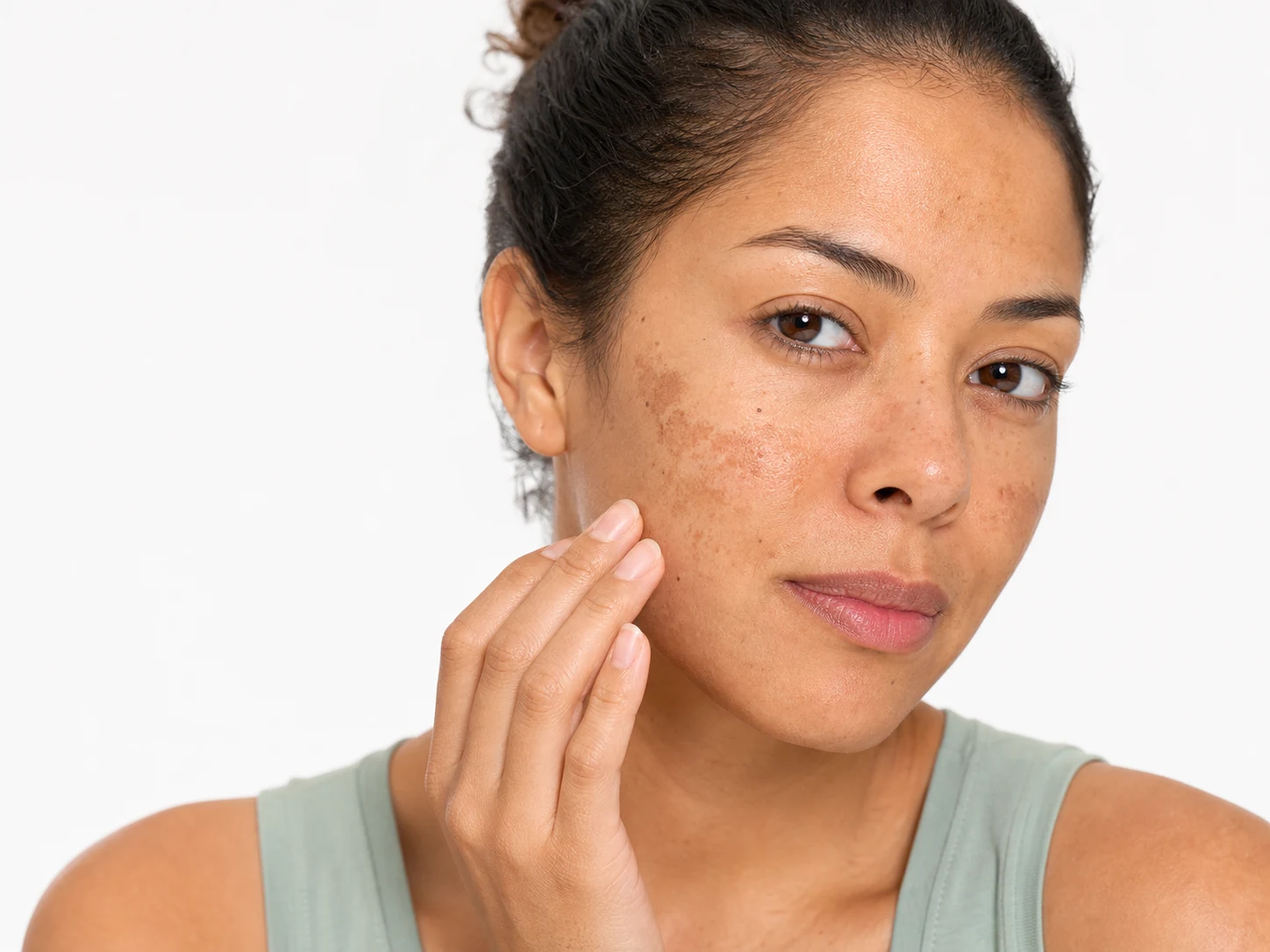
Hyperpigmentation is a color change (flat surface); acne scars are textural changes (indentations or raised areas).
They're caused by different processes: melanin excess vs. collagen damage.
They require different treatments: topicals vs. professional interventions.
You can have both simultaneously on the same area.
If you're unsure which you have, consult a dermatologist.
Definition
What is post-inflammatory hyperpigmentation (PIH)?
PIH is a flat area of darkened skin that appears after inflammation - like a pimple. It's caused by excess melanin production in response to inflammatory signals. The skin's surface is smooth and normal in texture, just darker in color.
- Flat surface
- Caused by excess melanin production
- Responds to brightening ingredients
Definition
What are acne scars?
Acne scars are textural changes in the skin that result from collagen damage during the healing process. They can be atrophic (indented), hypertrophic (raised), or rolling (wave-like). The surface is not flat, regardless of color.
- Textural changes
- Caused by collagen damage or overgrowth
- Need resurfacing treatments
Key differences at a glance
| Factor |
|---|
Benefits
Why the distinction matters for treatment
Treating hyperpigmentation and scars requires completely different approaches.
- Hyperpigmentation can be treated with topicals like niacinamide, vitamin C, and retinoids
- Scars often require more intensive treatments like microneedling, lasers, or dermal fillers
- Using the wrong treatment won't work and may make things worse
- A dermatologist can help identify what you have and what to do about it
Questions
Frequently asked questions
Can hyperpigmentation turn into a scar?
No - they're separate processes. You can have both, but one doesn't become the other.
Will a hyperpigmentation treatment help with scars?
It can help with the color of a scar, but not the texture.
Are atrophic scars the same as hyperpigmentation?
No - atrophic scars are indentations (textural); hyperpigmentation is color-based.
Can acne scars cause hyperpigmentation?
The scar tissue itself can be darker, but the scar and the pigmentation are separate issues.