Evidence
What the evidence shows
The distinction matters because different types of hyperpigmentation respond to different treatments. Calling everything "dark spots" can lead you to use the wrong approach for what's actually on your skin.
Is your pigmentation in one specific spot or a patch?
Localized suggests a dark spot; diffuse suggests melasma or generalized hyperpigmentation.Did it appear after a breakout or injury?
This suggests PIH (post-inflammatory hyperpigmentation).Is it on areas exposed to sun (face, hands, chest)?
Sun spots often appear on sun-exposed areas.Is it symmetrical on the face?
Symmetrical patches suggest melasma.
Use this section to decide
Does this advice apply to me?
Find the concern or goal closest to yours, then use the fit signal to decide how much weight to give this guide.If your goal is
HyperpigmentationUse caution- Fit signal
- Limited evidence
Broad term for excess pigment
If your goal is
Dark SpotsUsually relevant- Fit signal
- Often useful
Specific type of hyperpigmentation
If your goal is
RelationshipUse caution- Fit signal
- Limited evidence
Dark spots are a subset
If your goal is
Other TypesUse caution- Fit signal
- Limited evidence
Melasma, PIH, sun spots
If your goal is
Key InsightUsually relevant- Fit signal
- Often useful
Not interchangeable
Practical use
How to use it
Identify your type
Determine whether you have PIH, melasma, sun spots, or another type.
Consult a professional
If you're unsure, a dermatologist can help identify the type and cause.
Choose targeted treatment
Select ingredients and approaches based on your specific type.
Safety
Side effects and cautions
- Using the terms interchangeably without understanding the type
Identify whether you have PIH, melasma, or sun spots - they need different care.
- Treating all hyperpigmentation the same way
Different types respond to different ingredients and approaches.
- Assuming all dark spots are sun damage
Dark spots can also come from inflammation, hormones, or injury.
Fit
Who should be careful
- None - this is foundational knowledge
Worth noting
Small details that can change the answer
- Hyperpigmentation Definition. Hyperpigmentation is any darkening of the skin caused by excess melanin.
- Dark Spot Definition. Dark spots are localized areas of hyperpigmentation with a specific trigger.
- Common Triggers. Sun exposure, inflammation, hormones, and injury can all trigger hyperpigmentation.
- Treatment Differences. Different types of hyperpigmentation may respond to different treatments.
Hyperpigmentation is the broader term; dark spots are a specific type.
All dark spots are hyperpigmentation, but not all hyperpigmentation is dark spots.
Different types of hyperpigmentation need different treatments.
Understanding the distinction helps guide effective treatment.
When in doubt, consult a dermatologist to identify what you're dealing with.
Definition
What is hyperpigmentation?
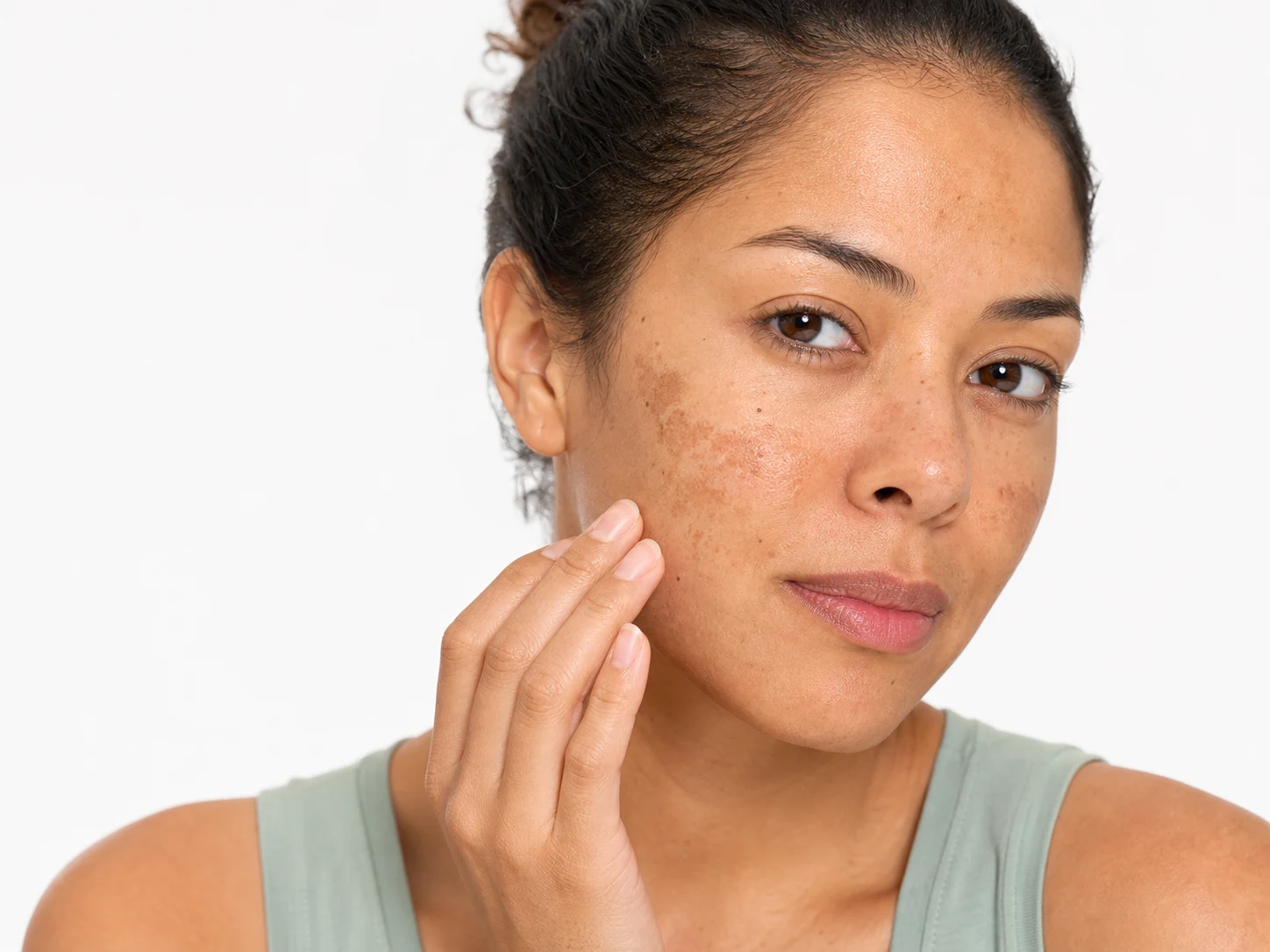
Hyperpigmentation is the general term for any condition where patches of skin become darker than the surrounding area. It happens when melanocytes produce excess melanin in response to triggers like sun exposure, inflammation, or hormonal changes.
- Melanin is the pigment that gives skin its color
- Hyperpigmentation can be localized or widespread
- It's a symptom, not a disease itself
Definition
What are dark spots?
Dark spots are specific, localized areas of hyperpigmentation. They're often called age spots, sun spots, or liver spots, though those terms refer to specific types. They're usually the result of sun exposure, inflammation, or injury.
- Localized pigmentation
- Often triggered by sun exposure or inflammation
- The most visible form of hyperpigmentation
Key differences at a glance
| Factor |
|---|
Benefits
Why the distinction matters
Understanding whether you have hyperpigmentation or dark spots - and what type - helps guide treatment.
- Different types of hyperpigmentation respond to different ingredients
- Melasma requires different treatment than PIH
- Understanding the cause helps prevent recurrence
- Specific diagnosis leads to more effective treatment
Questions
Frequently asked questions
Are dark spots the most common form of hyperpigmentation?
Yes, they're the most visible and common form.
Can hyperpigmentation exist without dark spots?
Yes - generalized hyperpigmentation or melasma can appear as more diffuse darkening.
Is melasma a dark spot or a type of hyperpigmentation?
Melasma is a specific type of hyperpigmentation that can appear as patches or spots.
Should I treat all dark spots the same way?
No - different types (PIH vs. sun spots vs. melasma) may require different treatments.