Evidence
What the evidence shows
Vitamin C's main value for sun damage isn't a single dramatic effect - it's the combination of modest antioxidant defense and modest pigment correction, which together add up over months.
Antioxidant effect
Well documented in research.Pigment correction
Supported, results vary by formula.
Use this section to decide
Does this advice apply to me?
Find the concern or goal closest to yours, then use the fit signal to decide how much weight to give this guide.If your goal is
Main benefitUsually relevant- Fit signal
- Often useful
Tone, pigment, antioxidant defense
If your goal is
Best time to useUse caution- Fit signal
- Limited evidence
Morning
If your goal is
Typical strengthUse caution- Fit signal
- Limited evidence
10-20%
If your goal is
Formula stabilityDepends- Fit signal
- Possible fit
Can oxidize
Research notes already in this guide
- Vitamin C's antioxidant properties and role in reducing UV-related damage are well documented.
- Its effect on pigment production is supported, though results vary based on formula strength and stability.
- Vitamin C is widely recommended by dermatologists as a complementary, not standalone, treatment for sun damage.
Expected results
Results and timeframe
Results build gradually over 8 to 12 weeks and require consistent use.
Practical use
How to use it
Choose a stable formula
Look for vitamin C in a well-sealed, opaque bottle to reduce oxidation.
Apply each morning
Use on clean, dry skin before moisturizer and sunscreen.
Track progress over months
Take photos periodically to notice gradual tone changes.
Safety
Side effects and cautions
- Expecting vitamin C to erase sun spots quickly
Improvement is gradual and typically takes several months of consistent use.
- Skipping sunscreen because vitamin C is "protective"
Vitamin C supplements sun protection, it does not replace SPF.
- Using an oxidized, discolored serum
Replace vitamin C serums once they change color, as this signals reduced effectiveness.
Fit
Who should be careful
- Those seeking fast, dramatic pigment correction alone
Worth noting
Small details that can change the answer
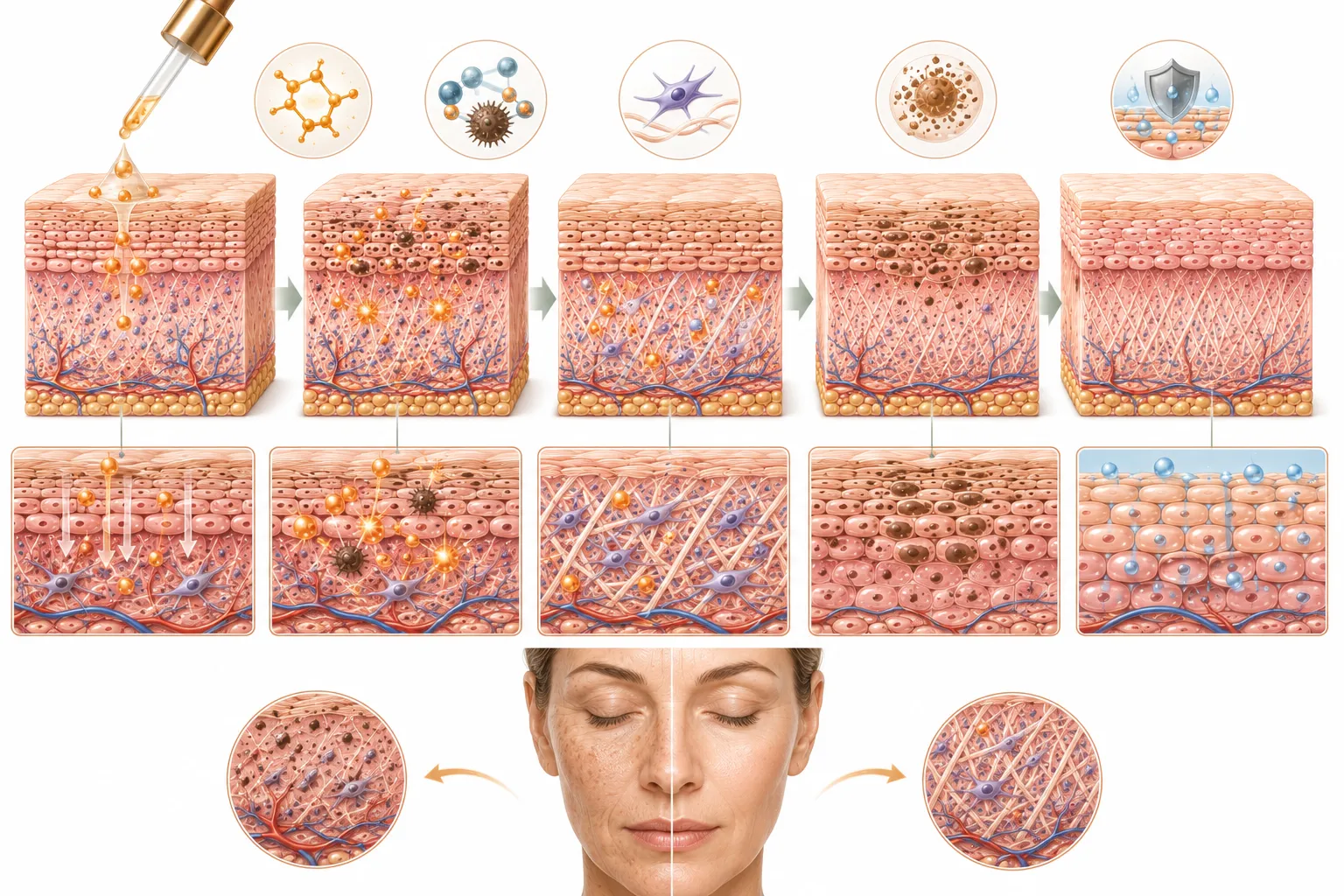
- Antioxidant Role. Vitamin C helps neutralize free radicals generated by UV exposure.
- Pigment Inhibition. It interferes with the enzyme responsible for producing excess melanin.
- Stability Matters. Some vitamin C formulas oxidize and lose potency over time, especially when exposed to light and air.
- Works Best With SPF. Its benefits are most noticeable when paired with consistent daily sunscreen use.
Vitamin C is a well-supported ingredient for sun-damaged skin, particularly for tone and dullness.
It works by neutralizing some UV-related free radical damage and interfering with excess pigment production.
Formula stability matters, since oxidized vitamin C loses effectiveness.
It works best as a complement to daily sunscreen, not a replacement for it.
Science
Why vitamin C matters for sun-damaged skin
Vitamin C, or ascorbic acid, is a water-soluble antioxidant that the skin naturally produces in small amounts, though UV exposure depletes these stores over time. Topical formulas help replenish this defense, giving skin more resources to counter free radical damage as it occurs.
- Free radical
- An unstable molecule generated by UV exposure that can damage skin cells and accelerate visible aging.
- Tyrosinase
- An enzyme involved in producing melanin, the pigment responsible for sun spots and tanning.
Benefits
What vitamin C can realistically do
For sun-damaged skin specifically, vitamin C's benefits tend to cluster around tone and ongoing defense rather than deep structural repair.
- Gradually fades sun spots and uneven pigmentation
- Adds antioxidant defense against further UV-related damage
- Brightens overall dullness associated with photoaging
- Layers well underneath sunscreen for added protection
Dos Donts
Getting the most out of vitamin C
Do
Prevents oxidation, which reduces effectiveness.
Adds antioxidant support for the day ahead.
Visible tone improvement typically takes 8 to 12 weeks.
Avoid
It does not provide UV protection on its own.
This usually signals oxidation and reduced potency.
Questions
Frequently asked questions
Can vitamin C fade existing sun spots?
It can help fade them gradually over time by interfering with excess pigment production, though results vary.
Should I use vitamin C in the morning or at night?
Morning is most common, since its antioxidant properties help defend skin during the day.
Can vitamin C be combined with retinol?
Yes, many people use vitamin C in the morning and retinol at night without issue.
Why did my vitamin C serum turn orange?
This usually indicates oxidation, which reduces its effectiveness; it's best to replace the product.
References
Sources
The notes below are drawn from the evidence already cited in this guide. They are not a complete bibliography.
- Vitamin C's antioxidant properties and role in reducing UV-related damage are well documented.
- Its effect on pigment production is supported, though results vary based on formula strength and stability.
- Vitamin C is widely recommended by dermatologists as a complementary, not standalone, treatment for sun damage.