Evidence
What the evidence shows
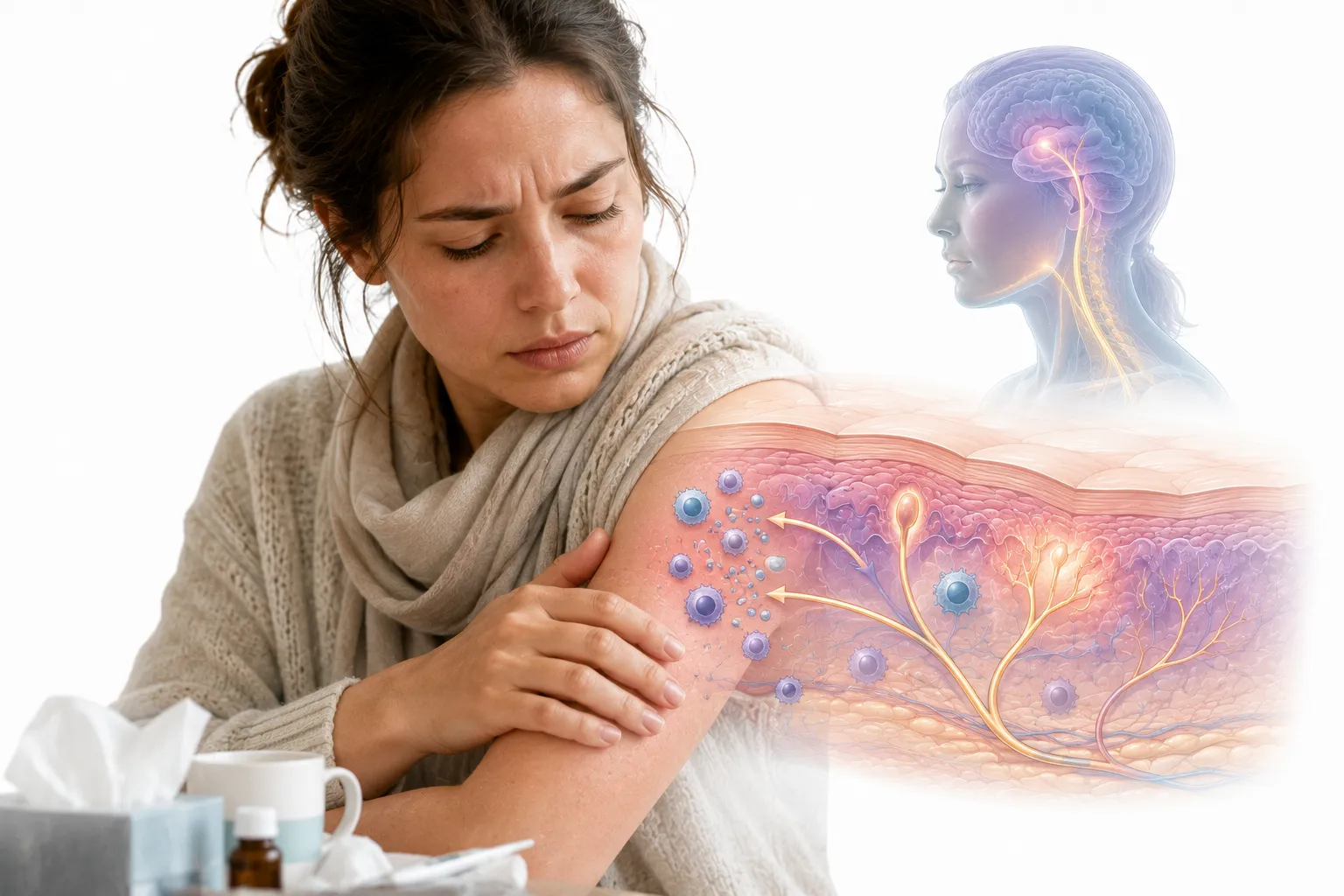
The same inflammatory chemicals that help your body fight infection also sensitize your nerves. The sensitivity is a side effect of a well-functioning immune response, not a sign that something is wrong with your skin.
Use this section to decide
Does this advice apply to me?
Find the concern or goal closest to yours, then use the fit signal to decide how much weight to give this guide.If your goal is
Primary causeUse caution- Fit signal
- Limited evidence
Inflammatory cytokines
If your goal is
Contributing factorsDepends- Fit signal
- Possible fit
Fever, dehydration
If your goal is
DurationUse caution- Fit signal
- Limited evidence
Few days to a week
If your goal is
Best careUsually relevant- Fit signal
- Often useful
Gentle, simple, hydrating
Research notes already in this guide
- The link between cytokines and nerve sensitization is well-established in medical literature.
- Fever and skin tenderness are recognized symptoms of many infections.
- Dehydration is known to affect skin barrier function.
- Sensitivity typically resolves with the underlying illness.
Explanation
How it works
The path from illness to skin tenderness.
Infection triggers immune response
The body releases inflammatory molecules to fight the infection.
Cytokines sensitize nerves
Inflammatory chemicals make skin nerves more responsive.
Pain threshold lowers
Even light touch can trigger a pain signal.
Skin sensitivity results
The skin becomes tender and uncomfortable to the touch.
Practical use
How to use it
Simplify your skincare
Avoid active ingredients, fragrances, and harsh products. Use only a gentle cleanser and soothing moisturizer.
Hydrate from the inside out
Drink plenty of water and apply a gentle, hydrating moisturizer to support your skin's barrier.
Rest and recover
The sensitivity will resolve as your body fights the infection. Prioritize rest.
Safety
Side effects and cautions
- Using active skincare products while sick thinking they'll help
Your skin is sensitized - avoid actives. Stick to gentle, soothing care.
- Hot showers to "feel better"
Hot water can further irritate sensitive skin. Use lukewarm.
- Ignoring hydration
Fever and sweating cause fluid loss; hydrate both internally and externally.
- Generalized tenderness
Common · Avoid touching or rubbing sensitive areas
- Flushed appearance
Common · Stay cool and hydrated
- Dryness and flaking
Occasional · Use gentle, hydrating products
Fit
Who should be careful
- Severe or prolonged sensitivity
Worth noting
Small details that can change the answer
- Cytokines. Cytokines are inflammatory molecules released by the immune system that can sensitize nerves.
- Pain Threshold. Inflammatory chemicals lower the threshold at which nerves signal pain.
- Fever Effects. Fever increases blood flow to skin, making it feel tender and flushed.
- Temporary Issue. Illness-related sensitivity usually resolves with the infection.
Skin sensitivity during illness is caused by inflammatory cytokines that sensitize nerve endings.
Fever and dehydration also contribute to skin tenderness.
The sensitivity is a side effect of the immune response, not a skin problem.
Gentle, soothing skincare is best - avoid active ingredients.
The sensitivity resolves as the illness passes.
Science
The cytokine sensitivity connection
Cytokines like interleukin-1 (IL-1) and tumor necrosis factor (TNF) are part of the immune response. They help fight infection but also have effects on nerve endings. In the skin, these cytokines lower the threshold for pain signals, causing normally non-painful stimuli (like light touch) to feel uncomfortable or painful. This is a direct biological effect of the immune response.
- Cytokine
- A small protein released by immune cells that coordinates the inflammatory response and can sensitize nerves.
- Pain threshold
- The minimum level of stimulation required for a nerve to send a pain signal.
Explanation
The role of fever and dehydration
Fever causes blood vessels in the skin to dilate, which can make the skin feel warm and tender. Dehydration from fever and sweating reduces the skin's moisture content, which can compromise the barrier and make the skin feel dry and sensitive. Both are temporary effects that resolve with recovery.
Questions
Frequently asked questions
Is skin sensitivity during illness a sign of a serious problem?
Usually not - it's a common and temporary side effect of the immune response.
How long does illness-related skin sensitivity last?
It usually resolves within a few days as the infection clears.
Can I use my regular skincare when sick?
If your skin is sensitive, simplify your routine and avoid active ingredients.
Does fever always cause skin sensitivity?
Not always, but many people experience skin tenderness with fever.
References
Sources
The notes below are drawn from the evidence already cited in this guide. They are not a complete bibliography.
- The link between cytokines and nerve sensitization is well-established in medical literature.
- Fever and skin tenderness are recognized symptoms of many infections.
- Dehydration is known to affect skin barrier function.
- Sensitivity typically resolves with the underlying illness.