Evidence
What the evidence shows
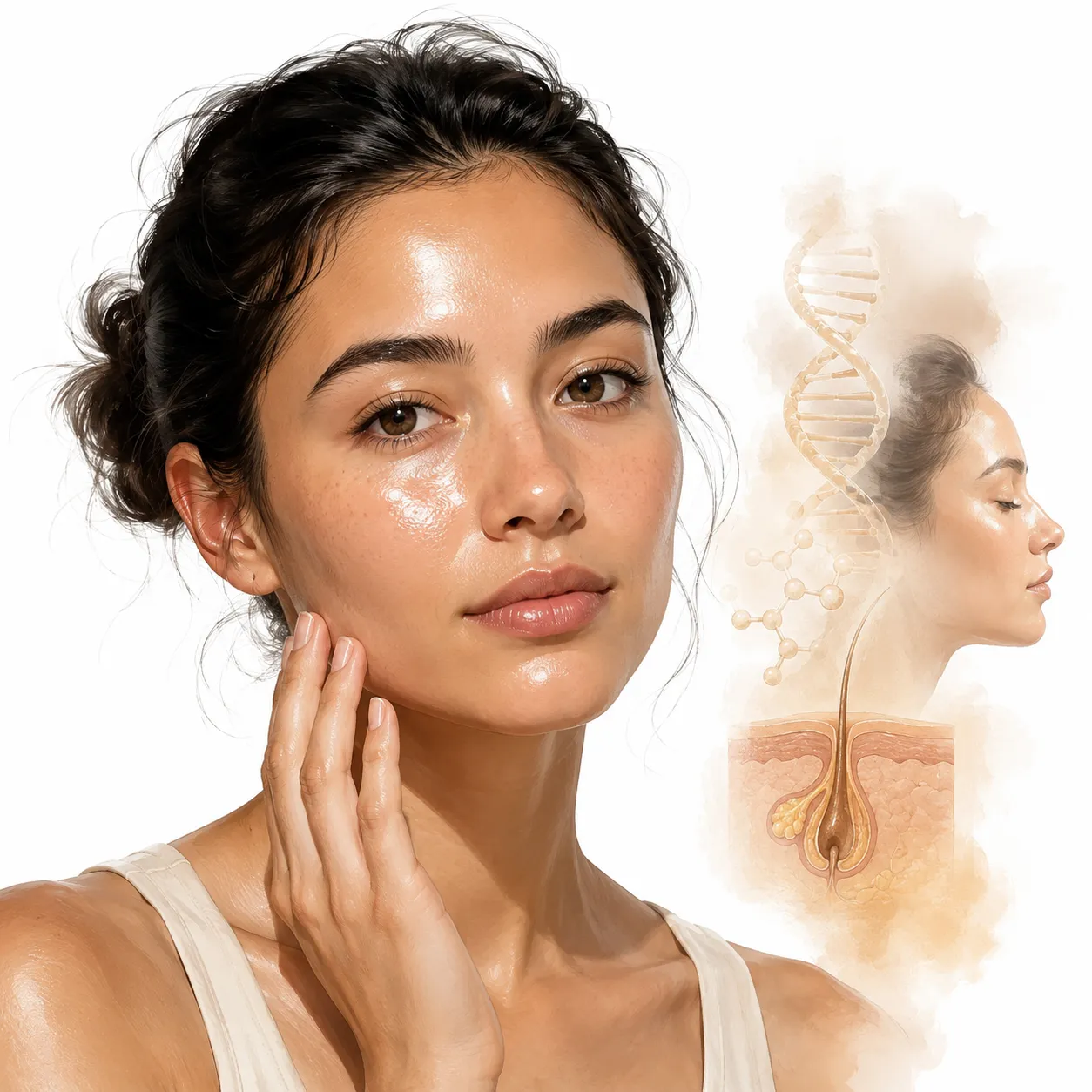
The hormonal drivers of oily skin in females are complex and dynamic. The same woman can experience oily skin at different life stages and find that the causes - and the solutions - change over time.
Use this section to decide
Does this advice apply to me?
Find the concern or goal closest to yours, then use the fit signal to decide how much weight to give this guide.If your goal is
HormonesUsually relevant- Fit signal
- Often useful
Primary driver
If your goal is
GeneticsDepends- Fit signal
- Possible fit
Sets baseline
If your goal is
StressUse caution- Fit signal
- Limited evidence
Cortisol effect
If your goal is
DietDo not rely on it- Fit signal
- Not established
Influences sebum quality
If your goal is
SkincareUse caution- Fit signal
- Limited evidence
Can worsen or improve
Research notes already in this guide
- The link between androgens and sebum production is one of the most established facts in dermatology.
- Hormonal fluctuations during the menstrual cycle reliably affect sebum output.
- PCOS is consistently associated with seborrhea (excessive oiliness).
- Hormonal contraceptives with anti-androgenic effects can reduce oily skin.
Explanation
How it works
The journey from hormone to sebum production.
Hormone release
Androgens are released from the ovaries and adrenal glands.
Receptor binding
Androgens bind to receptors on sebaceous glands.
Stimulation of sebum production
The gland produces and releases more sebum.
Oily skin appears
The skin becomes shiny, may feel greasy, and pores can become more visible.
Practical use
How to use it
Use gentle, non-stripping cleansers
Choose cleansers that remove excess oil without disrupting the barrier.
Consider hormone-sensitive skincare
Talk to a dermatologist about options like anti-androgenic treatments.
Manage stress and lifestyle factors
Stress, diet, and sleep quality all affect hormonal balance and oil production.
Safety
Side effects and cautions
- Believing oily skin is just a teenage problem
Oily skin affects women at all stages of life, particularly during hormonal transitions.
- Over-washing to remove oil
Over-washing can strip the skin and cause rebound oil production.
- Ignoring hormonal health
For some women, addressing underlying hormonal imbalances is key to managing oiliness.
Fit
Who should be careful
- Assuming a one-size-fits-all approach
Worth noting
Small details that can change the answer
- Androgen Effect. Androgens are the primary hormones that stimulate sebaceous glands in both women and men.
- Estrogen Moderation. Estrogen typically moderates sebum production, which is why oily skin often improves when estrogen levels are higher.
- Cycle Fluctuations. Skin oiliness often peaks around ovulation and before menstruation due to hormone changes.
- PCOS Impact. Conditions with higher androgen levels, like PCOS, commonly lead to oilier skin in women.
Oily skin in females is primarily driven by androgens, which stimulate sebum production.
Estrogen typically moderates oil production, leading to fluctuations throughout life.
Menstrual cycles, pregnancy, perimenopause, and hormonal conditions all influence oiliness.
Genetics set the baseline responsiveness of sebaceous glands to hormones.
Effective management often involves understanding and addressing hormonal drivers.
Science
The hormone-sebum connection
Sebaceous glands have receptors for androgens, and when these receptors are stimulated, the glands produce more sebum. The sensitivity of sebaceous glands to androgens varies from person to person - some women's glands are more responsive than others. This explains why the same hormone levels can produce different degrees of oiliness in different women.
- Androgen receptor
- A protein on sebaceous gland cells that binds to androgens, triggering increased sebum production.
- Sebum
- The oily substance produced by sebaceous glands that lubricates and protects the skin.
Explanation
Life stages and oily skin
Oily skin in females can emerge at any stage: puberty brings increased androgens; the menstrual cycle causes monthly fluctuations; pregnancy often improves oiliness due to higher estrogen; perimenopause can worsen it as estrogen drops and androgen effects become relatively stronger; and some women find skin changes significantly after starting or stopping hormonal contraceptives.
Questions
Frequently asked questions
Does birth control affect oily skin?
Yes - some hormonal contraceptives can reduce oiliness, while others may make it worse.
Can oily skin change after pregnancy?
Yes - hormonal shifts after pregnancy can affect skin oiliness, sometimes temporarily.
Is oily skin in females linked to PCOS?
Yes - PCOS often involves elevated androgens, which can increase sebum production.
Can stress make oily skin worse?
Yes - stress hormones can stimulate sebaceous glands and increase oil production.
References
Sources
The notes below are drawn from the evidence already cited in this guide. They are not a complete bibliography.
- The link between androgens and sebum production is one of the most established facts in dermatology.
- Hormonal fluctuations during the menstrual cycle reliably affect sebum output.
- PCOS is consistently associated with seborrhea (excessive oiliness).
- Hormonal contraceptives with anti-androgenic effects can reduce oily skin.