Evidence
What the evidence shows
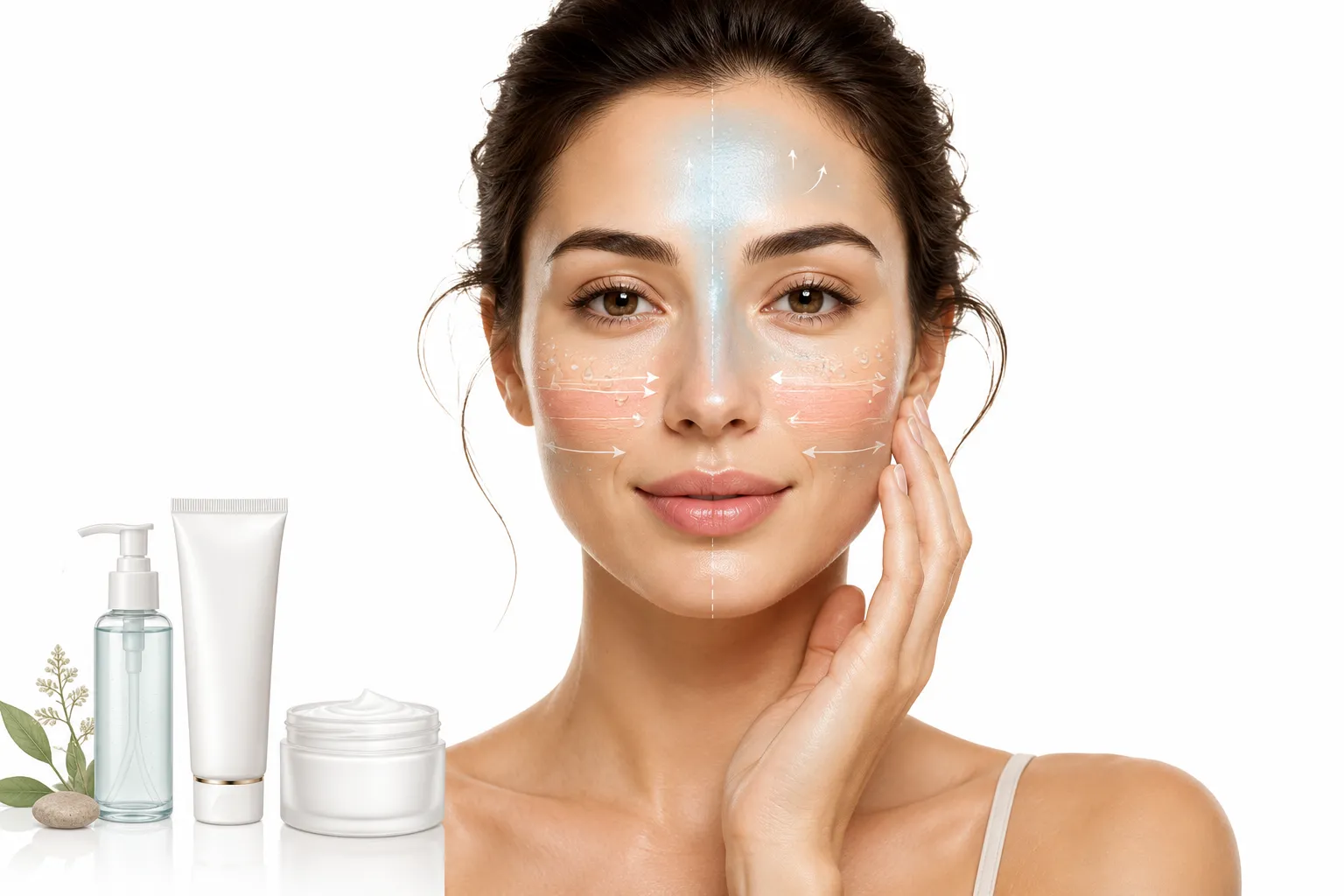
The secret to managing combination skin is not finding one perfect product - it's building the flexibility to use the right products in the right places.
Is the area oily or congested?
T-zone → Use lightweight, oil-controlling productsApply primarily to the T-zoneIs the area dry or tight?
Cheeks → Use richer, hydrating productsApply primarily to the cheeksCould the product work everywhere?
Only if it's gentle and hydrating enough for the cheeks but light enough for the T-zoneSome products can be used universally
Use this section to decide
Does this advice apply to me?
Find the concern or goal closest to yours, then use the fit signal to decide how much weight to give this guide.If your goal is
Gentle cleansingUsually relevant- Fit signal
- Often useful
Essential for both zones
If your goal is
Zone-specific moisturizersUsually relevant- Fit signal
- Often useful
Critical for balance
If your goal is
Oil control (T-zone)Depends- Fit signal
- Possible fit
Important for the T-zone
If your goal is
Barrier support (cheeks)Depends- Fit signal
- Possible fit
Important for the cheeks
If your goal is
SPFUsually relevant- Fit signal
- Often useful
Essential for all skin types
Practical use
How to use it
Cleanse gently with a pH-balanced, sulfate-free cleanser
Use lukewarm water and avoid over-scrubbing any area.
Apply zone-specific treatments
Use lightweight or mattifying products on the T-zone; richer, hydrating products on the cheeks.
Moisturize everywhere, but differently
Use light moisturizers on the T-zone and richer moisturizers on the cheeks.
Safety
Side effects and cautions
- Using the same moisturizer on the entire face
Use lightweight or gel moisturizers on the T-zone and richer formulas on the cheeks.
- Over-exfoliating the T-zone to control oil
Gentle, regular exfoliation is more effective than aggressive treatment.
- Skipping moisturizer on the T-zone because it's oily
The T-zone needs hydration too - just with lighter, non-comedogenic formulas.
Fit
Who should be careful
- Expecting a single product to solve everything
Worth noting
Small details that can change the answer
- T-zone Needs. The T-zone needs oil control and gentle exfoliation without over-drying.
- Cheeks Need. The cheeks need hydration and barrier support without heaviness.
- Cleanser Choice. A gentle, pH-balanced cleanser is essential for not over-stripping either zone.
- Routine Flexibility. The same product may be appropriate for the T-zone but too heavy for the cheeks.
Combination skin needs a zone-specific approach - what works for the T-zone may not work for the cheeks.
A gentle, pH-balanced cleanser is the foundation for both zones.
The T-zone benefits from oil control and gentle exfoliation.
The cheeks need hydration, barrier support, and gentler care.
Flexibility and seasonal adjustment are key to long-term success.
Definition
What combination skin needs in a cleanser
The right cleanser is the foundation for combination skin. It should be gentle enough not to strip the cheeks but effective enough to remove oil from the T-zone without leaving residue. Look for sulfate-free, pH-balanced formulas with mild surfactants.
Explanation
What combination skin needs in the T-zone
The T-zone benefits from ingredients that help regulate oil production, keep pores clear, and absorb excess shine without causing dryness. Salicylic acid, niacinamide, zinc, and gentle exfoliants are all helpful. The key is balance - the T-zone needs treatment, not punishment.
Explanation
What combination skin needs on the cheeks
The cheeks need hydration and barrier support. Look for moisturizers with ceramides, glycerin, hyaluronic acid, and other humectants. Richer formulas may be welcome, but they should not be so heavy that they cause congestion. The goal is to support the barrier without overwhelming it.
Questions
Frequently asked questions
Can I use the same products on my whole face?
You can, but you may get better results by using different products or amounts on different zones.
Should I exfoliate combination skin?
Yes - but use gentle exfoliation and be careful not to over-exfoliate the cheeks.
Does combination skin need a moisturizer?
Yes - every skin type needs hydration, but the formula should match the zone.
Can combination skin be managed year-round with the same routine?
Seasonal adjustment is usually helpful - more hydration in winter, lighter layers in summer.