Evidence
What the evidence shows
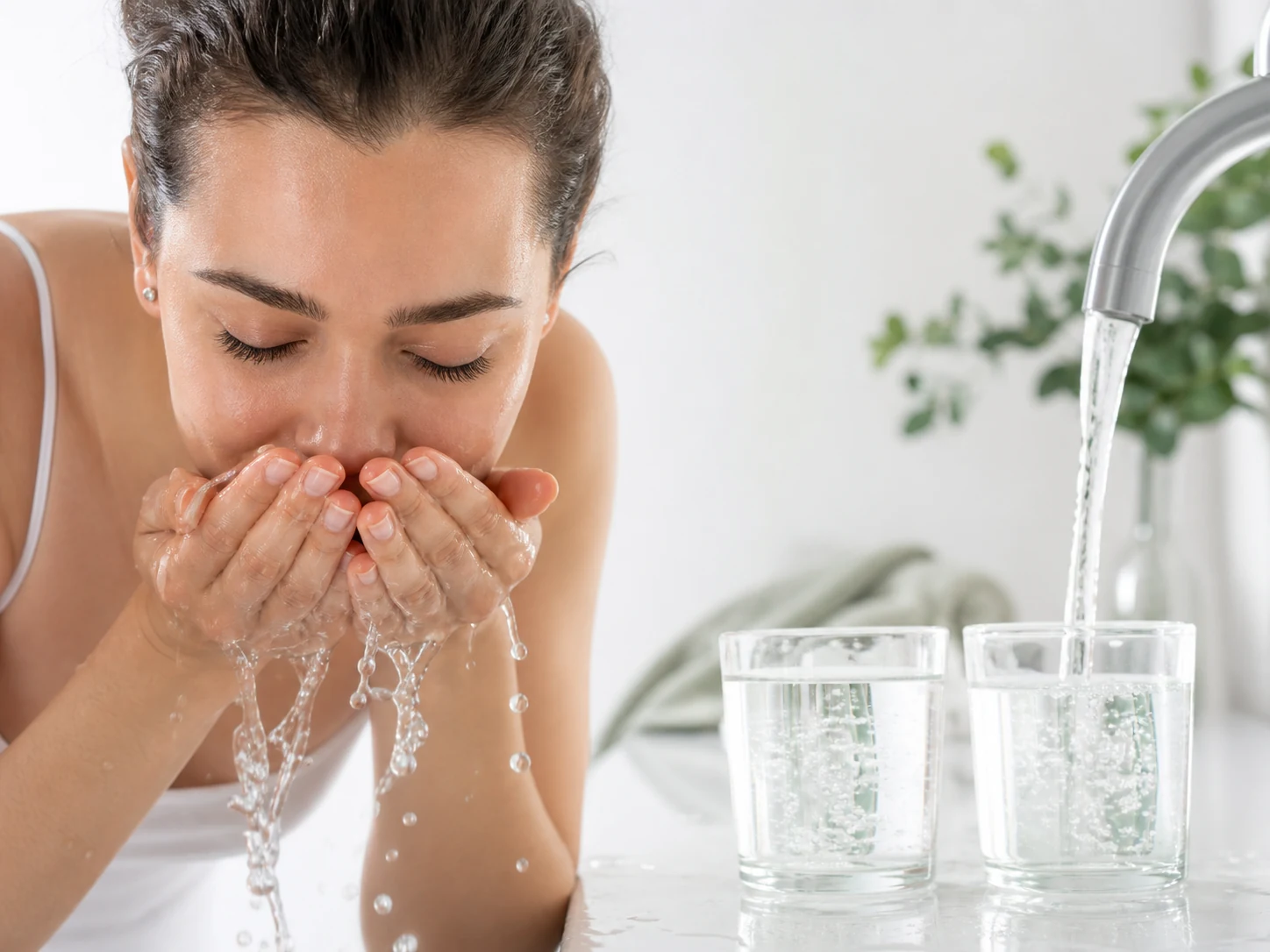
Hard water doesn't just fail to clean your skin - it actively deposits material on it, like a form of involuntary topical mineral therapy you never asked for. The effects are subtle but cumulative.
Does your skin feel tight after washing?
That's often a sign of hard water residue.Is your cleanser not foaming well?
Hard water is likely interfering with it.Does your skin seem more reactive lately?
Cumulative hard water exposure could be a factor.
Use this section to decide
Does this advice apply to me?
Find the concern or goal closest to yours, then use the fit signal to decide how much weight to give this guide.If your goal is
Direct effectDepends- Fit signal
- Possible fit
Mineral deposition
If your goal is
Barrier effectDepends- Fit signal
- Possible fit
pH rise, acid mantle loss
If your goal is
Cleansing effectDepends- Fit signal
- Possible fit
Soap scum formation
If your goal is
Chronic effectUse caution- Fit signal
- Limited evidence
Can worsen eczema
Research notes already in this guide
- Multiple studies confirm that hard water minerals can disrupt skin barrier function.
- The role of water hardness in eczema has been studied in several observational and interventional studies.
- There's agreement that the effects vary significantly by individual skin type and genetic predisposition.
- The overall evidence supports the claim that hard water affects skin, but the magnitude of effect varies.
Explanation
How it works
Contact and deposit
Hard water comes into contact with skin; calcium and magnesium ions remain on the surface after water evaporates.
Film formation
Minerals combine with soap or sebum to form a thin film that adheres to the skin.
Barrier interference
The film disrupts the acid mantle and lipid structure of the stratum corneum.
Symptom emergence
Dryness, tightness, flaking, and increased sensitivity become noticeable.
Practical use
How to use it
Switch to a non-soap cleanser
Syndets and other non-soap cleansers don't form soap scum and rinse off more completely.
Use chelating ingredients
Look for products with EDTA or phytic acid that can bind and remove mineral deposits.
Moisturize while skin is damp
Apply moisturizer immediately to damp skin to help compensate for mineral-related barrier disruption.
Safety
Side effects and cautions
- Believing hard water is the same as having dirty water
Hard water is mineral-rich, not contaminated, and is perfectly safe for washing and drinking.
- Thinking hard water damage is immediate and obvious
The effects are usually subtle and cumulative, building up over weeks and months.
- Assuming all hard water affects skin the same way
Effect varies by the exact mineral composition, water hardness level, and your skin type.
Fit
Who should be careful
- If you don't experience any skin issues from your water, these effects may be minimal
Worth noting
Small details that can change the answer
- Mineral Deposition. Hard water deposits calcium and magnesium ions directly onto your skin during and after washing.
- pH Change. This can raise your skin's pH from its healthy acidic state to a more alkaline level.
- Barrier Disruption. The disruption of the acid mantle leads to increased water loss and vulnerability to irritants.
- Cleanser Inefficacy. Hard water prevents cleansers from working properly by binding to their surfactants.
Hard water deposits calcium and magnesium minerals on your skin during washing.
This residue raises skin pH, disrupts the acid mantle, and weakens the skin barrier.
Hard water also forms soap scum that can trap debris and bacteria on the skin.
The effects are often subtle and cumulative rather than immediate and dramatic.
Proper product choices can significantly reduce the impact of hard water on your skin.
Benefits
Wait - is there anything good about hard water?
Hard water isn't all bad. The minerals it contains, particularly calcium and magnesium, are essential nutrients, and drinking hard water can contribute to your daily intake. The mineral content also gives hard water a distinct taste that some prefer. For skin, the story is less positive - but it's worth noting that the problems are manageable and the water itself isn't harmful.
- Mineral content is beneficial when consumed orally
- Hard water is not dangerous or toxic in any way
- The effects are manageable with the right skincare approach
Risks
The cumulative effect of hard water exposure
Single exposures to hard water are generally not a major issue. The concern is more about cumulative, daily exposure over months or years.
- Gradual accumulation of mineral residues on the skin
- Progressive weakening of the skin barrier function
- Potential worsening of chronic conditions like eczema
- Interference with the efficacy of active skincare ingredients
Science
What the research shows about hard water and skin
Scientific studies on hard water and skin have focused on several key areas. The ionic composition of wash water has been shown to affect skin barrier function, with calcium and magnesium ions reducing barrier recovery after irritation. Studies have also demonstrated that hard water can increase skin pH and alter the composition of skin surface lipids, making the skin more susceptible to irritants.
- Stratum Corneum
- The outermost layer of skin, composed of dead cells and lipids that form the primary barrier.
- Skin Surface pH
- The acidity or alkalinity of the skin's surface, normally around 4.5-5.5.
Questions
Frequently asked questions
Can hard water strip your skin?
Indirectly - by disrupting the barrier, hard water increases water loss, which can leave skin feeling stripped and dry.
Does hard water age your skin?
There's no direct evidence that hard water causes premature aging, but chronic barrier disruption can contribute to visible skin dryness and roughness.
Is hard water the same for everyone?
No - water hardness varies by location, and individual skin sensitivity determines how much the effects are noticed.
Can hard water make my skin itchy?
Yes - the disruption to the skin barrier can increase sensitivity and lead to itchiness, especially in people with dry or sensitive skin.
References
Sources
The notes below are drawn from the evidence already cited in this guide. They are not a complete bibliography.
- Multiple studies confirm that hard water minerals can disrupt skin barrier function.
- The role of water hardness in eczema has been studied in several observational and interventional studies.
- There's agreement that the effects vary significantly by individual skin type and genetic predisposition.
- The overall evidence supports the claim that hard water affects skin, but the magnitude of effect varies.