Evidence
What the evidence shows
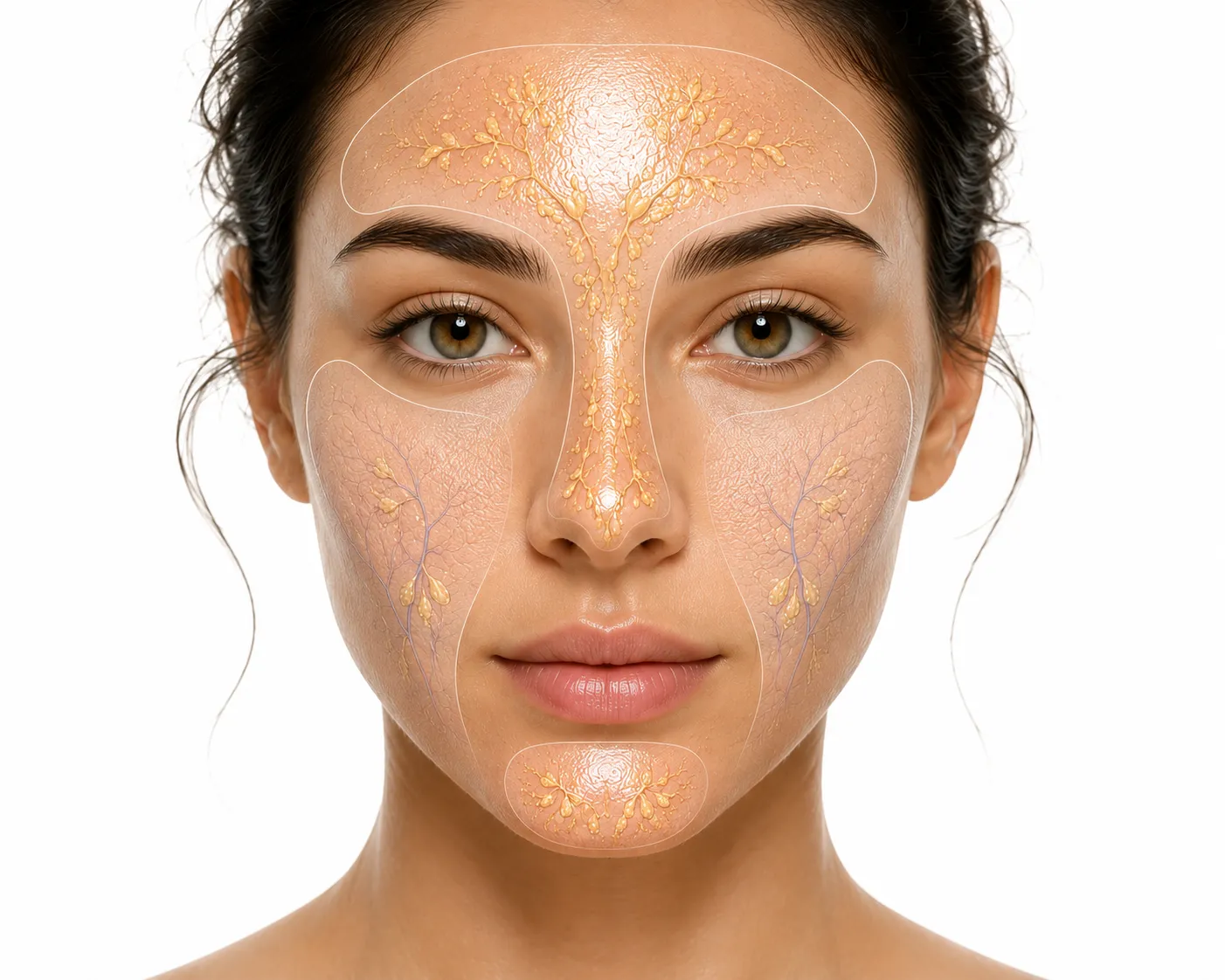
The difference between oily and dry areas isn't about the skin itself - it's about the number of oil glands in that area. The T-zone simply has more oil-producing equipment than the cheeks. This is why you can have both oily and dry skin on the same face without anything being "wrong."
Use this section to decide
Does this advice apply to me?
Find the concern or goal closest to yours, then use the fit signal to decide how much weight to give this guide.If your goal is
Primary causeUse caution- Fit signal
- Limited evidence
Uneven oil gland distribution
If your goal is
T-zoneUse caution- Fit signal
- Limited evidence
More glands, more oil
If your goal is
CheeksUse caution- Fit signal
- Limited evidence
Fewer glands, drier
If your goal is
Key takeawayUsually relevant- Fit signal
- Often useful
It's normal
Research notes already in this guide
- Sebaceous gland distribution varies across the face.
- Genetics plays a significant role in determining skin type.
- Hormones and aging affect oil production levels.
Explanation
How it works
T-zone
Forehead, nose, and chin have more oil glands.
Cheeks
Fewer oil glands - less oil production.
Genetics
Determines this distribution from birth.
Result
Oily T-zone, dry or normal cheeks.
Practical use
How to use it
Treat different areas differently
Use lighter products on the T-zone and richer, more hydrating products on the cheeks.
Choose balanced skincare
Look for products that are hydrating but not greasy - gel or water-based moisturizers are good.
Work with your skin, not against it
Combination skin is normal - the goal is management, not transformation.
Safety
Side effects and cautions
- Treating the whole face as oily
The cheeks need different care than the T-zone - don't use the same products on both areas.
- Treating the whole face as dry
The T-zone needs oil control, not heavy creams.
- Trying to "fix" combination skin
It's not a flaw - it's the natural arrangement of your face. Manage it rather than trying to change it.
Fit
Who should be careful
- Those looking for a quick fix for a normal skin type
Helpful context
What else is worth knowing
The combination skin map
More oil glands - can be oily
Fewer oil glands - can be dry or normal
Thin skin, can be sensitive
Can be affected by hormones
Worth noting
Small details that can change the answer
- Oil glands. The T-zone has more sebaceous glands than the cheeks.
- Genetics. Determines oil gland distribution.
- Hormones. Affect oil production levels.
- Common. Combination skin is one of the most common skin types.
Combination skin happens because of uneven oil gland distribution.
The T-zone has more oil glands; the cheeks have fewer.
Genetics, hormones, and aging all influence this balance.
Combination skin is one of the most common skin types.
The goal is management, not "fixing" what's normal.
Definition
The anatomy of combination skin
Why different areas behave differently.
The face has different densities of sebaceous glands in different areas. The T-zone (forehead, nose, chin) has the highest concentration - up to 10 times more than the cheeks in some people. This means the T-zone naturally produces more oil. The cheeks have fewer glands, so they produce less oil and can become dry. This uneven distribution is determined by genetics and is entirely normal.
Why combination skin develops
- Genetics - the primary factor that determines oil gland distribution
- Hormones - androgens stimulate oil production, affecting T-zone oiliness
- Aging - oil production naturally decreases with age, which can make dry areas drier
- Environment - climate and weather can affect the balance between oily and dry areas
- Skincare habits - harsh products can disrupt the barrier in dry areas while over-cleansing can affect the T-zone
Signs you have combination skin
- Oily T-zone (forehead, nose, chin) that can look shiny by midday
- Dry or normal cheeks that may feel tight or flaky
- Enlarged pores in the T-zone
- Occasional breakouts in the T-zone
- Rough or flaky texture on the cheeks
- Different product performance in different areas
Questions
Frequently asked questions
Is combination skin genetic?
Yes, genetics is the primary factor determining oil gland distribution.
Can combination skin change over time?
Yes, hormones and aging affect oil production levels.
Is combination skin normal?
Yes, it's one of the most common skin types.
Can skincare cause combination skin?
Harsh products can affect the balance, but the underlying distribution is genetic.
References
Sources
The notes below are drawn from the evidence already cited in this guide. They are not a complete bibliography.
- Sebaceous gland distribution varies across the face.
- Genetics plays a significant role in determining skin type.
- Hormones and aging affect oil production levels.