Evidence
What the evidence shows
Melasma onset in pregnancy follows hormone levels, not a fixed calendar date. When estrogen and progesterone reach a critical threshold for your individual melanocyte sensitivity, the pigmentation appears - for most, that's the second trimester, but there's wide variation.
Use this section to decide
Does this advice apply to me?
Find the concern or goal closest to yours, then use the fit signal to decide how much weight to give this guide.If your goal is
Most common onsetUsually relevant- Fit signal
- Often useful
Second trimester
If your goal is
Earliest possibleUse caution- Fit signal
- Limited evidence
First trimester
If your goal is
Latest possibleUse caution- Fit signal
- Limited evidence
Third trimester
If your goal is
Key triggerDepends- Fit signal
- Possible fit
Hormones + UV exposure
Explanation
How it works
Hormones rise
Estrogen and progesterone increase dramatically, particularly in the second trimester.
Melanocytes activate
Hormones bind to receptors on melanocytes, increasing melanin production.
UV exposure amplifies
Sunlight stimulates melanocytes further, dramatically accelerating pigmentation changes.
Pigment appears
The excess melanin becomes visible, creating the characteristic patches of melasma.
Expected results
Results and timeframe
Melasma most commonly starts in the second trimester, around 18 to 22 weeks of pregnancy.
Practical use
How to use it
Start sun protection early
Sun protection should begin in the first trimester, even before melasma appears.
Track your pigment changes
Keep an eye on when pigmentation develops; this helps dermatologists understand your specific pattern.
Discuss treatment options with your doctor
Pregnancy-safe treatments may include topical vitamin C or azelaic acid - ask your obstetrician or dermatologist.
Safety
Side effects and cautions
- Expecting melasma to appear immediately when pregnancy begins
Melasma typically takes until the second trimester to appear because hormone levels need to reach a threshold.
- Assuming your melasma will resolve right after delivery
Melasma often fades after birth but can persist for months or even years.
- Thinking timing is the same for everyone
Melasma onset varies widely - some women never get it, others get it early, and some get it late.
Fit
Who should be careful
- Expecting a fixed, universal timeline
Helpful context
What else is worth knowing
What's your pregnancy skin scenario?
When you might expect melasma based on your pregnancy experience.
You may develop melasma in the second trimester, or you might escape it entirely — either is normal.
Previous melasma in pregnancyIt's likely to recur in subsequent pregnancies, often at a similar stage.
High UV exposure during pregnancyMelasma may appear earlier and be more pronounced; rigorous sun protection is essential.
Worth noting
Small details that can change the answer
- Second Trimester Peak. Melasma most commonly appears in the second trimester when pregnancy hormones reach a critical threshold.
- Hormonal Lag. The delay between hormonal changes and visible melasma reflects how long it takes for melanocytes to respond and produce noticeable pigmentation.
- UV Amplification. Sun exposure in early pregnancy can cause melasma to appear earlier than it otherwise would.
- Individual Variation. Melasma timing varies widely, from the first trimester to the postpartum period.
Hormone levels, not a fixed calendar date, determine when melasma appears.
Some women develop melasma in the first trimester, and some in the third - both are normal.
UV exposure can cause melasma to appear earlier than it otherwise would.
Melasma typically resolves after delivery but can persist in some women.
Definition
What is pregnancy melasma?
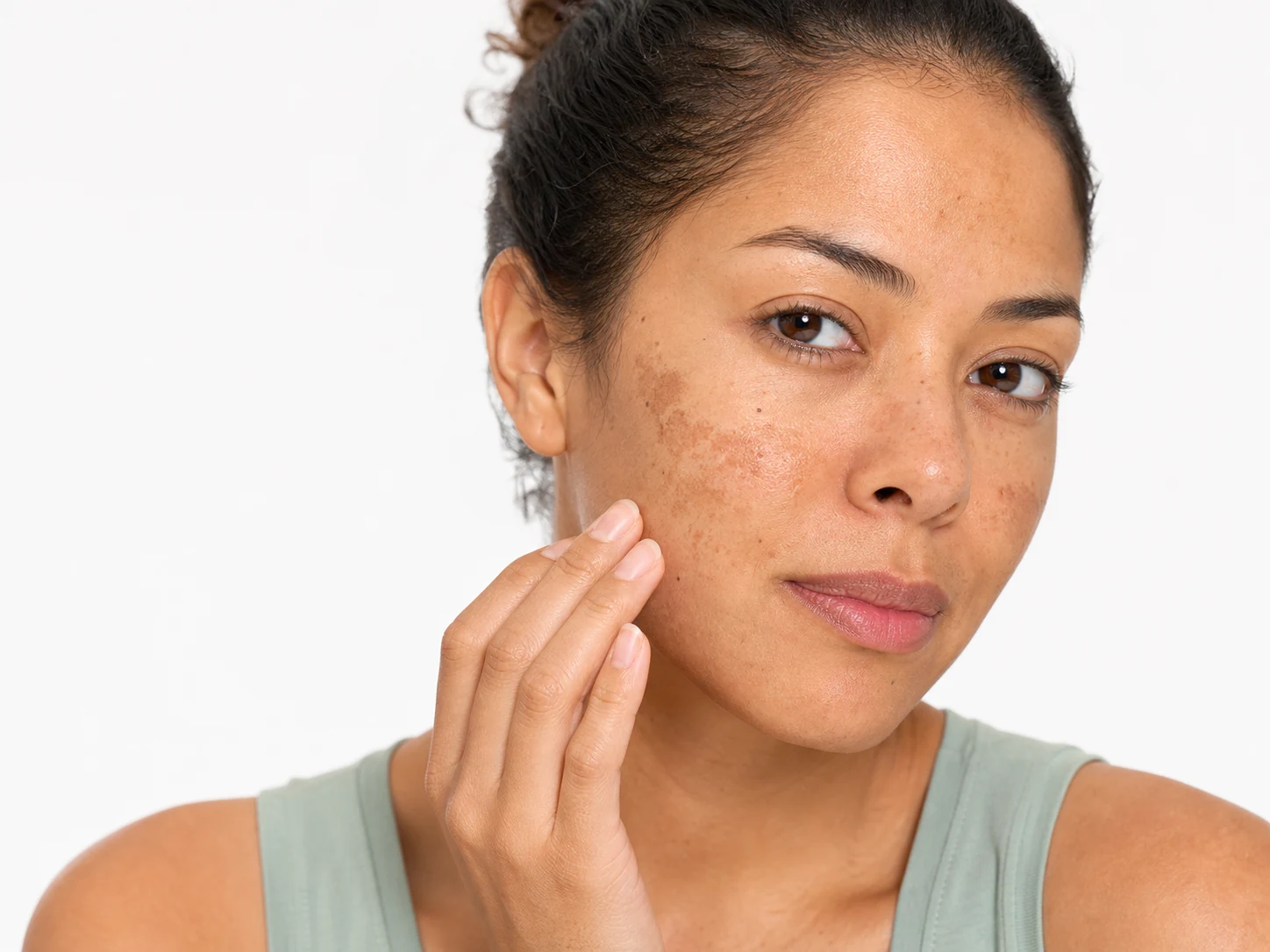
Pregnancy melasma, often called chloasma or the mask of pregnancy, is a specific type of melasma that develops during pregnancy. It's triggered by the hormonal changes of pregnancy and typically appears as symmetrical patches of hyperpigmentation on sun-exposed areas of the face. It's a benign condition that resolves after delivery in many women, though it can persist or recur in subsequent pregnancies.
- Symmetrical pigmentation on cheeks, forehead, nose, and chin
- Triggered by pregnancy hormones and UV exposure
- Affects 15-50% of pregnant women
- Usually resolves postpartum, but can be persistent
Explanation
Why the second trimester?
The second trimester is the sweet spot for melasma onset because of how pregnancy hormones behave. Estrogen and progesterone both rise through the first trimester, but progesterone continues rising after estrogen peaks. By the second trimester, both hormones are at levels that can trigger melanocyte activity. The condition also requires a certain level of melanocyte sensitivity that varies between individuals, which accounts for why some women develop melasma earlier or later - or not at all.
Science
The hormones behind pregnancy melasma
Estrogen and progesterone both contribute to pregnancy melasma, but they affect melanocytes differently. Estrogen increases melanocyte activity and can also affect how melanin is distributed. Progesterone appears to stimulate melanocyte size and melanin production more directly. Both hormones also likely affect other skin cells, such as keratinocytes, which communicate with melanocytes. The relative importance of each hormone varies between individuals and may explain why some women develop melasma earlier or later in pregnancy.
- Chloasma
- The term sometimes used for melasma during pregnancy, emphasizing its hormonal trigger.
- Melanocyte stimulating hormone
- A hormone that can increase melanin production and is influenced by pregnancy hormones.
- Melanin
- The pigment in skin that protects against UV radiation and determines skin color.
Questions
Frequently asked questions
Can melasma start in the first trimester?
Yes, though it's less common. Some women develop melasma very early in pregnancy if hormone levels rise quickly or if there's significant UV exposure.
Does melasma always start in the second trimester?
No, it's most common but not universal. Melasma can start at any time during pregnancy or even not at all.
If I didn't get melasma in my first pregnancy, will I in my second?
Not necessarily. The pregnancy environment can vary significantly, and melasma is influenced by multiple factors, including sun exposure and individual sensitivity, which can change.
Does melasma always go away after pregnancy?
No. While many women see significant improvement or complete resolution postpartum, some women experience persistent melasma.