Evidence
What the evidence shows
The best toner for oily skin doesn't dry it out - it hydrates it. Hydrated skin produces less oil, making toner a powerful tool for oil control.
Use this section to decide
Does this advice apply to me?
Find the concern or goal closest to yours, then use the fit signal to decide how much weight to give this guide.If your goal is
Best typeUsually relevant- Fit signal
- Often useful
Hydrating, alcohol-free
If your goal is
Key benefitUse caution- Fit signal
- Limited evidence
Balances pH and hydrates
If your goal is
AvoidUse caution- Fit signal
- Limited evidence
Alcohol, witch hazel, astringents
If your goal is
ApplicationUse caution- Fit signal
- Limited evidence
Hands, gently patting in
Explanation
How it works
The path toner takes to help oily skin.
Removes residual oil
Clears what cleansing left behind.
Hydrates the skin
Delivers water-based hydration.
Restores pH balance
Resets the acid mantle after cleansing.
Prepares for hydration
Serums and moisturizers absorb better.
Practical use
How to use it
Choose a hydrating, alcohol-free toner
Look for ingredients like glycerin, hyaluronic acid, or panthenol.
Apply with clean hands
Pour a small amount into your palm and gently pat it into the skin.
Follow with a moisturizer
Apply a lightweight moisturizer to lock in the hydration from the toner.
Safety
Side effects and cautions
- Using an astringent, alcohol-based toner
Choose a hydrating, alcohol-free toner instead.
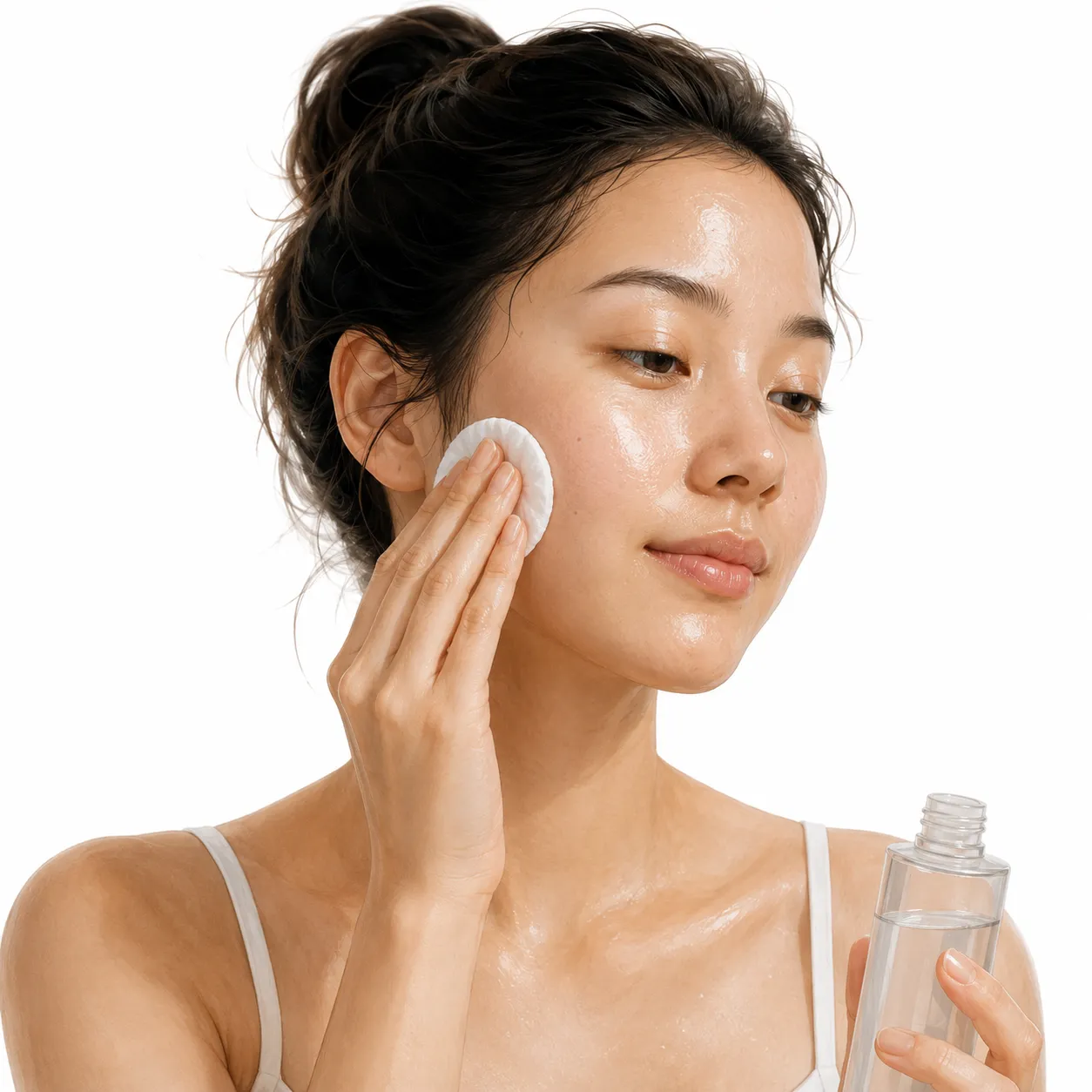
- Applying toner with a cotton pad
Apply with clean hands to reduce waste and friction.
- Skipping moisturizer after toner
Toner hydrates, but you need a moisturizer to lock that hydration in.
Fit
Who should be careful
- Those with very dry skin who need richer formulations
Worth noting
Small details that can change the answer
- pH Balance. Cleansers can temporarily raise the skin's pH; toner helps restore the natural acid mantle.
- Hydration Boost. A hydrating toner can increase skin hydration levels by up to 50% instantly.
- Residual Removal. Toners can remove up to 20% of residual oil and dirt left after cleansing.
- Layering Benefit. Applying multiple layers of a hydrating toner can be as effective as using a thick moisturizer.
The right toner hydrates oily skin and balances pH without stripping it.
Apply toner with your hands, not a cotton pad, to avoid waste and friction.
Alcohol-free, hydrating toners are best for oily skin.
Toner prepares the skin for better absorption of serums and moisturizers.
Skipping moisturizer after toner defeats the purpose of hydration.
Definition
What is a toner?
A toner is a water-based liquid product applied after cleansing. Modern toners are hydrating and soothing, used to restore the skin's pH, deliver hydration, and prepare the skin for subsequent products. For oily skin, a toner should be alcohol-free, fragrance-free, and formulated with soothing humectants.
- Has a water-like or slightly viscous texture
- Applied after cleansing, before serums and moisturizers
- Can be applied with a cotton pad or the hands
- For oily skin, hydrating toners are best
Science
Why toner matters for oily skin
Toner matters for oily skin because it can reset the skin's pH after cleansing. Many cleansers, even gentle ones, can temporarily raise the skin's pH. A toner with a slightly acidic pH helps restore the acid mantle, which is crucial for barrier function. A compromised barrier can trigger reactive seborrhea - the overproduction of oil in response to dehydration.
- Acid Mantle
- A thin, acidic film on the skin's surface made of sebum and sweat that acts as a natural barrier to bacteria and irritants.
- Reactive Seborrhea
- A condition where the skin produces excess sebum in response to dehydration or barrier disruption.
Benefits
What toner does for oily skin
A well-chosen toner offers several benefits for oily skin that go beyond the basics.
- Removes residual oil and dirt after cleansing
- Hydrates the skin without adding oil
- Restores the skin's natural pH
- Prepares the skin for better absorption of serums and moisturizers
- Can be layered for intensive hydration without irritation
Avoid
Toner ingredients to avoid for oily skin
Strips the barrier and triggers compensatory oil production.
Astringent and can be irritating.
Can cause irritation and inflammation.
Can be too drying when used in a toner format; better in a serum or spot treatment.
Questions
Frequently asked questions
Can toner help reduce the appearance of pores?
Hydrating toners can make pores look less visible by plumping the skin around them.
Is a hydrating toner better than an astringent for oily skin?
Yes, hydrating toners support the barrier and prevent compensatory oil production.
How often should I use toner?
Twice daily, morning and evening, after cleansing and before moisturizing.
Can I use a toner with niacinamide?
Yes, niacinamide is a great ingredient for oily skin that supports the barrier.