Evidence
What the evidence shows
How well-established are the causes?
Surfactants and barrier damage
Well-documented mechanismClimate impacts on TEWL
Consistent researchBarrier repair timeline
Clinically observed
Use this section to decide
Does this advice apply to me?
Find the concern or goal closest to yours, then use the fit signal to decide how much weight to give this guide.If your goal is
Main causeDepends- Fit signal
- Possible fit
Lipid depletion
If your goal is
Key triggersDepends- Fit signal
- Possible fit
Cleansing, climate, exfoliation
If your goal is
SignsDepends- Fit signal
- Possible fit
Tightness, sensitivity, redness
If your goal is
RecoveryUse caution- Fit signal
- Limited evidence
2-4 weeks
Expected results
Results and timeframe
Barrier damage leads to dryness, sensitivity, and visible irritation.
Recovery takes consistent, gentle care over 2-4 weeks.
Practical use
How to use it
Switch to a gentle, non-stripping cleanser
Look for formulas with ceramides or other barrier-supporting ingredients.
Apply barrier-repair moisturizers
Choose products with ceramides, cholesterol, and fatty acids.
Protect against environmental stressors
Use SPF daily and consider a humidifier in dry conditions.
Safety
Side effects and cautions
- Using harsh, foaming cleansers that strip lipids
Choose gentle, pH-balanced cleansers without sulfates.
- Exfoliating daily or with overly aggressive methods
Exfoliate 1-2 times per week and be gentle.
- Skipping moisturizer after cleansing
Apply moisturizer while skin is still damp to lock in hydration.
- Tightness and dryness
Common · Switch to gentle cleansers and barrier-repair moisturizers
- Redness and irritation
Common · Avoid active ingredients until barrier recovers
- Increased sensitivity
Common · Simplify routine and prioritize hydration
Fit
Who should be careful
- Expecting quick fixes
Worth noting
Small details that can change the answer
- Lipid Matrix. The barrier is made of about 50% ceramides, 25% cholesterol, and 25% fatty acids.
- TEWL. Barrier damage increases trans-epidermal water loss, making skin feel tight and dry.
- pH Sensitivity. The barrier works best at a pH of around 5.5; high pH cleansers can damage it.
- Recovery Cycle. Barrier repair takes 2-4 weeks of consistent, gentle care.
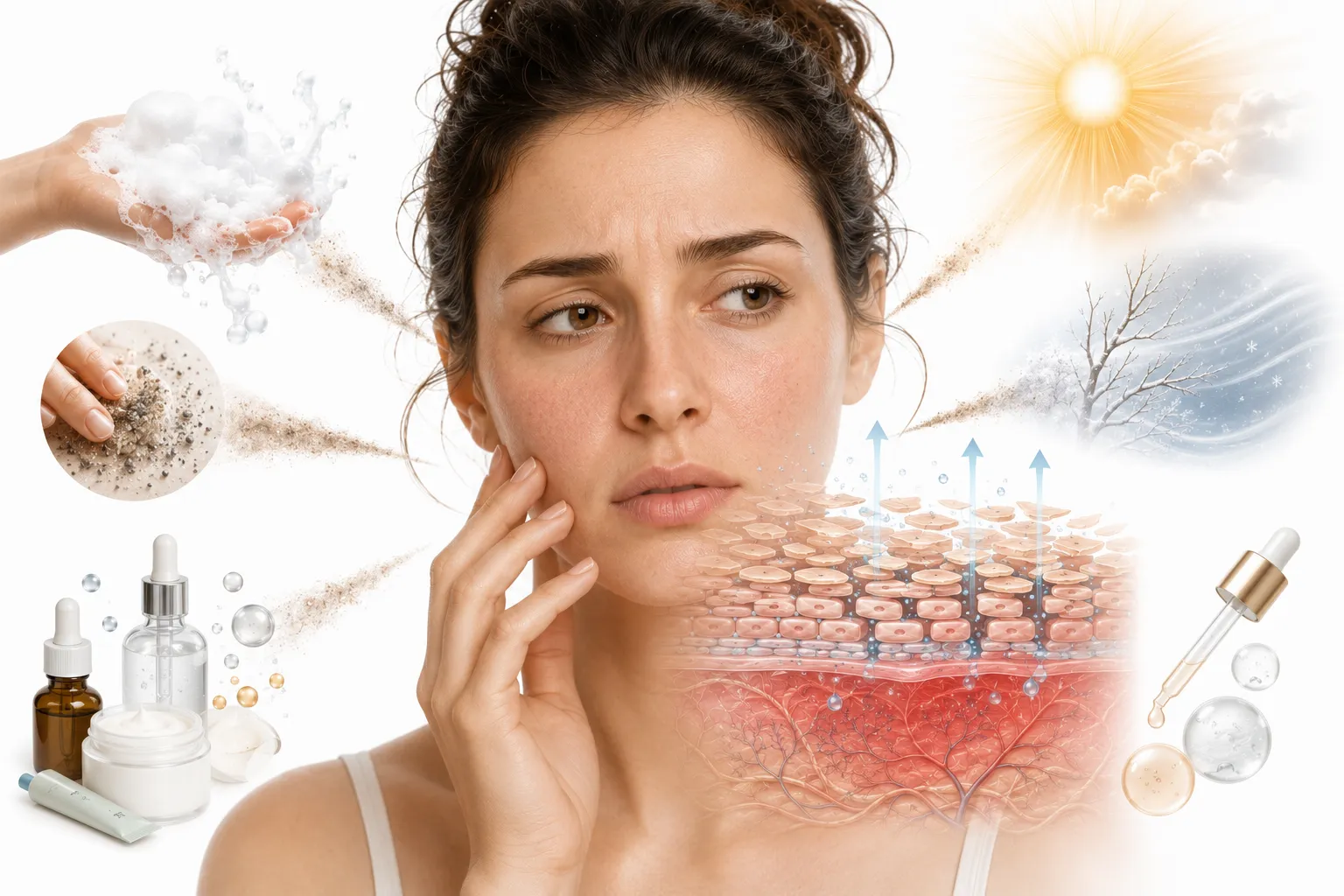
The skin barrier is a lipid matrix that holds skin cells together.
Damage occurs when the lipid matrix is depleted or disrupted.
Over-cleansing, over-exfoliation, and climate are the top causes.
Definition
What is the skin barrier?
The skin barrier, or stratum corneum, is the outermost layer of the skin. It's composed of dead skin cells (corneocytes) embedded in a lipid matrix of ceramides, cholesterol, and fatty acids. This structure is the skin's first line of defense against environmental threats and is responsible for retaining hydration.
Explanation
The top causes of barrier damage
Barrier damage typically results from multiple overlapping factors. Over-cleansing with harsh surfactants strips the lipid matrix. Over-exfoliation physically removes the corneocytes faster than they can be replaced. Environmental factors like low humidity, wind, and UV radiation accelerate lipid depletion. Stress and poor sleep can also impair barrier repair.
Science
How lipids are depleted
The lipid matrix is constantly being broken down and replenished. When the rate of breakdown exceeds the rate of replenishment, the barrier becomes compromised. This can happen through direct dissolution by surfactants, through mechanical removal by exfoliation, or through enzymatic breakdown triggered by environmental factors.
- Surfactant
- A substance that reduces surface tension, used in cleansers but can dissolve lipids.
- Corneocyte
- The dead skin cells that form the "bricks" of the barrier.
Risks
What happens when the barrier is damaged
A compromised barrier leads to a cascade of problems that compound over time.
- Increased moisture loss and chronic dehydration
- Greater susceptibility to irritants and allergens
- Visible redness and inflammation
- Accelerated appearance of fine lines and wrinkles
Questions
Frequently asked questions
Can barrier damage cause acne?
It can - a compromised barrier allows bacteria to penetrate more easily, potentially triggering breakouts.
Is barrier damage permanent?
Rarely. With proper care, the barrier can recover within weeks.
Can you over-moisturize while repairing the barrier?
It's possible to clog pores, but barrier repair requires ample hydration.
How do I know my barrier is healing?
Gradual improvement in tightness, sensitivity, and overall comfort.