Evidence
What the evidence shows
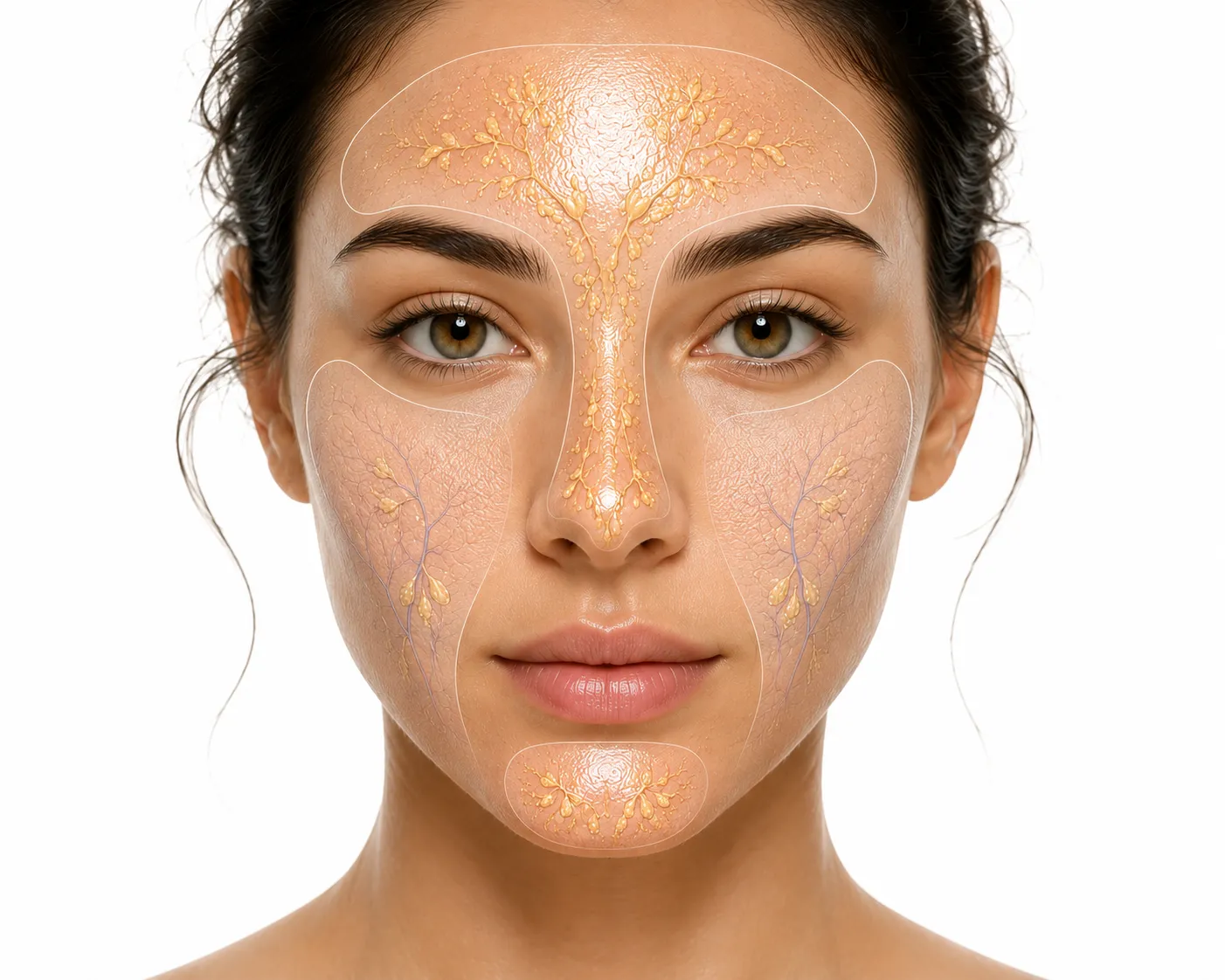
Combination skin is not two competing skin types fighting it out; it is one consistent biological pattern, oil gland density, mapped unevenly across the face from birth.
Use this section to decide
Does this advice apply to me?
Find the concern or goal closest to yours, then use the fit signal to decide how much weight to give this guide.If your goal is
Main driverUse caution- Fit signal
- Limited evidence
Uneven gland density
If your goal is
Oily zoneDepends- Fit signal
- Possible fit
T-zone
If your goal is
Drier zoneUse caution- Fit signal
- Limited evidence
Cheeks, jawline
If your goal is
Best approachUsually relevant- Fit signal
- Often useful
Zone-specific products
Explanation
How it works
The path from uneven gland distribution to the classic combination skin look.
Glands are unevenly distributed
The T-zone has more sebaceous glands than the cheeks and jawline from the start.
Oil production follows gland density
More glands in an area means more sebum reaching the surface there.
T-zone shows shine sooner
Higher oil output makes the forehead, nose, and chin look shinier by midday.
Cheeks stay comparatively drier
Fewer glands mean less natural oil, so cheeks can feel tighter or flakier by comparison.
Practical use
How to use it
Map your own zones
Note where shine and dryness typically show up across the day.
Use targeted moisturizers
Apply a lighter formula on the T-zone and a richer one on the cheeks.
Reassess seasonally
Adjust product weight as the contrast between zones shifts with weather and humidity.
Safety
Side effects and cautions
- Treating the whole face as one uniform skin type
Tailor products to the T-zone and cheeks separately
- Assuming combination skin will eventually "even out" on its own
Recognize it as a structural pattern that generally persists and plan a routine around it
- Over-drying the T-zone to compensate for cheek dryness elsewhere
Use zone-specific products rather than a single harsh formula everywhere
Fit
Who should be careful
- Cases with widespread irritation or breakouts, which may need a dermatologist's input
Worth noting
Small details that can change the answer
- Uneven Gland Map. Sebaceous gland density varies significantly across different regions of the face.
- T-Zone Density. The forehead, nose, and chin consistently have more oil glands than the cheeks.
- Lifelong Pattern. Combination skin's zone pattern is generally consistent throughout a person's life.
- Product Sensitivity. Using one product formula across the whole face often exaggerates the contrast between zones.
Combination skin happens because sebaceous gland density varies across the face.
The T-zone has more oil glands and tends to run oilier than the cheeks and jawline.
This zone pattern is a structural feature of facial skin, not a temporary imbalance.
Genetics largely set the pattern, though habits and climate can exaggerate or soften it.
Zone-specific product use, rather than one formula for the whole face, manages combination skin most effectively.
Explanation
Why the face isn't uniform
Facial skin develops with regional differences in gland density built in from early development. The T-zone's higher concentration of sebaceous glands is a structural feature of the skin, not a temporary condition, which is why it consistently produces more oil regardless of the season or routine.
Skin Type Suitability
How combination skin typically presents
Classic pattern: oily T-zone, normal to dry cheeks
May overlap if oiliness extends beyond the T-zone
May overlap if cheeks are notably drier than average
Dos Donts
What actually works for combination skin
Do
Matches product to the actual needs of each zone
Avoids over-drying the cheeks while still managing T-zone oil
Avoid
Can worsen T-zone shine while barely helping drier areas
Can dry out the cheeks further while triggering rebound oil in the T-zone
Beginner Guide
Building a routine around the zones
- 1Week 1 · Daily
Use a gentle, balanced cleanser across the whole face to establish a baseline.
- 2Week 2 · Daily
Introduce a lightweight, oil-free moisturizer for the T-zone only.
- 3Week 3 · Daily
Layer a richer moisturizer on the cheeks and jawline as needed.
Questions
Frequently asked questions
Does combination skin change with the seasons?
Yes, the contrast between the T-zone and cheeks often becomes more noticeable in humid summers and less so in dry winters.
Can combination skin turn into oily or dry skin over time?
The underlying gland pattern tends to stay fairly consistent, though hormonal changes and aging can shift the balance somewhat.
Do I need two different moisturizers?
Many people with combination skin benefit from applying a lighter formula on the T-zone and a richer one on the cheeks.
Is combination skin more prone to breakouts?
The oilier T-zone can be more prone to clogged pores, while the drier cheeks are generally less affected.