Evidence
What the evidence shows
Scratching dry, itchy skin feels relieving in the moment but actually damages the barrier further, which is why the itch-scratch cycle tends to make dryness and irritation worse rather than better over time.
Use this section to decide
Does this advice apply to me?
Find the concern or goal closest to yours, then use the fit signal to decide how much weight to give this guide.If your goal is
Main driverDepends- Fit signal
- Possible fit
Weakened barrier
If your goal is
MechanismUse caution- Fit signal
- Limited evidence
Exposed nerve fibers
If your goal is
Trap to avoidUse caution- Fit signal
- Limited evidence
Itch-scratch cycle
If your goal is
Best fixUsually relevant- Fit signal
- Often useful
Barrier-repair moisturizer
Explanation
How it works
Barrier weakens
Reduced oil and moisture cause the outer skin layer to develop gaps.
Irritants reach nerve fibers
Environmental triggers and friction penetrate closer to nerve endings than normal.
Nerves signal itch
Stimulated nerve fibers send an itch signal to the brain.
Scratching causes further damage
The scratch response temporarily interrupts itch but weakens the barrier more.
Practical use
How to use it
Moisturize consistently
Apply a fragrance-free, barrier-repairing moisturizer at least twice daily.
Interrupt the urge to scratch
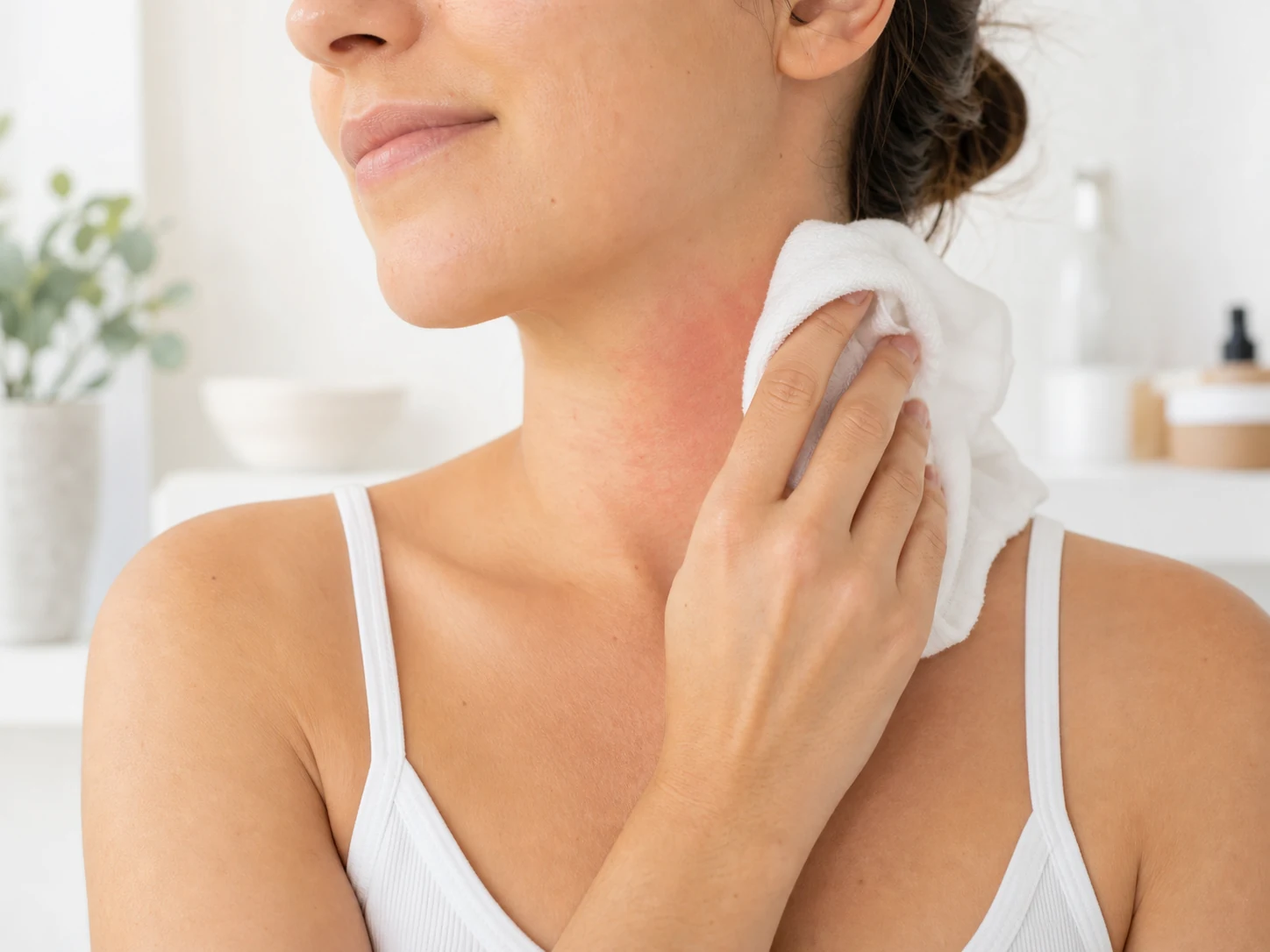
Use a cool compress or gentle pressure instead when itching flares.
See a doctor if it persists
Get an evaluation if itching is severe, widespread, or not improving with barrier care.
Safety
Side effects and cautions
- Scratching to get temporary relief
Use a cool compress or gentle patting instead to avoid further barrier damage
- Assuming itch will resolve without addressing the barrier
Focus on barrier-repairing moisturizer as the core fix, not just symptom relief
- Continuing hot showers despite worsening itch
Switch to lukewarm water to avoid stripping protective oils
- Itching that disrupts sleep
Occasional · See a doctor for evaluation
- Recurring itchy patches in the same spots
Common in eczema · Ask about an eczema diagnosis
Fit
Who should be careful
- Severe or persistent itching unresponsive to moisturizer, which needs medical evaluation
Worth noting
Small details that can change the answer
- Nerve Proximity. Itch-sensing nerve fibers sit close to the skin's surface, just beneath the barrier.
- Barrier Gaps. A dry, compromised barrier develops microscopic gaps that expose these nerves.
- Inflammatory Trigger. Certain inflammatory chemicals released in dry skin can directly stimulate itch-sensing nerves.
- Scratch Damage. Scratching further damages the barrier, reinforcing the itch-scratch cycle.
Dry skin itches because a weakened barrier exposes nerve fibers to irritants more easily.
Inflammation in dry skin can directly stimulate itch-sensing nerves, intensifying the sensation.
Scratching offers only brief relief while further damaging the barrier and worsening the cycle.
Barrier-repairing moisturizer addresses the root cause rather than just the symptom.
Persistent or severe itching is worth a doctor's evaluation to rule out eczema or another condition.
Science
The nerve mechanism behind itch
Itch, medically termed pruritus, is transmitted by specialized nerve fibers that respond to chemical and mechanical triggers. In dry skin, a compromised barrier allows more of these triggers to reach the nerve endings, increasing both the frequency and intensity of itch sensations.
- Pruritus
- The medical term for the sensation of itch.
- Itch-scratch cycle
- A pattern where scratching relieves itch briefly but damages skin further, provoking more itching.
Risks
What intensifies the itch-scratch cycle
Certain habits and conditions make dry skin itching worse rather than better.
- Hot showers, which strip oils and can heighten itch sensitivity
- Rough or synthetic fabrics rubbing against dry skin
- Fragranced lotions or detergents that irritate an already weak barrier
- Chronic scratching, which perpetuates barrier damage
Dos Donts
What actually breaks the cycle
Do
Rebuilds the barrier and reduces nerve exposure to irritants
Provides relief without the skin damage caused by scratching
Avoid
Damages the barrier further and reinforces the itch-scratch cycle
Strips oils and often worsens itch shortly afterward
Clinical Guidance
When itching needs medical attention
- See a doctor if itching is severe, persistent, or disrupts sleep
- Ask about eczema or dermatitis if dry, itchy patches recur in the same areas
- Avoid prolonged use of over-the-counter anti-itch creams without guidance, since some can irritate skin further with extended use
Questions
Frequently asked questions
Why does itching often feel worse at night?
Natural changes in body temperature and reduced distraction at night can make itch sensations feel more pronounced.
Can moisturizer alone stop the itching?
For mild to moderate dryness, consistent barrier-repairing moisturizer often significantly reduces itch over time.
Is itchy dry skin always eczema?
Not necessarily; simple dryness can itch too, though recurring, well-defined itchy patches may point toward eczema.
Does scratching ever help long term?
No, while it interrupts itch briefly, scratching consistently worsens barrier damage and prolongs the underlying problem.