Evidence
What the evidence shows
Oily skin's aging advantage has less to do with oil itself and more to do with moisture - the constant hydration from natural sebum helps keep skin plump, protected, and structurally sound for longer.
Wrinkle delay
Consistent observationMoisture mechanism
Well understoodMagnitude of effect
Varies individually
Use this section to decide
Does this advice apply to me?
Find the concern or goal closest to yours, then use the fit signal to decide how much weight to give this guide.If your goal is
Wrinkle delayUsually relevant- Fit signal
- Often useful
Significant advantage
If your goal is
Moisture retentionUsually relevant- Fit signal
- Often useful
Built-in hydration
If your goal is
Elasticity supportDepends- Fit signal
- Possible fit
Good structural support
If your goal is
Even toneUse caution- Fit signal
- Limited evidence
Pigmentation can still occur
Research notes already in this guide
- Observational studies consistently show later wrinkle onset in oilier skin types.
- The role of sebum in maintaining skin barrier function is well established.
- Moisture levels are recognized as a factor in skin aging.
Explanation
How it works
Continuous moisture
Sebum acts as an ongoing moisturizing layer that prevents excessive dryness.
Barrier protection
The lipid-rich surface helps protect against environmental stressors.
Slower protein breakdown
Better hydration appears to slow the degradation of collagen and elastin.
Delayed wrinkle formation
Over decades, this cumulative protection leads to later visible signs of aging.
Practical use
How to use it
Use sun protection daily
UV exposure remains the primary cause of skin aging regardless of skin type.
Keep barrier protection
Support the natural lipid barrier rather than stripping it away.
Balance oil with hydration
Use lightweight, oil-free moisturizers that support barrier function.
Safety
Side effects and cautions
- Assuming oily skin doesn't need sun protection
UV damage affects all skin types regardless of oil production.
- Stripping the skin too aggressively
Over-cleansing can damage the barrier and remove natural aging protection.
- Ignoring other aging signs
Oily skin may wrinkle less but can still show age spots and sagging.
Fit
Who should be careful
- Those with dry skin who may feel frustrated - moisturizing helps
Worth noting
Small details that can change the answer
- Hydration Advantage. Natural sebum keeps the skin continuously hydrated, slowing structural protein breakdown.
- Wrinkle Delay. Oily skin typically develops visible fine lines 5-10 years later than dry skin.
- Structural Support. Oily skin often has a thicker dermis that provides better underlying support.
- Not Immune. Oily skin does eventually age - it just tends to do so more gradually.
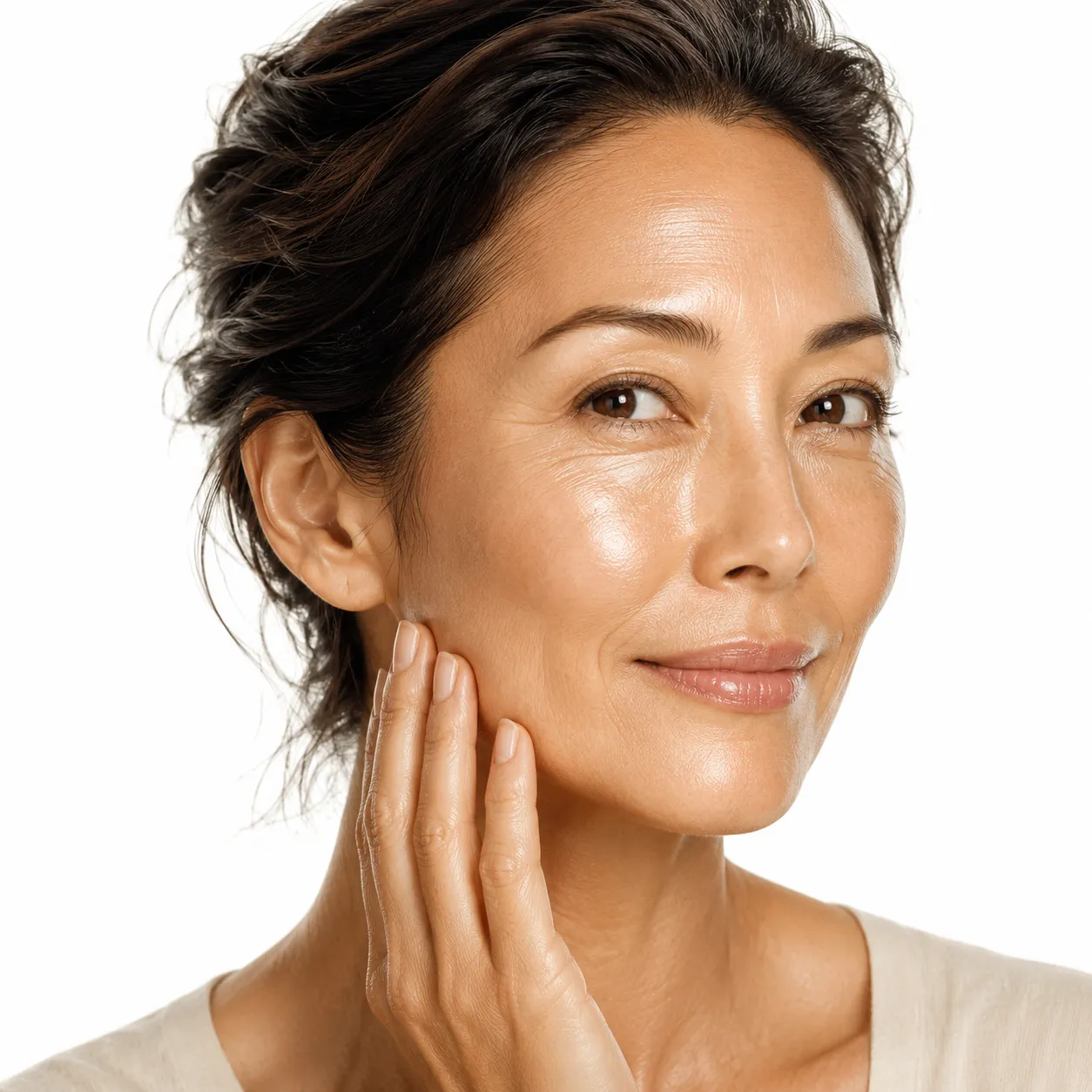
Oily skin tends to age more slowly because natural sebum provides consistent hydration and barrier support.
The delayed wrinkle onset is one of the few genuine advantages of having oilier skin.
This benefit is not immunity from aging - wrinkles do eventually appear, just later.
Sun protection is still essential regardless of skin type.
Stripping the skin of its natural oils can cancel out the aging advantage.
Science
The moisture mechanism
The visible signs of aging - fine lines, wrinkles, and sagging - largely result from the breakdown of collagen and elastin in the skin's dermis. This breakdown is accelerated by environmental factors like UV exposure and by internal factors like the gradual decline in natural moisture levels. Oily skin's continuous sebum production helps maintain the outer moisture barrier, which in turn helps protect the underlying structural proteins from the kind of drying stress that can accelerate their degradation.
- Sebum
- The natural oil produced by the skin's sebaceous glands, which helps maintain hydration and barrier function.
- Collagen
- A structural protein in the skin that provides firmness and support.
Questions
Frequently asked questions
Does oily skin really age better than dry skin?
Research and clinical observation both suggest that oily skin types tend to develop visible wrinkles later than dry skin types.
Is the aging advantage the only benefit of oily skin?
It's the main benefit, though some also find that oily skin feels more resilient to environmental stress.
Do all people with oily skin age more slowly?
Not necessarily - genetics, lifestyle, and sun exposure all play major roles in how skin ages.
Can dry skin get the same benefits with moisturizer?
Good moisturization can definitely help support barrier function and may slow visible aging.
References
Sources
The notes below are drawn from the evidence already cited in this guide. They are not a complete bibliography.
- Observational studies consistently show later wrinkle onset in oilier skin types.
- The role of sebum in maintaining skin barrier function is well established.
- Moisture levels are recognized as a factor in skin aging.