Evidence
What the evidence shows
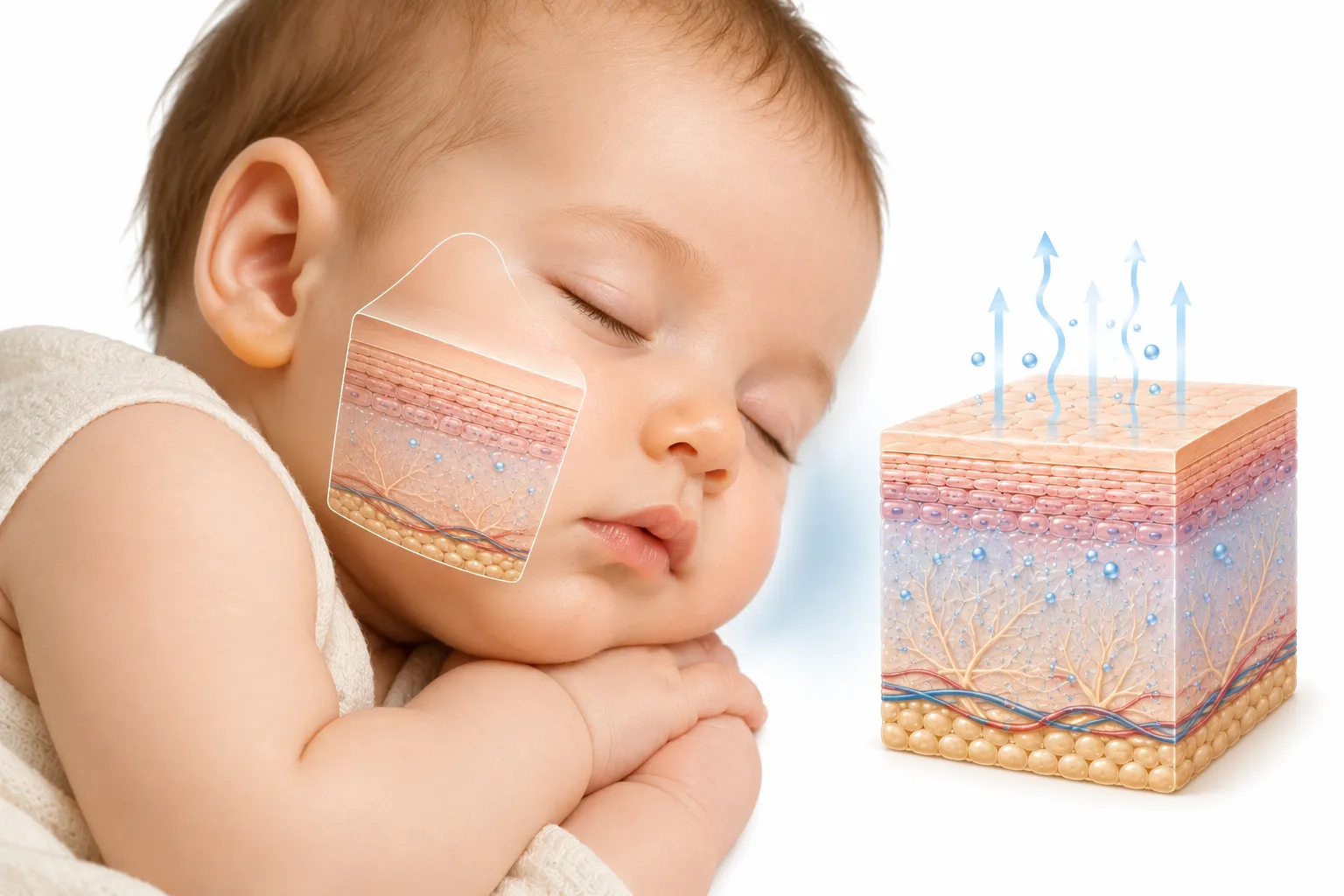
The most important difference between baby and adult skin is barrier function. Baby skin has a thinner stratum corneum and fewer lipids - which means it can't hold onto water as effectively and lets irritants in more easily. This is the primary reason for its sensitivity.
Use this section to decide
Does this advice apply to me?
Find the concern or goal closest to yours, then use the fit signal to decide how much weight to give this guide.If your goal is
Thinner barrierUse caution- Fit signal
- Limited evidence
30% thinner than adults
If your goal is
Fewer lipidsUse caution- Fit signal
- Limited evidence
Less protection
If your goal is
MaturationUse caution- Fit signal
- Limited evidence
Takes 1-2 years
If your goal is
Key careUsually relevant- Fit signal
- Often useful
Gentle, fragrance-free
Research notes already in this guide
- Baby skin is well-documented as structurally different from adult skin.
- Barrier maturation takes 1-2 years after birth.
- Gentle skincare is recommended to protect the developing barrier.
Explanation
How it works
Stratum corneum
Thinner and less tightly packed in babies.
Lipid barrier
Fewer lipids = less protection and more water loss.
Immune system
Still developing, more reactive.
Result
Skin is more sensitive and vulnerable.
Practical use
How to use it
Use gentle, fragrance-free products
Choose products specifically formulated for babies.
Moisturize daily
Apply a gentle, fragrance-free moisturizer to baby's skin.
Keep baths short and lukewarm
Limit baths to 5-10 minutes with lukewarm water.
Safety
Side effects and cautions
- Using adult skincare products on babies
Adult products are often too harsh - use products specifically formulated for babies.
- Bathing babies too often or with hot water
Bathe 2-3 times per week with lukewarm water.
- Not moisturizing baby's skin
Baby skin needs daily moisturization to support the barrier.
Fit
Who should be careful
- Those looking for adult skin advice
Helpful context
What else is worth knowing
Baby vs. adult skin
Baby skin
Thinner, fewer lipids, higher pH, developing immune system.
- Soft, smooth
- More sensitive
- Prone to dryness
Adult skin
Thicker, more lipids, lower pH, mature immune system.
- More resilient
- Less soft
Worth noting
Small details that can change the answer
- Thinner barrier. Baby skin is about 30% thinner than adult skin.
- Fewer lipids. Baby skin has fewer barrier lipids, affecting moisture retention.
- Higher water content. Baby skin has more water content but loses it faster.
- Maturation. The skin barrier takes 1-2 years to mature.
Baby skin is structurally different from adult skin - thinner, fewer lipids, more permeable.
This makes it more vulnerable to irritants, moisture loss, and reactions.
The immune system is also developing, increasing the risk of allergic reactions.
Gentle, fragrance-free products and daily moisturization are essential.
The barrier matures over the first 1-2 years of life.
Definition
Why baby skin is structurally different
The anatomy of sensitivity.
Baby skin differs from adult skin in three key ways: (1) the stratum corneum is thinner and less tightly packed, making it more permeable; (2) there are fewer lipids (ceramides, cholesterol, fatty acids) in the barrier, which means less protection and more water loss; and (3) the skin's pH is higher (more alkaline), which affects the barrier's function. The immune system is also immature, making allergic reactions more likely.
The factors that make baby skin sensitive
- Thinner stratum corneum - irritants penetrate more easily
- Fewer barrier lipids - less protection, more water loss
- Higher skin pH - affects barrier function
- Higher water content - makes the skin soft but also more vulnerable to water loss
- Developing immune system - more reactive to potential allergens
- Less melanin - more vulnerable to sun damage
How to care for baby's sensitive skin
Gentle care is essential.
- Use fragrance-free, hypoallergenic products
- Avoid harsh soaps and detergents
- Moisturize daily with a gentle, fragrance-free moisturizer
- Pat dry after bathing - don't rub
- Protect from the sun with shade and clothing (sunscreen after 6 months)
- Keep baths short (5-10 minutes) and use lukewarm water
Questions
Frequently asked questions
Why is baby skin more sensitive than adult skin?
It's thinner, has fewer lipids, and loses moisture more easily. The barrier is still developing.
How long does it take for baby skin to mature?
The skin barrier typically matures within the first 1-2 years of life.
Should I use lotion on baby's skin?
Yes, daily moisturization supports the developing barrier and prevents dryness.
Can babies have allergic reactions to skincare products?
Yes, baby skin is more reactive - choose fragrance-free, hypoallergenic products.
References
Sources
The notes below are drawn from the evidence already cited in this guide. They are not a complete bibliography.
- Baby skin is well-documented as structurally different from adult skin.
- Barrier maturation takes 1-2 years after birth.
- Gentle skincare is recommended to protect the developing barrier.