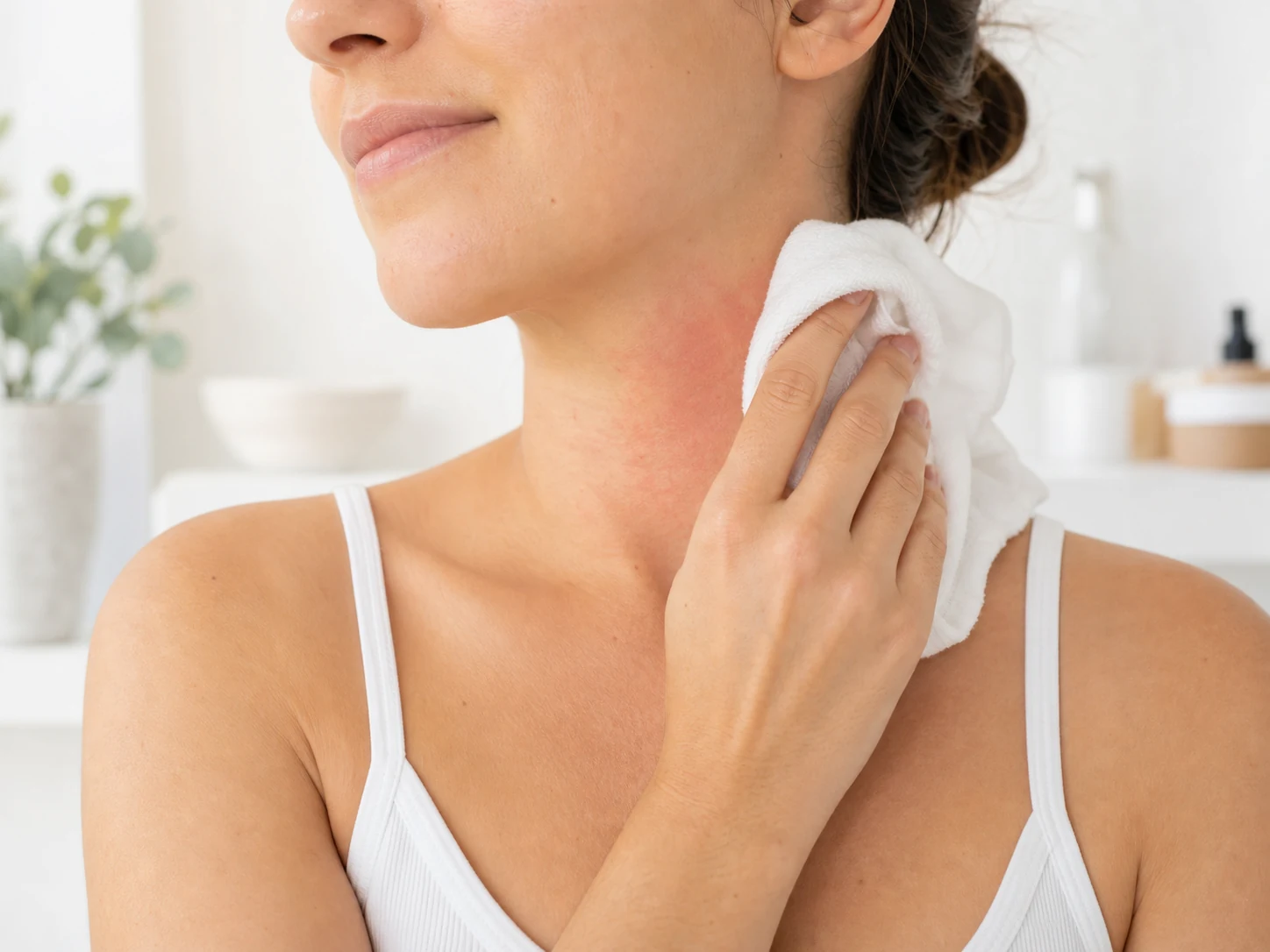
Evidence
What the evidence shows
Skin discoloration from heat rash is usually a sign that your skin produced excess melanin in response to inflammation. It's a healing process, not a permanent change. The real risk of permanent discoloration comes from scratching and scarring.
Use this section to decide
Does this advice apply to me?
Find the concern or goal closest to yours, then use the fit signal to decide how much weight to give this guide.If your goal is
Discoloration riskUse caution- Fit signal
- Limited evidence
Yes, especially darker skin
If your goal is
Primary typeUse caution- Fit signal
- Limited evidence
Post-inflammatory hyperpigmentation
If your goal is
DurationDepends- Fit signal
- Possible fit
Weeks to months
If your goal is
Key preventionUsually relevant- Fit signal
- Often useful
No scratching + sunscreen
Expected results
Results and timeframe
Most discoloration fades over weeks to months as the skin regenerates.
Practical use
How to use it
Prevent scratching
Use cool compresses and gentle products to avoid breaking the skin and triggering more inflammation.
Protect from the sun
Use a broad-spectrum sunscreen of SPF 30 or higher on affected areas.
Be patient and gentle
Allow the skin to heal naturally. Most discoloration will fade over several months.
Safety
Side effects and cautions
- Scratching the rash, assuming marks are inevitable
Scratching worsens inflammation and increases discoloration risk dramatically. Prevention is key.
- Not using sunscreen on healing skin
UV exposure can darken PIH and slow its fading. Sun protection is essential.
- Using harsh treatments to try to fade marks faster
This can cause further inflammation and worsen discoloration.
Fit
Who should be careful
- Cases with persistent or worsening discoloration
Worth noting
Small details that can change the answer
- PIH Common. Post-inflammatory hyperpigmentation is a normal response to skin inflammation.
- Darker Skin Risk. People with darker skin are more likely to experience heat rash discoloration.
- Temporary Condition. Most heat rash discoloration fades over time as the skin renews itself.
- Scratching Risk. Scratching increases the risk and severity of discoloration.
Heat rash can cause temporary skin discoloration, particularly in darker skin tones.
This is post-inflammatory hyperpigmentation (PIH) - a normal response to inflammation.
Scratching significantly increases the risk and severity of discoloration.
Sunscreen is essential to prevent darkening and support fading.
Definition
What is post-inflammatory hyperpigmentation?
Post-inflammatory hyperpigmentation (PIH) is a darkening of the skin that occurs after inflammation. When your skin is inflamed, the melanocytes (pigment-producing cells) sometimes go into overdrive, producing extra melanin. This melanin is deposited in the upper layers of the skin, creating a dark patch that lasts long after the original inflammation has resolved.
- PIH is a normal, temporary response to skin inflammation
- It's more common and more pronounced in darker skin tones
- The discoloration can range from light brown to dark brown or even black
- It's different from post-inflammatory erythema (redness)
Explanation
Why heat rash sometimes leaves marks
The inflammation from heat rash triggers a cascade of signals in the skin. Among these signals are messages to melanocytes - the pigment-producing cells. Sometimes these cells interpret the inflammation as a sign to produce more pigment, resulting in localized hyperpigmentation. The more severe the inflammation and the longer it lasts, the more likely discoloration is to occur. This is why scratching - which prolongs and worsens inflammation - significantly increases the risk of PIH.
Benefits
What helps with discoloration
While most heat rash discoloration fades on its own, you can support the process with simple measures:
- Sun protection: UV exposure can darken existing pigmentation and slow fading
- Gentle skincare: Avoid harsh products that could cause further inflammation
- Patience: Skin turnover takes time - most PIH fades within months
- Moisturization: Healthy skin heals and renews more effectively
Risks
When discoloration might be more concerning
While post-inflammatory hyperpigmentation from heat rash is typically harmless and temporary, there are situations where it warrants medical evaluation:
- If discoloration doesn't begin to fade within several months
- If the discoloration is accompanied by new symptoms
- If you notice changes in the texture or surface of the skin
- If you have a history of skin cancer or other skin conditions
Questions
Frequently asked questions
How long does heat rash discoloration last?
Mild discoloration may fade in a few weeks; more pronounced PIH can take several months. Patience is key.
Can heat rash cause white spots?
Rarely, heat rash can cause temporary hypopigmentation (lightening of the skin), but this is less common than darkening.
Will heat rash marks go away permanently?
Yes, post-inflammatory hyperpigmentation from heat rash typically resolves completely, though it can take time.
Can I use skin lightening products on heat rash marks?
This is not recommended without medical guidance. Over-the-counter lightening products can be harsh and may cause further irritation.