Evidence
What the evidence shows
Niacinamide's barrier-repairing benefits are well documented, but on damaged skin, concentration matters more than usual. Stick to 2-5% for the best results without irritation.
Use this section to decide
Does this advice apply to me?
Find the concern or goal closest to yours, then use the fit signal to decide how much weight to give this guide.If your goal is
Ceramide productionUsually relevant- Fit signal
- Often useful
Increases by up to 50%
If your goal is
Reduces rednessDepends- Fit signal
- Possible fit
Soothes inflammation
If your goal is
Lipid supportUsually relevant- Fit signal
- Often useful
Builds barrier structure
If your goal is
Gentleness on compromised skinUse caution- Fit signal
- Limited evidence
Best at 2-5%
Explanation
How it works
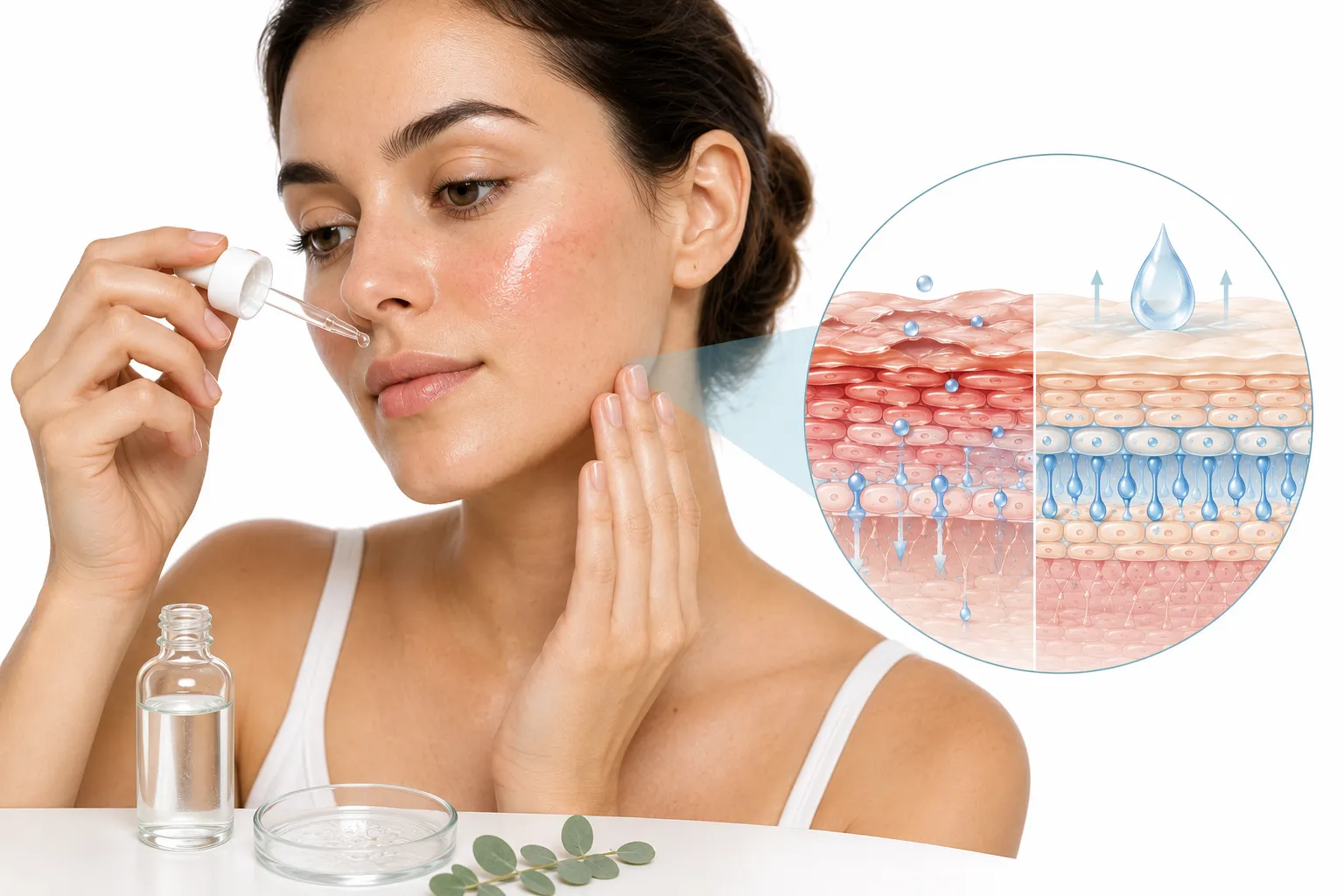
Lipid production triggered
Niacinamide stimulates cells to produce more ceramides and other key lipids.
Inflammation reduced
It calms inflammatory pathways, reducing redness and sensitivity.
Barrier strengthened
With more lipids, the "mortar" between skin cells becomes stronger.
Water loss reduced
A stronger barrier means less water escapes, improving hydration.
Expected results
Results and timeframe
Pair with a gentle, barrier-supporting moisturizer for best results.
Practical use
How to use it
Choose the right concentration
Start with 2-5% niacinamide, not the higher percentages currently popular in some formulations.
Apply after cleansing, on damp skin
Apply niacinamide to damp skin to help it absorb gently.
Follow with a barrier-supporting moisturizer
Seal with a moisturizer containing ceramides, squalane, or panthenol.
Safety
Side effects and cautions
- Using 10% niacinamide on damaged skin
Stick to 2-5% while your barrier is compromised.
- Applying niacinamide alongside exfoliating acids
Avoid acids while your barrier is damaged; focus on repair.
- Not patching testing first
Always patch test on compromised skin to check for sensitivity.
Fit
Who should be careful
- Skin that reacts to niacinamide even at low concentrations
Worth noting
Small details that can change the answer
- Ceramide Booster. Niacinamide can increase ceramide synthesis in the skin by up to 50%.
- Anti-inflammatory. It reduces inflammatory markers in the skin, helping calm barrier damage.
- Lipid Support. Niacinamide supports the production of other barrier lipids like cholesterol and fatty acids.
- Flushing Risk. At 5% or higher, some people experience transient flushing, especially with compromised skin.
Niacinamide can help repair a damaged skin barrier by increasing ceramide production.
Use a lower concentration (2-5%) on compromised skin to avoid stinging.
Introduce gradually and pay attention to how your skin responds.
Avoid combining niacinamide with acids or retinoids during barrier repair.
Science
How niacinamide supports the skin barrier
Niacinamide works primarily by stimulating the production of ceramides, the key lipids that form the barrier's "mortar." It also promotes the synthesis of other barrier lipids like cholesterol and free fatty acids, reduces inflammatory cytokines, and helps regulate the skin's natural pH. All of these mechanisms directly support barrier repair.
- Ceramide
- A lipid molecule that forms a protective barrier in the skin, keeping moisture in and irritants out.
- Cytokine
- A signaling protein in the body that can promote inflammation when produced in excess.
Risks
When niacinamide might irritate a damaged barrier
Even a good ingredient can cause issues at the wrong concentration or frequency.
- Concentrations over 5% can sting on already-sensitive skin
- Applying niacinamide with other active ingredients can compound irritation
- Some people are naturally sensitive to niacinamide regardless of concentration
- Flushing (transient redness) can occur, especially at higher percentages
Skin Type Suitability
Is niacinamide right for your barrier-damaged skin?
Excellent - supports lipid production and reduces water loss.
Generally well tolerated at 2-5%, but introduce slowly.
Excellent - supports barrier and regulates oil production.
Very beneficial - anti-inflammatory and barrier-supporting.
Ideal - balances and supports all areas.
Questions
Frequently asked questions
Can niacinamide sting on damaged skin?
Yes, higher concentrations or compromised skin can cause stinging. Stick to 2-5% and patch test.
Should I use niacinamide morning or night for barrier repair?
Either works, but applying it after cleansing on damp skin is more important than the time of day.
Can I use niacinamide with other barrier-repairing ingredients?
Yes, it pairs well with ceramides, panthenol, squalane, and other gentle hydrating ingredients.
How quickly will I see barrier improvement with niacinamide?
Surface improvements may appear in days, but deeper barrier repair takes weeks of consistent use.