Evidence
What the evidence shows
The difference is location: combination skin means different areas have different types, while dehydrated oily skin means the same area has both excess oil and water loss.
Use this section to decide
Does this advice apply to me?
Find the concern or goal closest to yours, then use the fit signal to decide how much weight to give this guide.If your goal is
Way 1Use caution- Fit signal
- Limited evidence
Combination skin (different areas)
If your goal is
Way 2Use caution- Fit signal
- Limited evidence
Dehydrated oily skin (same area)
If your goal is
Key DistinctionUsually relevant- Fit signal
- Often useful
Location
If your goal is
Care ApproachUsually relevant- Fit signal
- Often useful
Zone-specific or hydration
Research notes already in this guide
- Combination skin is the most common skin type, affecting the majority of adults.
- Dehydration can affect any skin type, including oily skin.
- Research confirms that different facial zones have different oil gland densities.
- Barrier damage is the primary cause of dehydration in oily skin.
Practical use
How to use it
Identify which scenario you have
Is it different areas (combination) or the same area (dehydrated oily)?
Adapt your approach
Zone-specific care for combination skin; hydration and barrier repair for dehydrated oily skin.
Be patient
Improvement takes consistent care over weeks.
Safety
Side effects and cautions
- Treating your whole face the same way
Different zones need different products for combination skin.
- Confusing dehydration with dryness
Dehydrated oily skin needs water-based hydration, not heavy oils.
- Using harsh products to "control" oil on dehydrated skin
Harsh products worsen dehydration and can increase oiliness.
Fit
Who should be careful
- Those seeking a simple yes/no answer without nuance
Worth noting
Small details that can change the answer
- Combination Pattern. The most common pattern is oily T-zone with dry cheeks.
- Gland Density. Different areas of the face have different numbers of oil glands.
- Dehydration. Oily skin can be dehydrated, feeling both oily and tight.
- Distinction. Location is the key: different areas vs the same area.
Yes - you can have both dry and oily skin in two ways.
Combination skin means different areas of your face are different types.
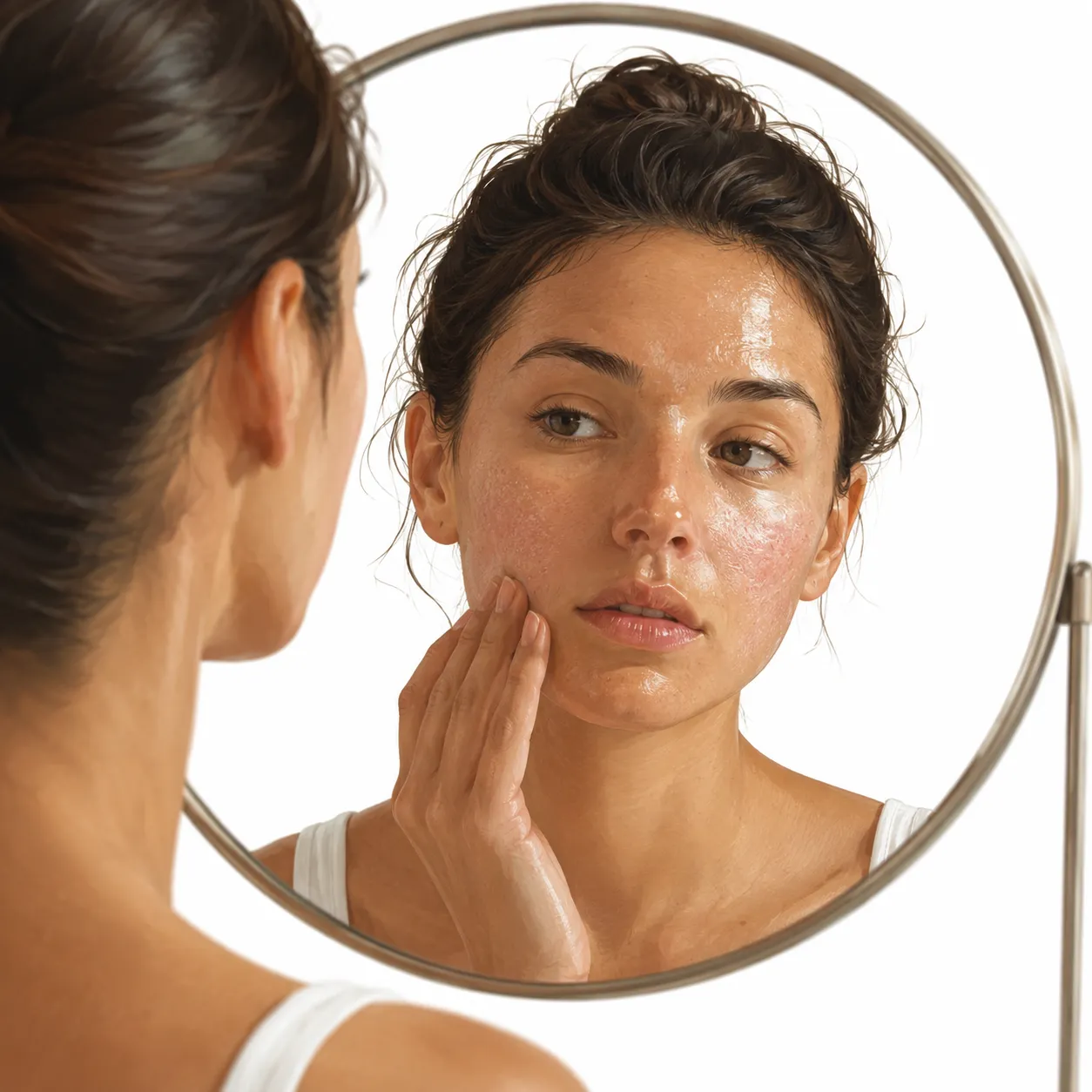
Dehydrated oily skin means the same area is both oily and water-depleted.
The treatment approach is different for each scenario.
Identify which scenario you have to choose the right care.
Definition
Two ways to have dry and oily skin
There are two distinct scenarios where dry and oily skin coexist.
- Combination skin - different areas, different types
- Dehydrated oily skin - the same area, both oily and water-depleted
- Combination is a type; dehydration is a condition
- The treatment approach differs for each
Explanation
Combination skin - the most common pattern
Combination skin is a skin type where different areas of the face have different characteristics. The T-zone (forehead, nose, chin) has more oil glands and tends to be oily, while the cheeks have fewer glands and can be dry or normal. This is a genetic trait, not a problem to fix.
Explanation
Dehydrated oily skin - the same area, two problems
Dehydrated oily skin occurs when the barrier is compromised, allowing water to escape while oil production continues normally. The result is skin that's both oily (on the surface) and dry-feeling (tight, dull, uncomfortable). This is a condition, not a type, and it can affect any area of the face.
Questions
Frequently asked questions
Is combination skin the same as dehydrated oily skin?
No - combination is a type (different areas); dehydrated oily is a condition (same area, water loss).
Can I have combination skin that's also dehydrated?
Yes - you can have combination skin with dehydrated areas.
What's the best way to care for combination skin?
Use different products or techniques for different areas.
Can dehydrated oily skin become normal with care?
Yes - with consistent hydration and barrier repair, it can improve significantly.
References
Sources
The notes below are drawn from the evidence already cited in this guide. They are not a complete bibliography.
- Combination skin is the most common skin type, affecting the majority of adults.
- Dehydration can affect any skin type, including oily skin.
- Research confirms that different facial zones have different oil gland densities.
- Barrier damage is the primary cause of dehydration in oily skin.