Evidence
What the evidence shows
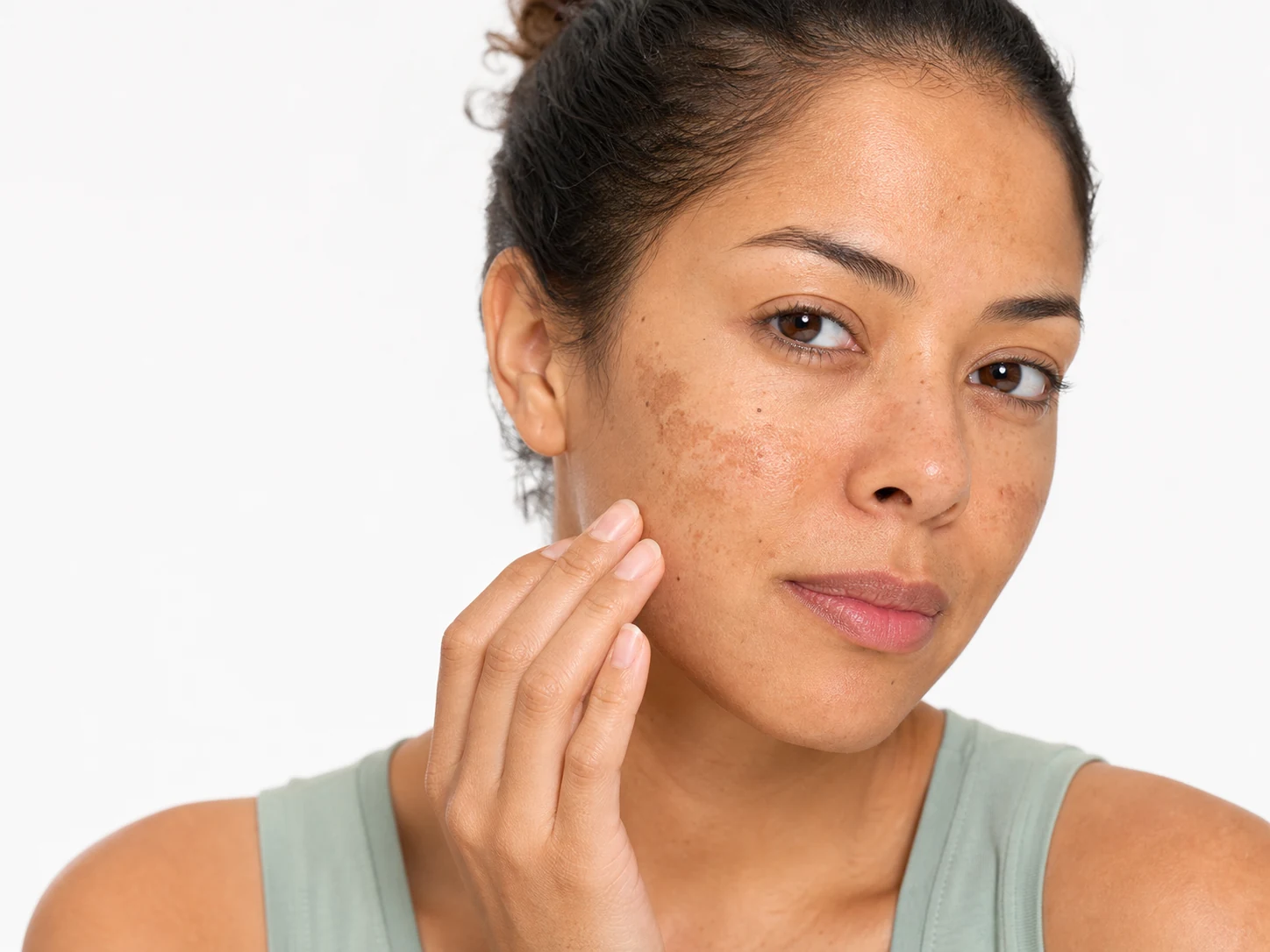
Retinol doesn't just fade hyperpigmentation - it fundamentally changes how your skin produces and distributes pigment. It's one of the few ingredients that works on multiple stages of pigmentation, not just the surface.
Use this section to decide
Does this advice apply to me?
Find the concern or goal closest to yours, then use the fit signal to decide how much weight to give this guide.If your goal is
Cell turnover for removalUsually relevant- Fit signal
- Often useful
Sheds pigmented cells
If your goal is
Melanin production reductionDepends- Fit signal
- Possible fit
Inhibits tyrosinase
If your goal is
Melanin transfer inhibitionDepends- Fit signal
- Possible fit
Prevents new spots
If your goal is
Combined approachUsually relevant- Fit signal
- Often useful
Multi-mechanism action
Research notes already in this guide
- Multiple clinical trials confirm retinol's efficacy for hyperpigmentation.
- Studies show significant reduction in melanin content and pigmentation after 12 weeks of use.
- Research indicates that retinol is more effective when combined with other brightening agents.
- Sun protection is essential - studies show that UV exposure can counteract retinol's benefits.
Explanation
How it works
Increases cell turnover
Pigmented skin cells are shed faster, revealing newer, less-pigmented cells underneath.
Inhibits tyrosinase
Retinol reduces the activity of the enzyme that produces melanin.
Reduces melanin transfer
Less melanin reaches the skin's surface, preventing new spots.
Combined effect
Existing spots fade and new spots are prevented - a comprehensive approach.
Expected results
Results and timeframe
Results take 3-6 months of consistent use.
Practical use
How to use it
Start with a low concentration
Begin with 0.1-0.25% retinol and gradually increase as your skin adjusts.
Apply at night and protect during the day
Use retinol at night and apply SPF 50+ daily.
Be patient and consistent
Give retinol 3-6 months to show significant results on hyperpigmentation.
Safety
Side effects and cautions
- Expecting immediate results with retinol
Retinol takes 3-6 months of consistent use to show significant pigmentation improvement.
- Using retinol without adequate sun protection
Sun exposure can worsen pigmentation and counteract retinol's benefits.
- Starting with too high a concentration
Start low and build up to minimize irritation and prevent pigmentation from irritation.
Fit
Who should be careful
- Those with sensitive skin who can't tolerate retinol
Worth noting
Small details that can change the answer
- Cell Turnover. Retinol increases turnover, shedding pigmented cells.
- Tyrosinase Inhibition. It reduces the enzyme that produces melanin.
- Melanin Transfer. It prevents pigment from reaching skin cells.
- Results Timeline. Significant improvement in 3-6 months.
Yes, retinol is proven to help with hyperpigmentation.
It works through multiple mechanisms: cell turnover, melanin inhibition, and reduced pigment transfer.
Sun protection is essential - retinol makes skin more sensitive to UV.
Start with a low concentration to minimize irritation.
Ingredient Comparison
Retinol vs. other hyperpigmentation treatments
Retinol
bestBest for: Comprehensive pigmentation treatmentWorks on multiple stages of pigmentation · Also provides anti-aging benefits · Effective for most types of hyperpigmentation
Limitations: Requires 3-6 months for results · Can cause irritation initially · Requires sun protectionVitamin C
goodBest for: Antioxidant protection and brighteningInhibits melanin production · Provides antioxidant benefits · Gentler than retinol
Limitations: Less comprehensive than retinol · Can be unstableHydroquinone (prescription)
goodBest for: Stubborn, severe hyperpigmentationStrongest available brightener · Effective for resistant pigmentation
Limitations: Prescription required in many countries · Can cause ochronosis with prolonged use · Not suitable for all skin typesNiacinamide
goodBest for: Gentle, sustained brighteningGentle and well-tolerated · Inhibits melanin transfer · Supports barrier function
Limitations: Less potent than retinol for severe pigmentationDos Donts
Using retinol for hyperpigmentation
Do
Build tolerance gradually to minimize irritation.
Retinol is photolabile and can be degraded by light.
Sun protection is essential for preventing new pigmentation.
Results take 3-6 months of regular use.
Avoid
High concentrations cause more irritation and may worsen pigmentation in sensitive skin.
Retinol can increase sun sensitivity and should be used at night.
Moisturizer helps mitigate the dryness and irritation from retinol.
Questions
Frequently asked questions
Can retinol make hyperpigmentation worse?
It can initially in some cases due to irritation - but with proper introduction, it should improve pigmentation.
How long does retinol take to fade dark spots?
Significant improvement typically takes 3-6 months of consistent use.
Can I use retinol with vitamin C for pigmentation?
Yes - they work well together, with vitamin C in the morning and retinol at night.
Is retinol safe for darker skin with hyperpigmentation?
Yes, but start with a low concentration and use carefully to avoid inflammation.
References
Sources
The notes below are drawn from the evidence already cited in this guide. They are not a complete bibliography.
- Multiple clinical trials confirm retinol's efficacy for hyperpigmentation.
- Studies show significant reduction in melanin content and pigmentation after 12 weeks of use.
- Research indicates that retinol is more effective when combined with other brightening agents.
- Sun protection is essential - studies show that UV exposure can counteract retinol's benefits.