Evidence
What the evidence shows
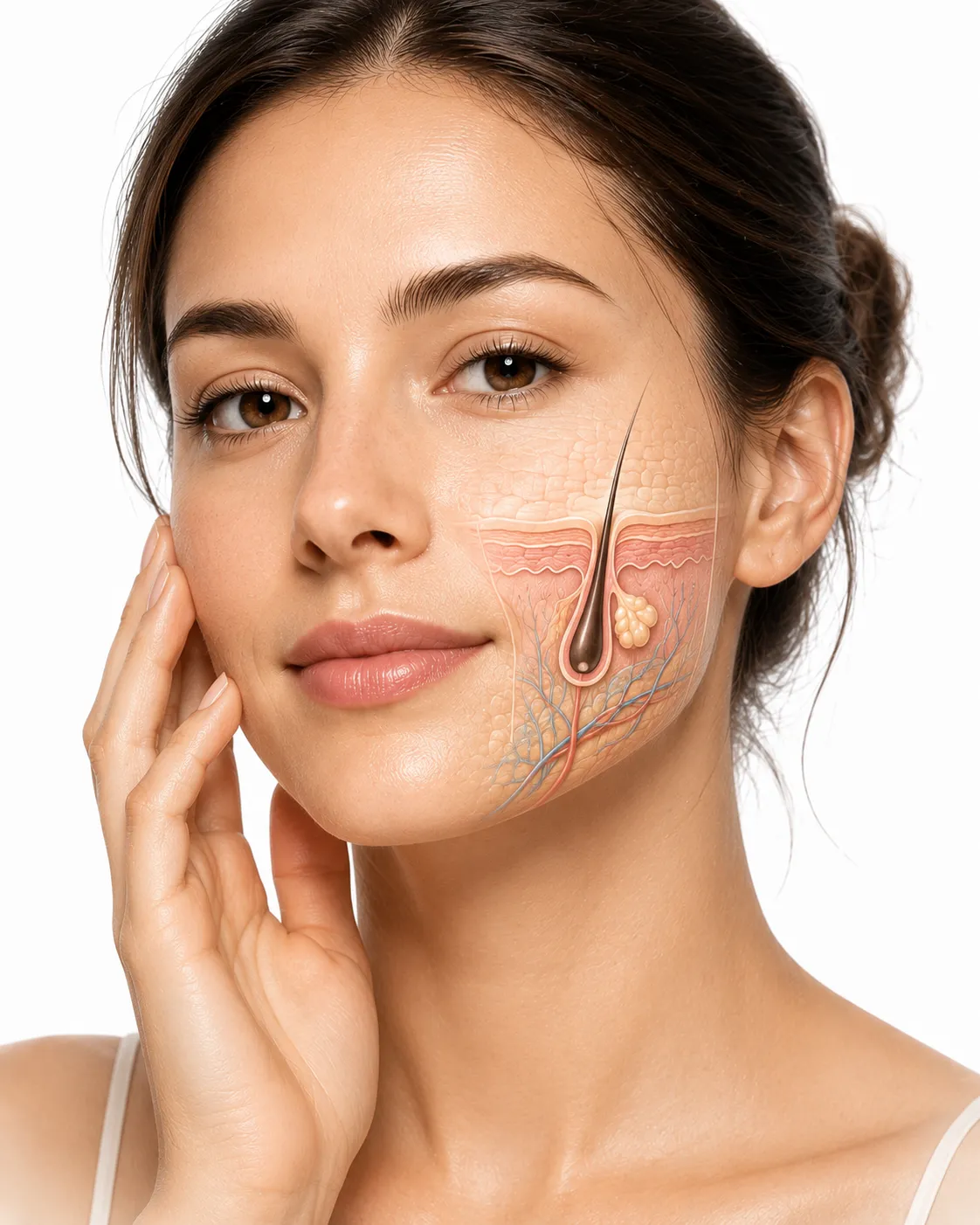
The difference between normal and oily skin is the amount of sebum produced. Normal skin produces just enough to keep the barrier healthy; oily skin produces too much.
My skin feels comfortable and balanced most of the time
You likely have normal skin.My skin is consistently shiny and greasy
You likely have oily skin.My skin sometimes gets shiny but is usually balanced
You likely have normal skin that experiences temporary oiliness.
Use this section to decide
Does this advice apply to me?
Find the concern or goal closest to yours, then use the fit signal to decide how much weight to give this guide.If your goal is
Normal skinUsually relevant- Fit signal
- Often useful
Balanced oil production
If your goal is
Oily skinDepends- Fit signal
- Possible fit
Excess oil production
If your goal is
Key differenceUse caution- Fit signal
- Limited evidence
Amount of sebum produced
If your goal is
ManagementUsually relevant- Fit signal
- Often useful
Normal: lightweight; Oily: oil-balancing
Practical use
How to use it
Assess your skin consistently
If your skin is always shiny and greasy, you have oily skin. If it's sometimes shiny but usually balanced, you have normal skin.
Choose products for your skin type
Normal: lightweight moisturizers; Oily: oil-free, balancing products.
Adjust for temporary changes
Normal skin may need lighter products in summer or hot weather.
Safety
Side effects and cautions
- Using oily-skin products on normal skin
Normal skin doesn't need oil-stripping products - they can cause dryness.
- Assuming normal skin never gets shiny
Normal skin can appear shiny temporarily, especially in heat.
- Overwashing normal skin to reduce shine
Overwashing can strip the barrier and cause compensatory oil production.
Fit
Who should be careful
- Those looking for a simple yes/no answer (it's no)
Worth noting
Small details that can change the answer
- Normal Skin. Normal skin has balanced sebum production and small pores.
- Oily Skin. Oily skin has excess sebum production and enlarged pores.
- T-Zone Shine. Normal skin can appear shiny in the T-zone, but this is temporary.
- Long-term Needs. Oily skin requires different care than normal skin.
Normal skin and oily skin are different skin types.
Normal skin is balanced; oily skin produces excess sebum.
Normal skin can appear shiny temporarily.
Oily skin requires oil-balancing, non-comedogenic products.
Normal skin needs lightweight hydration and maintenance.
Definition
What is normal skin?
Normal skin is characterized by balanced sebum production, even texture, and a lack of severe concerns. It has small to medium pores, good elasticity, and a smooth, comfortable texture. It's not too oily or dry.
- Balanced sebum production
- Smooth texture and small pores
- Minimal concerns (acne, dryness, sensitivity)
- Good elasticity and resilience
Definition
What is oily skin?
Oily skin is characterized by overactive sebaceous glands that produce excess oil. This leads to a shiny complexion, enlarged pores, and a tendency toward blackheads, whiteheads, and acne. It can also lead to makeup not staying on well.
- Excess sebum production
- Shiny appearance, enlarged pores
- Prone to blackheads and acne
- Requires oil-balancing products
Explanation
The key differences
The key difference between normal and oily skin is the amount of sebum produced. Normal skin produces just enough oil to maintain the barrier and keep the skin comfortable. Oily skin produces too much, leading to a shiny complexion and congestion. Normal skin can appear shiny temporarily, but this isn't a consistent state.
Myth Reality
Common myths about normal and oily skin
Normal skin can appear shiny in the T-zone or in hot weather.
Oily skin has a different biological basis - overactive sebaceous glands.
Temporary shine doesn't mean oily skin - it's a consistent condition.
Questions
Frequently asked questions
Can normal skin become oily?
Yes, temporarily - due to hormones, stress, or environment. But this doesn't change the skin type permanently.
Is oily skin more prone to acne?
Yes, excess oil can clog pores and lead to acne.
Can oily skin ever become normal?
With proper care, oily skin can become more balanced, but it may always tend toward oiliness.
Does normal skin need oil-control products?
No, normal skin doesn't need oil-control products - they can be stripping.