Evidence
What the evidence shows
Normal skin is well-understood and clearly defined in dermatology.
Biological basis
Well understoodCare requirements
Clearly establishedPopulation distribution
Extensively studied
Use this section to decide
Does this advice apply to me?
Find the concern or goal closest to yours, then use the fit signal to decide how much weight to give this guide.If your goal is
Sebum productionUsually relevant- Fit signal
- Often useful
Balanced
If your goal is
FeelUsually relevant- Fit signal
- Often useful
Comfortable
If your goal is
Pore sizeUse caution- Fit signal
- Limited evidence
Small to medium
If your goal is
Care intensityUse caution- Fit signal
- Limited evidence
Moderate
Research notes already in this guide
- The characteristics of normal skin are well-defined in dermatological literature.
- The biological mechanisms of balanced skin function are well understood.
- The distribution of skin types across populations has been extensively studied.
- However, the concept of normal skin is somewhat relative and varies across ethnicities and age groups.
Practical use
How to use it
Cleanse gently daily
Use a gentle, sulfate-free cleanser once or twice daily to remove dirt and buildup without stripping the skin.
Moisturize consistently
Even normal skin benefits from a daily moisturizer that supports the barrier and prevents moisture loss.
Protect with sunscreen every day
Sun damage is the single biggest threat to normal skin's long-term health. Use SPF 30 daily.
Safety
Side effects and cautions
- Assuming normal skin needs no skincare
Normal skin still needs protection, particularly from sun damage, and basic care to maintain balance as you age.
- Using harsh products because you think you can tolerate anything
Even normal skin can be damaged by harsh cleansers and over-exfoliation. Treat it with respect.
- Ignoring changes as you get older
Skin changes with age. What was normal in your 20s may become drier in your 40s. Adjust your routine accordingly.
Fit
Who should be careful
- Those with specific skin concerns like acne or severe dryness
Helpful context
What else is worth knowing
Is this information for you?
Normal skin varies in how it appears and behaves.
If your skin is generally comfortable and doesn't react easily, you likely have normal skin.
Occasional drynessIf you have occasional dry patches, your skin may lean toward dry but is still in the normal range.
Occasional breakoutsNormal skin can still have breakouts, especially around hormonal changes.
Worth noting
Small details that can change the answer
- Sebum Production. Normal skin produces a moderate amount of sebum, enough to protect without causing greasiness or breakouts.
- Barrier Function. The moisture barrier in normal skin is intact and effective at keeping water in and irritants out.
- Rare in Adulthood. Genuinely normal skin becomes less common with age as hormone levels change and skin naturally becomes drier.
- Not Perfection. Normal skin is still susceptible to sun damage, aging, and environmental stressors just like any other skin type.
Normal skin is balanced, neither oily nor dry, with minimal sensitivity and healthy barrier function.
It still requires daily care, including gentle cleansing, moisturizing, and sun protection.
Normal skin isn't perfect - it can still break out, react, or become dry as you age.
The main advantage is flexibility, allowing you to use a wider range of products without irritation.
Maintaining normal skin long-term requires adapting your routine as your skin changes.
Definition
What exactly is normal skin?
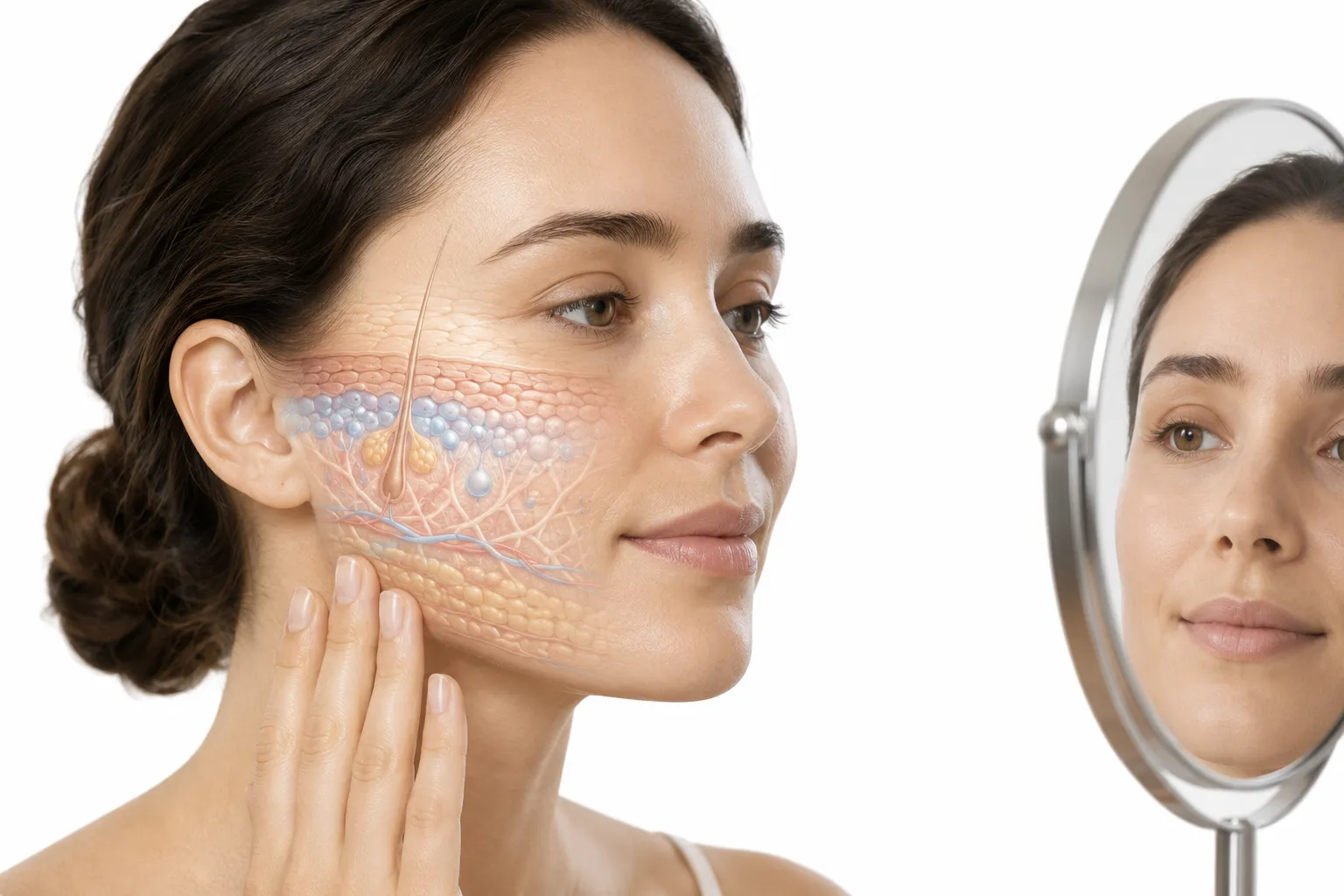
Normal skin is skin that falls in the middle of the spectrum - it's neither oily nor dry, doesn't have significant sensitivity or reactivity, and generally maintains a comfortable, balanced state without intervention. The skin appears even-toned and smooth, and pores are small to medium.
- Balanced sebum production
- Maintains hydration well
- Low sensitivity to products
- Small to medium pores
- Minimal breakouts or congestion
Explanation
What normal skin isn't
This is important: normal skin doesn't mean skin without any issues. It doesn't mean you'll never get a pimple, never have a dry patch, or never react to a product. It means your baseline is balanced and your skin handles changes better than other skin types might.
Science
The science of balance in normal skin
Normal skin reflects a healthy equilibrium in the skin's microbiome, sebum production, and barrier function. The skin produces sebum at a rate that's sufficient to maintain the lipid barrier without blocking pores. The natural shedding cycle of skin cells proceeds smoothly, preventing the buildup that can lead to congestion.
- Sebum
- The skin's natural oil, produced by sebaceous glands to lubricate and protect the skin.
- Microbiome
- The community of bacteria and microorganisms living on the skin's surface, which is balanced and healthy in normal skin.
- Barrier function
- The skin's ability to protect against external irritants while retaining moisture, which functions optimally in normal skin.
Questions
Frequently asked questions
Is normal skin the most common skin type?
It's less common than you might think. Many people have combination skin, which is oily in some areas and dry in others.
Can you develop normal skin if you don't have it?
Skin types are largely genetic, but well-considered skincare can help balance and manage what you have.
Does normal skin need different products for different seasons?
Yes. Normal skin may benefit from richer products in winter when the air is dryer, and lighter ones in summer.
Is normal skin less likely to show signs of aging?
Not necessarily. Aging is influenced by genetics and sun exposure, not just skin type.
References
Sources
The notes below are drawn from the evidence already cited in this guide. They are not a complete bibliography.
- The characteristics of normal skin are well-defined in dermatological literature.
- The biological mechanisms of balanced skin function are well understood.
- The distribution of skin types across populations has been extensively studied.
- However, the concept of normal skin is somewhat relative and varies across ethnicities and age groups.