Evidence
What the evidence shows
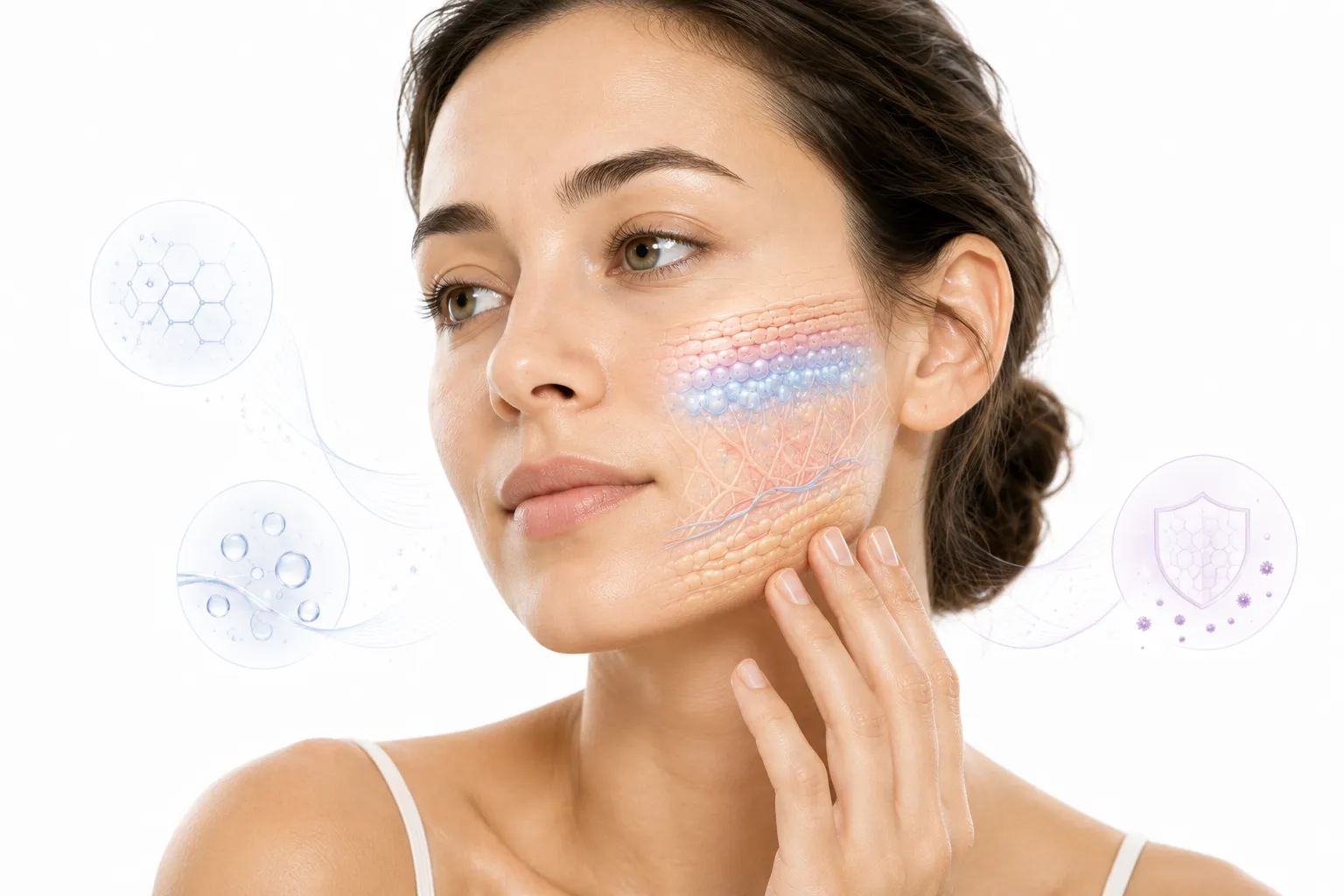
The key difference between normal and sensitive skin is barrier function and nerve sensitivity. Normal skin has a strong barrier and low nerve reactivity; sensitive skin has the opposite.
I can use most products without reaction
You likely have normal skin.Many products sting, burn, or redden my skin
You likely have sensitive skin.I sometimes react but usually tolerate products
You may have normal skin with temporary sensitivity.
Use this section to decide
Does this advice apply to me?
Find the concern or goal closest to yours, then use the fit signal to decide how much weight to give this guide.If your goal is
Normal skinUsually relevant- Fit signal
- Often useful
Resilient, strong barrier
If your goal is
Sensitive skinDepends- Fit signal
- Possible fit
Reactive, thin barrier
If your goal is
Key differenceUse caution- Fit signal
- Limited evidence
Barrier function and reactivity
If your goal is
ManagementUsually relevant- Fit signal
- Often useful
Normal: wide range; Sensitive: gentle
Practical use
How to use it
Assess your skin consistently
If your skin regularly reacts to products, you likely have sensitive skin. If it only occasionally reacts, you may have normal skin with temporary sensitivity.
Choose products for your skin type
Normal: a wide range; Sensitive: fragrance-free, gentle products.
Address temporary sensitivity
If your normal skin becomes sensitive, simplify your routine and use gentle products until it recovers.
Safety
Side effects and cautions
- Treating normal skin as if it's sensitive
Normal skin doesn't need extreme caution - it can tolerate a wider range of products.
- Assuming temporary sensitivity is permanent
Normal skin can become temporarily sensitive and then return to normal.
- Not recognizing acquired sensitivity
Normal skin can become sensitive over time due to cumulative damage.
Fit
Who should be careful
- Those looking for a simple yes/no answer (it's no)
Worth noting
Small details that can change the answer
- Normal Skin. Normal skin has a strong, intact barrier and low reactivity.
- Sensitive Skin. Sensitive skin has a thinner barrier and more reactive nerve endings.
- Temporary Sensitivity. Normal skin can become temporarily sensitive with over-exfoliation or harsh products.
- Long-term Needs. Sensitive skin requires gentler, more barrier-focused care.
Normal skin and sensitive skin are different.
Normal skin is resilient and tolerates most products.
Sensitive skin has a lower threshold for irritation.
Normal skin can become temporarily sensitive.
Choose products based on your skin's current state.
Definition
What is normal skin?
Normal skin is characterized by balanced sebum production, even texture, and a lack of severe concerns. It has a strong, intact barrier and tolerates most products without irritation. It's not too oily or dry.
- Balanced sebum production
- Strong, intact barrier
- Tolerates most products without irritation
- Resilient and bounces back quickly
Definition
What is sensitive skin?
Sensitive skin is characterized by a lower threshold for irritation. It often has a thinner or compromised barrier, allowing irritants to penetrate more easily. It reacts to products, environmental factors, or touch with stinging, burning, redness, or itching.
- Thinner or compromised barrier
- Reacts to products with stinging, burning, redness
- Often sensitive to environmental factors
- Requires gentle, fragrance-free products
Explanation
The key differences
The key difference between normal and sensitive skin is barrier function and nerve sensitivity. Normal skin has a strong, intact barrier that blocks irritants and a low nerve reactivity. Sensitive skin has a thinner or more porous barrier that allows irritants to penetrate, and it often has more reactive nerve endings. Normal skin can become temporarily sensitive, but this isn't a permanent state.
Myth Reality
Common myths about normal and sensitive skin
Normal skin can become temporarily sensitive due to products or environment.
Sensitive skin has a physical difference in barrier and nerve sensitivity.
Sensitive skin can use products - they just need to be gentle and well-formulated.
Questions
Frequently asked questions
Can normal skin be sensitive?
Yes, temporarily - due to products, environment, or exfoliation.
Can sensitive skin become normal?
With proper care, sensitive skin can become more resilient, but it may always tend toward sensitivity.
How do I know if my sensitivity is temporary?
If it resolves when you change products or the season changes, it's likely temporary.
Should I treat my skin as sensitive if I'm unsure?
It's safer to err on the side of caution with gentle, fragrance-free products.