Evidence
What the evidence shows
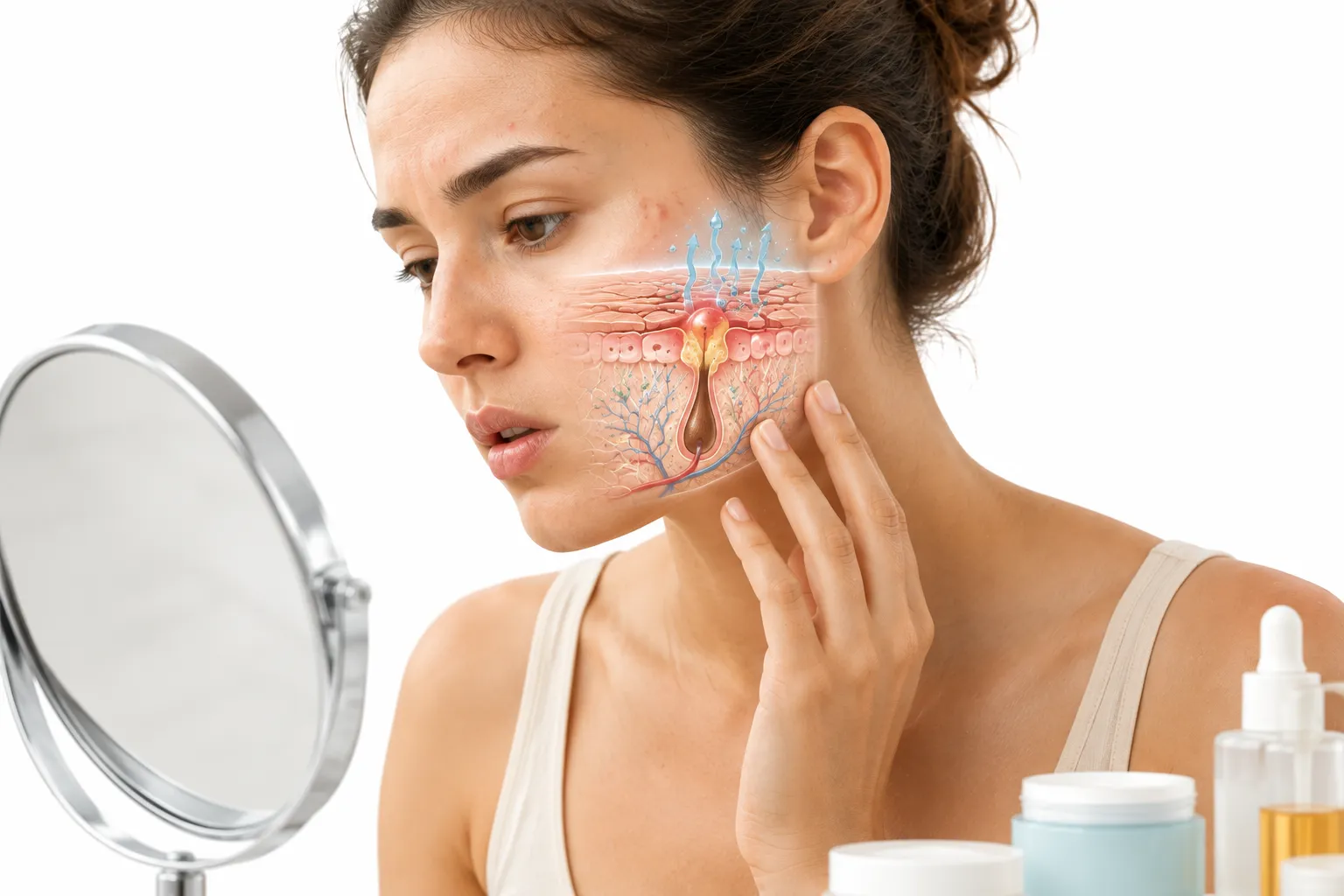
The connection between barrier damage and acne is largely about inflammation. A compromised barrier allows irritants and bacteria to penetrate more easily, triggering inflammatory responses that can both cause and worsen breakouts.
Use this section to decide
Does this advice apply to me?
Find the concern or goal closest to yours, then use the fit signal to decide how much weight to give this guide.If your goal is
Direct CauseUse caution- Fit signal
- Limited evidence
No
If your goal is
Indirect RoleDepends- Fit signal
- Possible fit
Major - creates ideal conditions
If your goal is
Key MechanismUse caution- Fit signal
- Limited evidence
Inflammation + bacterial penetration
If your goal is
Treatment ApproachUsually relevant- Fit signal
- Often useful
Barrier repair + gentle acne care
Practical use
How to use it
Prioritize barrier repair
Use gentle cleansers, barrier-supporting moisturizers, and avoid harsh ingredients.
Choose gentle acne treatments
Avoid high-concentration actives. Azelaic acid and low-concentration retinoids are good options.
Be patient and consistent
Barrier repair and acne improvement both take time - stick with your routine for at least 4-6 weeks.
Safety
Side effects and cautions
- Using harsh acne treatments on a damaged barrier
Gentle treatments are more effective - harsh products worsen both barrier damage and acne.
- Skipping moisturizer because you have acne
Even acne-prone skin needs moisture. Choose a non-comedogenic moisturizer.
- Expecting immediate acne improvement after barrier repair
Barrier repair takes weeks, and acne improvement follows gradually.
- Redness and stinging
Common · Focus on barrier repair - your skin is inflamed.
- Breakouts that don't respond to treatment
Common · Your barrier may be preventing treatments from working.
- Dryness with acne
Common · Moisturize - you need barrier support.
Fit
Who should be careful
- People looking for a simple "yes or no" answer - the relationship is complex
Helpful context
What else is worth knowing
What experts say about barrier damage and acne
Dr. Shereene IdrissAcne and barrier damage often go hand in hand. Treating the barrier is just as important as treating the acne.
Dr. Whitney BoweWhen acne doesn't respond to treatment, look at the barrier. It's often the hidden culprit.
Worth noting
Small details that can change the answer
- Bacterial Penetration. A damaged barrier allows Cutibacterium acnes bacteria to penetrate deeper into the skin, where they can trigger stronger inflammatory responses.
- Inflammatory Response. A compromised barrier leads to increased inflammatory markers, which can cause both existing breakouts to worsen and new ones to form.
- Irritant Penetration. With a damaged barrier, irritants penetrate more easily, triggering reactions that can manifest as acne-like breakouts.
- Barrier-Acne Cycle. Acne treatments can damage the barrier, which worsens acne, leading to more treatment use - a classic vicious cycle.
A damaged skin barrier doesn't directly cause acne, but it creates conditions that make acne more likely.
Barrier damage allows bacteria and irritants to penetrate more easily, triggering inflammation.
Barrier damage and acne can create a vicious cycle - each one makes the other worse.
Treating acne with a damaged barrier requires a gentle, balanced approach.
Barrier repair is often a crucial part of successful acne treatment.
Definition
How a damaged barrier affects acne
Understanding the mechanism.
A damaged skin barrier doesn't cause acne directly, but it creates conditions that make acne more likely. By allowing bacteria and irritants to penetrate more easily, it triggers inflammation that can both cause and worsen breakouts.
Explanation
The barrier-acne cycle
The relationship between barrier damage and acne is a two-way street. Barrier damage makes acne worse, and acne treatments can damage the barrier. Breaking this cycle requires addressing both the barrier and the acne simultaneously.
How barrier damage contributes to acne
- Increased bacterial penetration - the barrier is the first line of defense against acne-causing bacteria
- Heightened inflammation - a compromised barrier triggers inflammatory responses
- Increased irritant penetration - irritants can trigger breakouts in susceptible skin
- Compromised healing - a damaged barrier makes it harder for the skin to heal existing breakouts
- Over-production of oil - sometimes a damaged barrier triggers increased oil production as a compensatory mechanism
Signs your barrier damage might be contributing to acne
- Your breakouts are accompanied by redness, stinging, or burning
- Your acne seems to be getting worse despite using acne treatments
- Your skin feels tight or dry, but you're still breaking out
- Products that used to work for your acne now cause irritation
- You have both acne and other signs of barrier damage (dryness, sensitivity, flaking)
How to treat acne when the barrier is damaged
The approach to acne treatment changes when the barrier is compromised. Here's what works.
- Focus on barrier repair first - moisturize with barrier-supporting ingredients
- Use gentle, non-stripping acne treatments (like azelaic acid or low-concentration retinoids)
- Avoid harsh exfoliants and high-concentration active ingredients
- Consider incorporating niacinamide, which both supports the barrier and helps with acne
- Be patient - barrier repair takes time, and acne improvement will follow
Questions
Frequently asked questions
Can a damaged barrier cause sudden breakouts?
Yes, a compromised barrier can make your skin more reactive, leading to sudden breakouts that might look like acne but are actually irritation-based reactions.
Should I stop all acne treatments if my barrier is damaged?
Not necessarily - you should switch to gentler treatments and focus on barrier repair alongside.
How long does it take for barrier repair to improve acne?
Barrier repair takes 2-4 weeks, and acne improvement typically follows within 4-8 weeks of consistent care.
Can a healthy barrier prevent acne?
A healthy barrier won't guarantee clear skin, but it can help prevent breakouts by limiting bacterial penetration and reducing inflammation.