Evidence
What the evidence shows
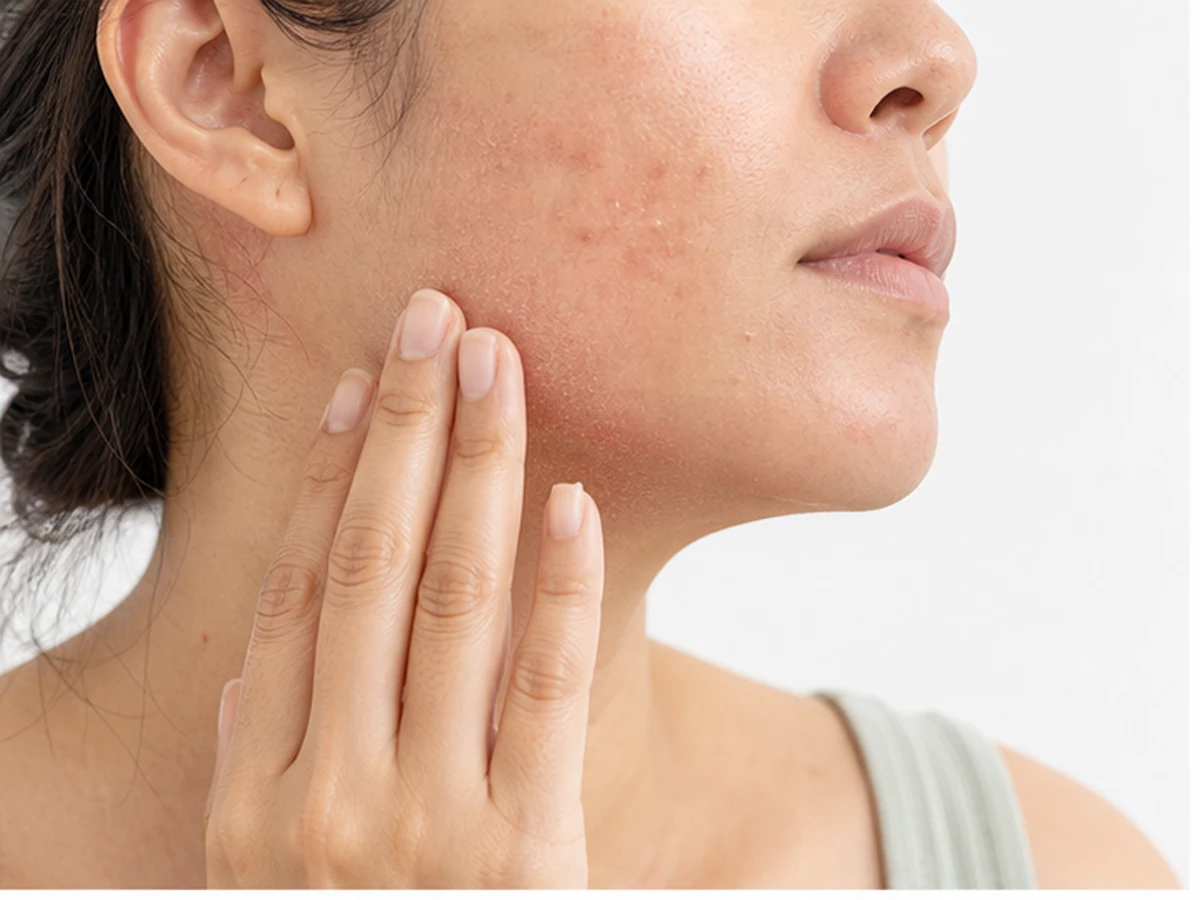
Eczema hyperpigmentation isn't the eczema itself - it's the skin's response to the inflammation. The same immune response that causes redness and itching also leaves behind pigment.
Use this section to decide
Does this advice apply to me?
Find the concern or goal closest to yours, then use the fit signal to decide how much weight to give this guide.If your goal is
Causes?Usually relevant- Fit signal
- Often useful
Yes
If your goal is
TypeUse caution- Fit signal
- Limited evidence
Post-inflammatory
If your goal is
PreventionUsually relevant- Fit signal
- Often useful
Manage eczema
If your goal is
TreatmentUsually relevant- Fit signal
- Often useful
Brightening + SPF
Research notes already in this guide
- Studies confirm that chronic inflammatory skin diseases like eczema are associated with hyperpigmentation.
- Research shows that inflammatory cytokines can directly stimulate melanocyte activity.
- The prevalence of PIH is higher in eczema patients with darker skin types.
- Treatment of the underlying eczema is essential for preventing pigmentation.
Explanation
How it works
The inflammation-pigment connection in eczema.
Eczema flare begins
Inflammatory response causes redness, itching, and skin damage.
Inflammation stimulates melanocytes
Inflammatory mediators like cytokines activate pigment-producing cells.
Excess melanin production
Melanocytes produce more melanin in response to inflammatory signals.
Pigment persists after healing
The excess melanin remains in the skin as dark spots after the eczema has cleared.
Expected results
Results and timeframe
Pigmentation fades with treatment and time, but can persist.
Practical use
How to use it
Manage your eczema effectively
Controlling inflammation is the best way to prevent pigmentation.
Treat existing pigmentation
Use gentle brightening agents like vitamin C, niacinamide, or azelaic acid.
Protect from sun exposure
SPF is essential - UV exposure can darken existing pigmentation.
Safety
Side effects and cautions
- Assuming eczema hyperpigmentation is permanent
It fades with treatment and time - it's not permanent.
- Treating pigmentation without managing eczema
Addressing the eczema is essential - new flares will create new spots.
- Scratching or picking at eczema spots
Trauma adds to inflammation and increases pigmentation risk.
Fit
Who should be careful
- Those with active eczema needing immediate flare management
Worth noting
Small details that can change the answer
- Eczema Effect. Inflammation from eczema triggers melanin production.
- PIH Type. Eczema pigmentation is post-inflammatory hyperpigmentation.
- Duration. Spots can persist for months to years without treatment.
- Risk Groups. Darker skin types (Fitzpatrick III-VI) are more susceptible.
Yes, eczema commonly causes post-inflammatory hyperpigmentation.
Inflammation from eczema flares triggers melanin production.
Darker skin types are at higher risk for eczema pigmentation.
Managing eczema is the key to preventing future pigmentation.
Explanation
Distinguishing eczema hyperpigmentation from other spots
Eczema hyperpigmentation has some characteristic features. It appears in areas where you've had eczema flares - often the flexural areas (elbow creases, behind the knees), face, or hands. The spots are flat and brown, not raised, and they don't itch or hurt. They fade over time, especially with treatment, and they're usually uniform in color. If you notice spots with irregular borders or multiple colors, they should be evaluated by a dermatologist.
Questions
Frequently asked questions
Does eczema hyperpigmentation go away?
Yes - it typically fades over weeks to months with proper treatment and sun protection.
How long does eczema hyperpigmentation last?
It can last for months to a few years, especially without treatment.
Can I use chemical exfoliants on eczema pigmentation?
Carefully - use gentle options and only on healed skin, never on active eczema.
Is eczema hyperpigmentation a sign of scarring?
No - it's pigmentation, not scar tissue. But it can look similar to scarring.
References
Sources
The notes below are drawn from the evidence already cited in this guide. They are not a complete bibliography.
- Studies confirm that chronic inflammatory skin diseases like eczema are associated with hyperpigmentation.
- Research shows that inflammatory cytokines can directly stimulate melanocyte activity.
- The prevalence of PIH is higher in eczema patients with darker skin types.
- Treatment of the underlying eczema is essential for preventing pigmentation.