Evidence
What the evidence shows
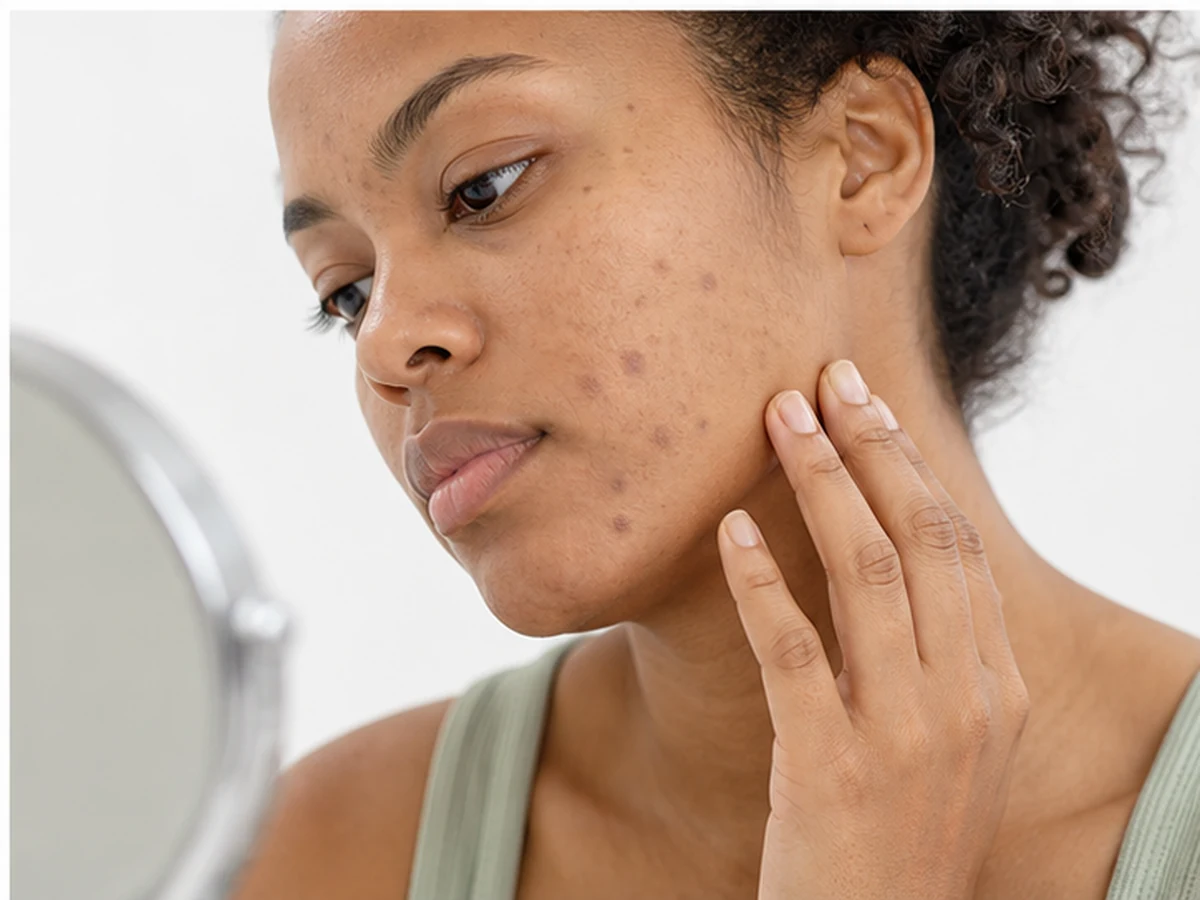
Hyperpigmentation doesn't spread like an infection or a growing stain - it appears in response to triggers. If new spots appear, it's because new trigger events have occurred, not because the old spot has "leaked."
Use this section to decide
Does this advice apply to me?
Find the concern or goal closest to yours, then use the fit signal to decide how much weight to give this guide.If your goal is
Pigment migrationUsually relevant- Fit signal
- Often useful
No
If your goal is
New spots possibleDepends- Fit signal
- Possible fit
Yes
If your goal is
ContagiousUsually relevant- Fit signal
- Often useful
No
If your goal is
Key preventionUse caution- Fit signal
- Limited evidence
Protect from triggers
Research notes already in this guide
- Studies confirm that melanin does not migrate laterally in the skin.
- Research shows that new pigmentation develops in response to localized triggers.
- The distribution of pigmentation follows patterns of exposure or inflammation.
- Clinical observations support the "new spots, not spreading" model.
Explanation
How it works
Trigger event occurs
Inflammation, UV exposure, or hormonal change affects a localized area of skin.
Melanin production increases
Melanocytes in that specific area produce excess pigment.
Localized darkening appears
Pigmentation develops only in the affected area.
New trigger events
If other areas experience triggers, new spots appear independently.
Practical use
How to use it
Identify triggers
Understand what's causing new spots to appear.
Prevent new triggers
Sun protection, manage inflammation, and be aware of hormonal changes.
Treat existing spots
Use appropriate brightening agents and protect from UV.
Safety
Side effects and cautions
- Thinking a dark spot will spread like a stain
Pigment doesn't migrate - new spots form from new triggers.
- Believing hyperpigmentation is contagious
It's not - it's a benign pigment response.
- Assuming new spots mean the old spot is getting worse
New spots are independent events, not the old spot spreading.
Fit
Who should be careful
- Those with rapidly changing moles - see a doctor
Worth noting
Small details that can change the answer
- Mechanism. Pigment doesn't move from one area to another.
- New Spots. New spots develop when triggers affect new areas.
- Common Triggers. Inflammation, sun exposure, and hormonal changes.
- Pattern. Spots often appear in areas with similar triggers.
Hyperpigmentation doesn't spread like an infection - the pigment doesn't move.
New spots appear in response to new trigger events.
Common triggers include inflammation, UV exposure, and hormonal changes.
The appearance of new spots is independent of existing ones.
Preventing new triggers is key to stopping new pigmentation.
Explanation
What spreading means in different conditions
The pattern of pigmentation varies by condition. Post-inflammatory hyperpigmentation appears where inflammation occurred - new breakouts equal new spots. Melasma often has a symmetrical pattern that can expand with hormonal changes, but this is new pigmentation, not the existing pigment spreading. Solar lentigines (sun spots) appear in areas of sun exposure - new spots appear where sun exposure has been highest. In all cases, the pigment stays where it's produced.
Questions
Frequently asked questions
Can hyperpigmentation spread to other parts of the body?
It can appear on any area exposed to triggers, but it doesn't spread from one area to another.
Why is my hyperpigmentation getting bigger?
If a single spot is expanding, there may be ongoing inflammation or activity - see a dermatologist.
Does scratching a dark spot make it spread?
Scratching can cause new inflammation and new pigmentation, which might look like spreading.
Can hyperpigmentation spread to my face from elsewhere?
New spots can appear on your face from new triggers, but they don't migrate from other areas.
References
Sources
The notes below are drawn from the evidence already cited in this guide. They are not a complete bibliography.
- Studies confirm that melanin does not migrate laterally in the skin.
- Research shows that new pigmentation develops in response to localized triggers.
- The distribution of pigmentation follows patterns of exposure or inflammation.
- Clinical observations support the "new spots, not spreading" model.