Evidence
What the evidence shows
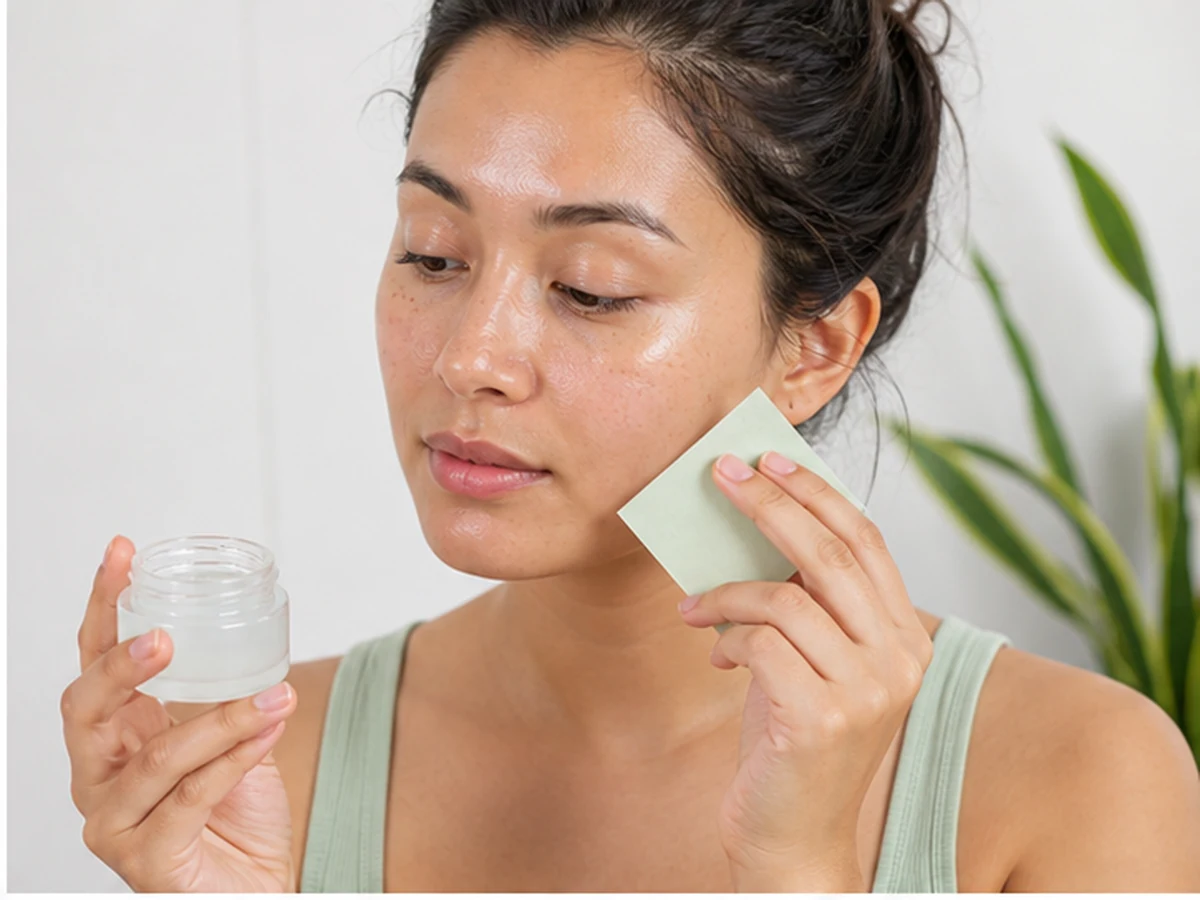
Sebum and hydration are not the same thing. Oily skin can be dehydrated, and skipping moisturizer often makes oiliness worse, not better.
Feeling tight or squeaky clean after washing?
You definitely need moisturizer - your barrier is compromised.Skin looks shiny but feels dry underneath?
This is classic dehydrated oily skin. Moisturizer will help balance it.Using active ingredients like salicylic acid?
Moisturizer is essential to buffer and support the skin.
Use this section to decide
Does this advice apply to me?
Find the concern or goal closest to yours, then use the fit signal to decide how much weight to give this guide.If your goal is
Should you moisturize?Usually relevant- Fit signal
- Often useful
Yes
If your goal is
Best textureUse caution- Fit signal
- Limited evidence
Water-based gel or gel-cream
If your goal is
Key ingredientsUsually relevant- Fit signal
- Often useful
Hyaluronic acid, glycerin, niacinamide
If your goal is
What to avoidDepends- Fit signal
- Possible fit
Heavy oils, shea butter, petrolatum
Explanation
How it works
Barrier weakens
Without hydration, the skin barrier becomes less effective at holding water.
Water evaporates
Transepidermal water loss increases, leaving skin dehydrated.
Oil production spikes
The skin overcompensates by producing more sebum to protect the barrier.
Cycle continues
More oil on the surface doesn't fix dehydration, so the cycle continues.
Practical use
How to use it
Choose a lightweight, oil-free moisturizer
Look for gel, gel-cream, or water-based lotion formulas with humectants.
Apply to damp skin
This helps the moisturizer absorb and traps water in the skin.
Don't use more than a pea-sized amount
A little goes a long way with lightweight formulas.
Safety
Side effects and cautions
- Skipping moisturizer to reduce oiliness
This often backfires and increases oil production.
- Using heavy creams on oily skin
Choose lightweight, water-based formulas instead.
- Not moisturizing at all because skin feels oily
Oily skin can still be dehydrated; use the right moisturizer.
Fit
Who should be careful
- Anyone looking to reduce oiliness - skipping won't help
Worth noting
Small details that can change the answer
- Reactive Sebum. Dehydrated skin can increase sebum production by up to 50% as a compensatory mechanism.
- Water vs Oil. Sebum is oil; hydration is water. They are not interchangeable.
- Barrier Function. A healthy barrier in oily skin still needs water-based hydration to function properly.
- Humectant Power. Humectants like hyaluronic acid attract water without adding oil.
Oily skin needs hydration, not just oil management.
Skipping moisturizer can trigger more oil production.
Choose water-based, lightweight moisturizers with humectants.
Apply to damp skin for better absorption.
Don't mistake oiliness for hydration - they're different things.
Science
Why oily skin still needs hydration
Sebum is produced by the sebaceous glands and serves to lubricate and protect the skin. But sebum is an oil, not a hydrator. The outermost layer of your skin needs water, not oil, to maintain its structural integrity. When it doesn't get it, the barrier weakens and water evaporates more easily, which paradoxically triggers more oil production.
- Reactive Sebum Production
- The skin's response to dehydration, where it produces more oil to compensate for a compromised barrier.
- Humectant
- An ingredient that attracts and holds water, hydrating the skin without adding oil.
Benefits
The right moisturizer for oily skin
Not all moisturizers are created equal, and the right one can transform oily skin without adding shine.
- Hydrates without clogging pores (non-comedogenic formulas)
- Helps normalize oil production over time
- Supports the skin barrier without adding heavy oils
- Leaves skin feeling comfortable, not greasy or tight
Risks
What happens when oily skin skips moisturizer
Skipping moisturizer can lead to a cascade of issues that make oily skin harder to manage.
- Increased oil production as the skin overcompensates
- A compromised barrier that leads to sensitivity and irritation
- Dehydrated skin that looks dull despite being oily
- More pronounced pores and breakouts
Dos Donts
Moisturizing oily skin do's and don'ts
Do
These hydrate without adding heavy oils.
These attract water into the skin.
Helps the moisturizer absorb more effectively.
Avoid
These can feel greasy and clog pores.
This can trigger more oil production.
Fragrances can irritate and trigger breakouts.
Questions
Frequently asked questions
Will moisturizer make my oily skin worse?
Only if you use a heavy, oil-based formula. Lightweight water-based moisturizers won't worsen oiliness.
Can I skip moisturizer if I use a hydrating serum?
A hydrating serum with humectants can be enough for some oily skin, but it's usually not a full replacement for a moisturizer that also supports the barrier.
What's the best moisturizer for oily skin?
A water-based gel or gel-cream with niacinamide, hyaluronic acid, and ceramides.
Should I use moisturizer at night if I have oily skin?
Yes, night is when your skin repairs itself, and it needs hydration to do that effectively.