Evidence
What the evidence shows
The skin barrier is made of lipids - ceramides, cholesterol, and fatty acids. Your body needs dietary fats to produce these lipids. Without enough healthy fats in your diet, your skin simply can't build a strong barrier, no matter how good your skincare routine is.
Use this section to decide
Does this advice apply to me?
Find the concern or goal closest to yours, then use the fit signal to decide how much weight to give this guide.If your goal is
Omega-3sUsually relevant- Fit signal
- Often useful
Salmon, walnuts, flaxseeds
If your goal is
Vitamin CUsually relevant- Fit signal
- Often useful
Citrus, berries, bell peppers
If your goal is
ZincUsually relevant- Fit signal
- Often useful
Oysters, beef, pumpkin seeds
If your goal is
AntioxidantsUsually relevant- Fit signal
- Often useful
Leafy greens, berries
Research notes already in this guide
- Omega-3 fatty acids are well-documented for supporting skin barrier function.
- Vitamin C is essential for collagen synthesis.
- Zinc deficiency is associated with impaired skin barrier function.
- A nutrient-rich diet is recommended for skin health.
Practical use
How to use it
Incorporate omega-3-rich foods
Eat salmon, sardines, walnuts, or flaxseeds weekly.
Eat vitamin C-rich foods daily
Include citrus, berries, or bell peppers in your diet.
Choose zinc-rich foods
Oysters, beef, or pumpkin seeds are good sources.
Safety
Side effects and cautions
- Relying only on topical products for barrier repair
Topical products help, but a nutrient-rich diet provides the building blocks for repair.
- Avoiding all fats thinking they're bad for skin
Healthy fats are essential for barrier function - choose omega-3 rich sources.
- Ignoring zinc and vitamin C
Both are essential for skin repair and barrier function.
Fit
Who should be careful
- Those with food allergies (find alternatives)
Helpful context
What else is worth knowing
Key nutrients for barrier repair
Essential—must come from food
Supports structure and protection
Essential for healing
Prevent oxidative damage
Building a barrier-supporting diet
Worth noting
Small details that can change the answer
- Omega-3s. Essential for barrier lipids - must come from food.
- Vitamin C. Supports collagen and acts as an antioxidant.
- Zinc. Essential for skin repair and barrier function.
- Antioxidants. Protect the barrier from oxidative damage.
Foods rich in omega-3s, vitamin C, zinc, and antioxidants support barrier repair.
Omega-3s are essential for lipid production - they must come from food.
Vitamin C supports collagen and protects against oxidative damage.
Zinc is essential for skin repair and barrier function.
A nutrient-rich diet works alongside topical skincare for optimal barrier health.
Definition
The best foods for skin barrier repair
Nutrients that support barrier function.
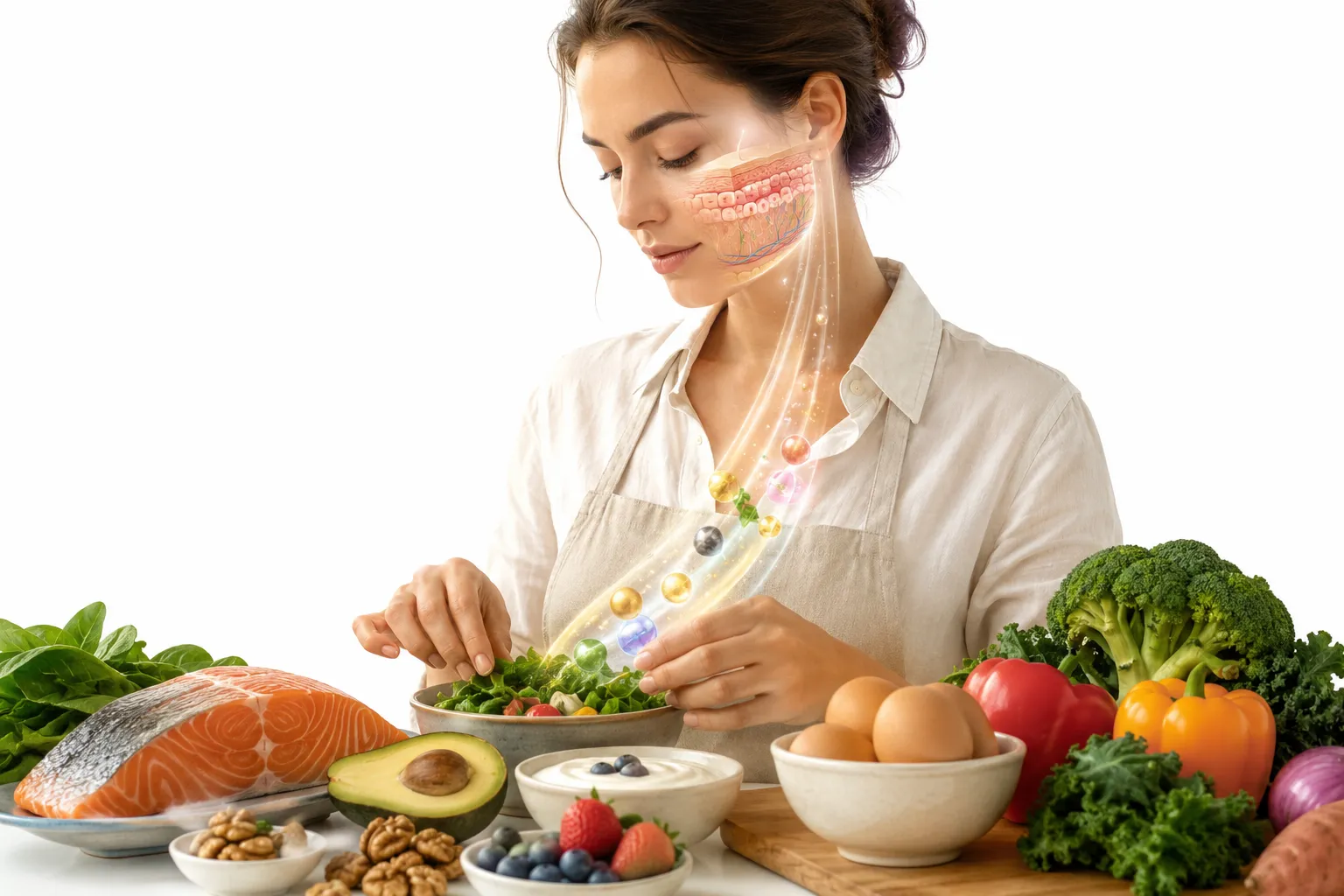
The skin barrier requires specific nutrients to maintain and repair itself. The most important categories are: (1) healthy fats - omega-3 and omega-6 fatty acids are essential for lipid production; (2) vitamin C - needed for collagen and antioxidant protection; (3) zinc - essential for skin repair and immune function; (4) antioxidants - protect the barrier from oxidative stress; and (5) protein - provides amino acids for skin cell production. A diet rich in these nutrients supports barrier repair.
Top foods for barrier repair
The best sources of barrier-supporting nutrients.
- Salmon and sardines - rich in omega-3 fatty acids
- Walnuts and flaxseeds - plant-based omega-3s
- Citrus fruits, kiwi, and bell peppers - vitamin C
- Leafy greens (spinach, kale) - antioxidants and vitamins
- Oysters and beef - zinc
- Pumpkin seeds - zinc and antioxidants
- Bone broth - collagen and amino acids
- Berries - antioxidants that protect the barrier
- Avocado - healthy fats and vitamin E
Questions
Frequently asked questions
Can diet really repair the skin barrier?
Yes, the nutrients in food provide the building blocks for barrier lipids and skin cells.
What's the best food for skin barrier repair?
Salmon (omega-3s) and vitamin C-rich fruits are excellent starting points.
How long does it take for diet to affect skin barrier?
It can take weeks to months of consistent dietary changes to see skin improvements.
Can supplements replace food for barrier repair?
They can help fill gaps, but whole foods provide a broader range of nutrients.
References
Sources
The notes below are drawn from the evidence already cited in this guide. They are not a complete bibliography.
- Omega-3 fatty acids are well-documented for supporting skin barrier function.
- Vitamin C is essential for collagen synthesis.
- Zinc deficiency is associated with impaired skin barrier function.
- A nutrient-rich diet is recommended for skin health.