Evidence
What the evidence shows
Heat rash isn't an infection or an allergy - it's a plumbing problem. The skin's sweat ducts get blocked, and the trapped moisture irritates surrounding tissue. Cool the skin, unblock the ducts, and the rash typically fades on its own.
Rash is mild and improving?
Home care is usually sufficient.Rash persists beyond a week?
Consult a healthcare provider.Signs of infection present?
Seek medical attention promptly.
Use this section to decide
Does this advice apply to me?
Find the concern or goal closest to yours, then use the fit signal to decide how much weight to give this guide.If your goal is
Medical nameUse caution- Fit signal
- Limited evidence
Miliaria
If your goal is
Common causeUsually relevant- Fit signal
- Often useful
Blocked sweat ducts
If your goal is
DurationUse caution- Fit signal
- Limited evidence
3-7 days
If your goal is
Contagious?Usually relevant- Fit signal
- Often useful
No
Research notes already in this guide
- The link between sweat duct blockage and heat rash is well established in dermatological literature.
- Studies consistently show that hot, humid conditions dramatically increase heat rash incidence.
- The effectiveness of cooling and drying as treatment is well documented in clinical practice.
- Miliaria types and their underlying mechanisms are clearly understood in medical science.
Practical use
How to use it
Cool the skin immediately
Move to a cooler environment, apply cool compresses, or take a cool shower to reduce sweating and inflammation.
Keep the rash area dry
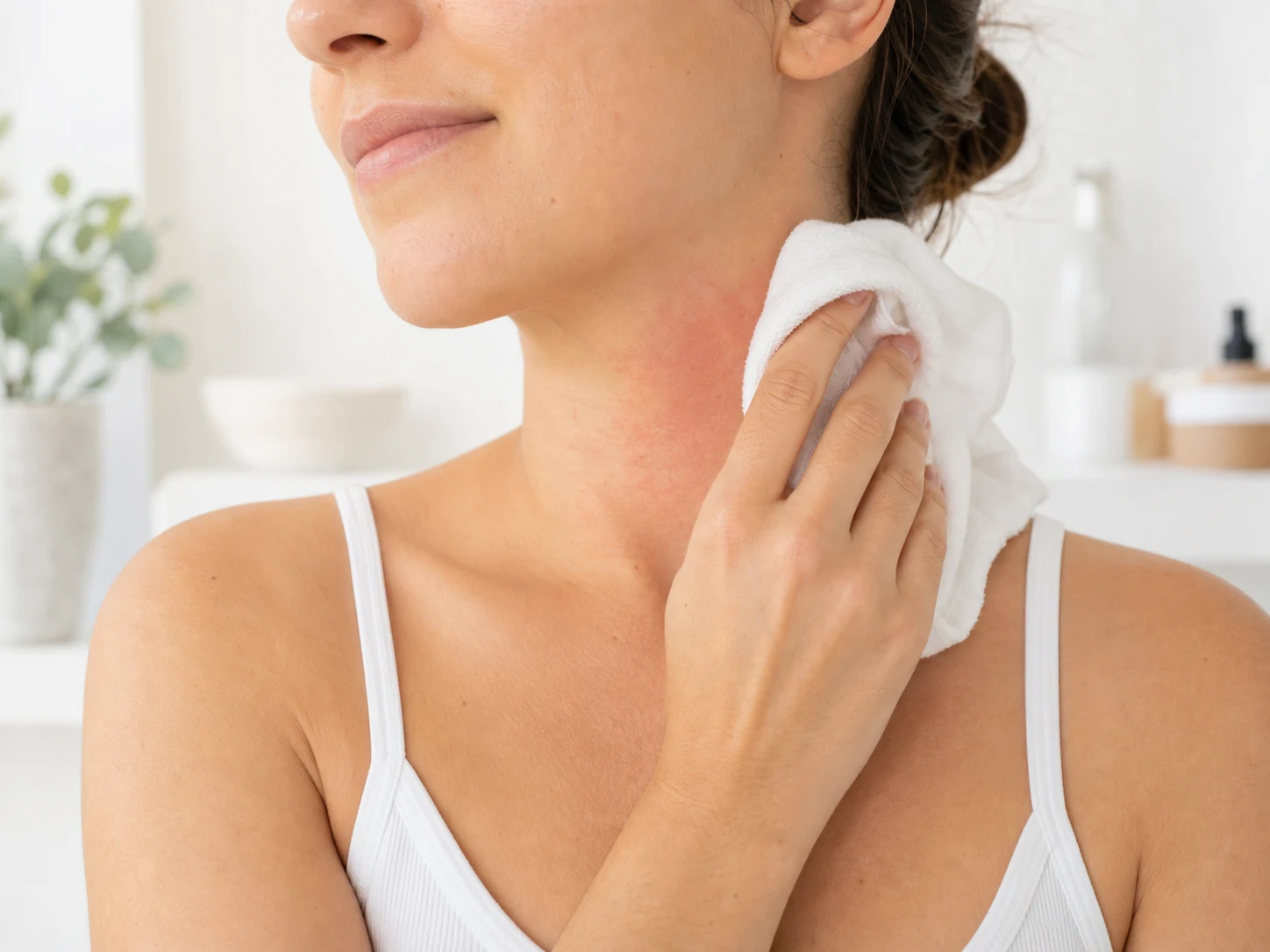
Pat the area dry gently with a clean towel and avoid activities that cause heavy sweating.
Use lightweight, breathable clothing
Wear loose, cotton clothing that allows air circulation and reduces sweat buildup.
Safety
Side effects and cautions
- Treating heat rash with heavy creams or ointments
Heavy products can further block sweat ducts and worsen the condition. Use lightweight, oil-free products or skip moisturizer in affected areas.
- Scratching the rash to relieve itching
Scratching can introduce bacteria and lead to secondary infections. Use cool compresses instead to soothe discomfort.
- Assuming heat rash only affects infants
Heat rash affects adults too, particularly in hot, humid climates or during intense physical activity.
Fit
Who should be careful
- Rashes that worsen or show signs of infection
Helpful context
What else is worth knowing
At-risk groups
Heat rash can affect anyone, but some groups are more susceptible.
Worth noting
Small details that can change the answer
- Sweat Duct Blockage. Heat rash occurs when dead skin cells or bacteria block the opening of a sweat duct.
- Miliaria Types. There are four types of heat rash, ranging from clear bumps (miliaria crystallina) to deeper, inflamed red bumps (miliaria profunda).
- Age Factors. Heat rash is most common in infants because their sweat ducts are smaller and more easily blocked.
- Seasonal Pattern. Heat rash is far more common in summer months, particularly during heat waves or in tropical climates.
Heat rash is caused by blocked sweat ducts that trap perspiration beneath the skin.
It typically appears as red, prickly bumps in areas where sweating is heaviest.
The condition is most common in hot, humid environments and during periods of heavy sweating.
Treatment focuses on cooling the skin, keeping it dry, and avoiding further sweating.
Most cases resolve on their own within 3 to 7 days without medical intervention.
Definition
What is heat rash?
Heat rash, or miliaria, is a skin condition that develops when sweat ducts become blocked and perspiration becomes trapped beneath the skin. This trapped sweat leaks into the surrounding skin tissue, causing inflammation, redness, and the characteristic small bumps. While uncomfortable, it's generally a benign condition that resolves once the skin is cooled and the blockage clears.
- The condition affects people of all ages but is most common in infants and young children
- Heat rash is not contagious and cannot be spread from person to person
- The rash typically appears on areas of the body where sweat is most likely to be trapped
- Symptoms usually improve within a few days of cooling the skin
Explanation
Why does heat rash happen?
The skin's sweat ducts are narrow tubes that carry perspiration from the sweat glands deep in the skin to the surface. When these ducts become blocked, sweat can't escape and backs up into the surrounding tissue. This trapped fluid irritates the skin and triggers an inflammatory response. Blockages can occur for several reasons: dead skin cells accumulating at the duct opening, bacteria on the skin's surface, or excessive sweating that overwhelms the ducts' capacity.
Science
The science of sweat and skin
The human body contains between 2 and 4 million sweat glands distributed across the skin. These glands are part of the body's thermoregulatory system, designed to release water-based perspiration that evaporates and cools the body. When the environment is hot and humid, the evaporation process slows down, leading to more sweating and a higher risk of duct blockages.
- Eccrine glands
- The most common type of sweat gland, found throughout the body, that produces a watery perspiration for cooling.
- Thermoregulation
- The body's ability to maintain a stable internal temperature through processes like sweating and blood flow adjustment.
- Stratum corneum
- The outermost layer of skin that can trap dead cells and contribute to sweat duct blockages.
Questions
Frequently asked questions
Is heat rash dangerous?
In most cases, no. Heat rash is uncomfortable but generally harmless and resolves on its own. However, if the rash becomes infected or doesn't improve with home care, medical attention may be needed.
Can heat rash spread to other parts of the body?
Heat rash can appear on any area where sweat ducts become blocked. It doesn't spread like an infection, but new areas can develop if you continue sweating and staying in hot conditions.
How long does heat rash last?
With proper cooling and drying, heat rash typically resolves within 3 to 7 days. More severe cases may take longer, particularly if the skin remains irritated or if secondary infection develops.
Is heat rash the same as sun rash?
No. Sun rash, or polymorphic light eruption, is an allergic reaction to UV exposure. Heat rash is purely a blockage of sweat ducts and doesn't require sun exposure to develop.
References
Sources
The notes below are drawn from the evidence already cited in this guide. They are not a complete bibliography.
- The link between sweat duct blockage and heat rash is well established in dermatological literature.
- Studies consistently show that hot, humid conditions dramatically increase heat rash incidence.
- The effectiveness of cooling and drying as treatment is well documented in clinical practice.
- Miliaria types and their underlying mechanisms are clearly understood in medical science.