Evidence
What the evidence shows
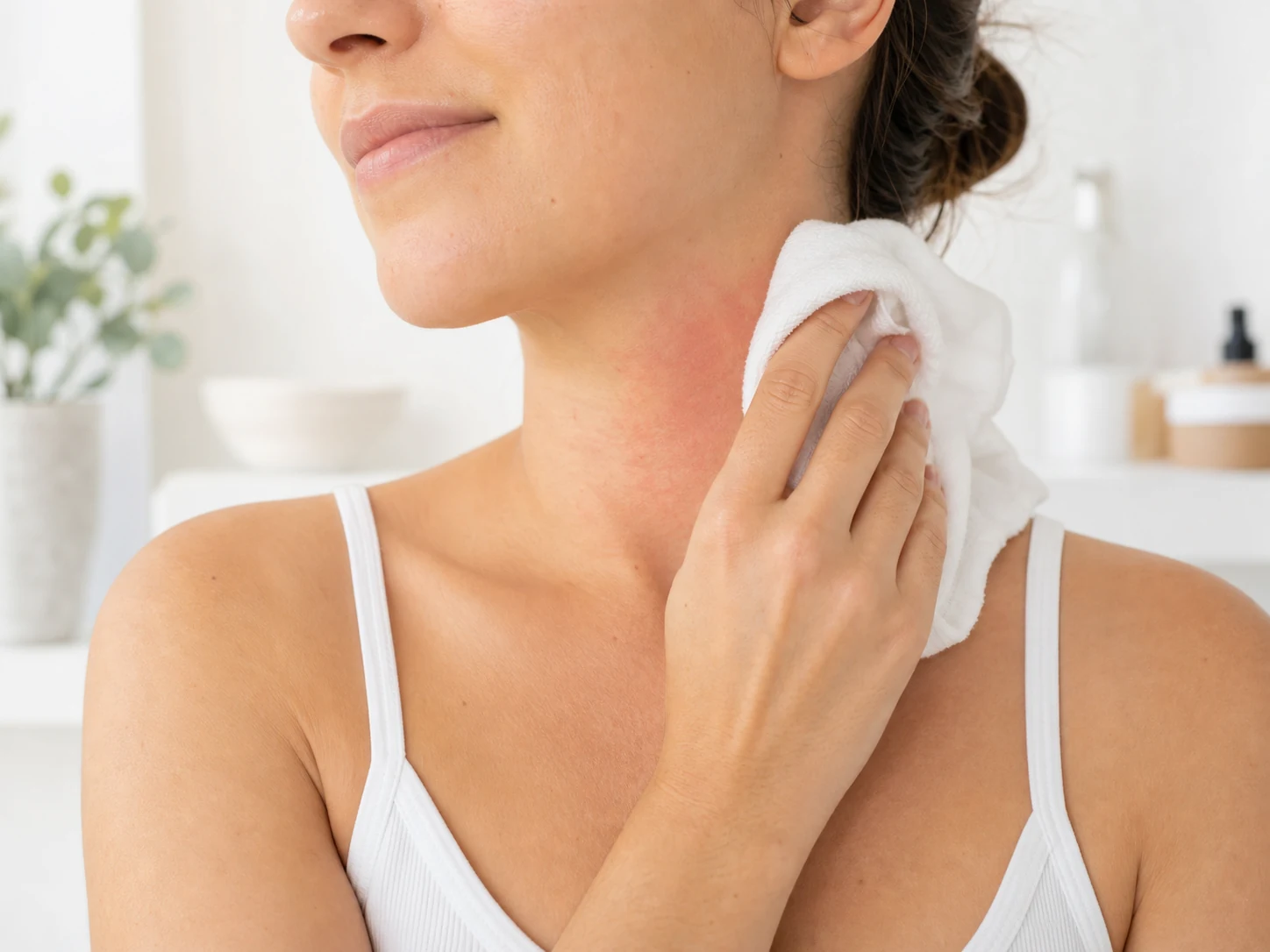
The appearance of heat rash is a direct indicator of how deep the sweat duct blockage is. Clear blisters mean a shallow blockage, while red bumps indicate a deeper blockage with more inflammation. Learning to read these visual clues helps in understanding how to treat it.
Bumps are small, clustered, and just appeared?
Likely heat rash.Bumps are following hair follicles?
May be folliculitis instead.Rash is accompanied by fever?
Seek medical attention.
Use this section to decide
Does this advice apply to me?
Find the concern or goal closest to yours, then use the fit signal to decide how much weight to give this guide.If your goal is
Miliaria crystallinaUse caution- Fit signal
- Limited evidence
Clear blisters
If your goal is
Miliaria rubraDepends- Fit signal
- Possible fit
Red, itchy bumps
If your goal is
Miliaria profundaUse caution- Fit signal
- Limited evidence
Flesh-colored bumps
If your goal is
Miliaria pustulosaUse caution- Fit signal
- Limited evidence
Pus-filled bumps
Research notes already in this guide
- Clinical dermatology recognizes the distinct visual patterns of heat rash types.
- The correlation between rash appearance and blockage depth is well documented.
- Visual identification of heat rash is generally reliable when combined with patient history and environmental factors.
- When appearance is atypical, medical consultation is recommended for accurate diagnosis.
Practical use
How to use it
Examine the rash carefully
Note the color, size, and whether the bumps are fluid-filled, pus-filled, or solid. Check location and pattern.
Consider the context
Have you been in hot, humid conditions? Has sweating been heavy? This helps confirm heat rash.
Monitor for changes
If the rash appears to change or worsen, or if you develop fever, seek medical advice.
Safety
Side effects and cautions
- Mistaking miliaria crystallina for contact dermatitis
Miliaria crystallina blisters are clear and don't itch, while contact dermatitis usually involves redness and itching.
- Assuming all red bumps in hot weather are heat rash
Folliculitis, allergic reactions, and other conditions can look similar. Consider location and duration.
- Popping the blisters to drain them
Popping blisters can introduce bacteria and lead to infection. Leave them intact to heal naturally.
Fit
Who should be careful
- Rashes that don't match the described appearance or are accompanied by fever
Worth noting
Small details that can change the answer
- Miliaria Crystallina. The most superficial type appears as clear, easily ruptured blisters the size of a pinhead.
- Miliaria Rubra Appearance. This type shows as clusters of red bumps that may be surrounded by a red halo.
- No Sweating Effect. The skin affected by heat rash typically doesn't sweat, creating a distinctive patchy pattern.
- Color Variations. Miliaria profunda bumps can be flesh-colored or slightly raised and don't always appear red.
Heat rash appears differently depending on the depth of the sweat duct blockage.
Miliaria crystallina shows as clear blisters, miliaria rubra as red, itchy bumps.
Miliaria profunda appears as flesh-colored bumps, and miliaria pustulosa as pus-filled bumps.
Common locations include the neck, chest, back, armpits, and skin folds.
Severe cases or signs of infection require medical attention.
Definition
The four types of heat rash by appearance
Heat rash is classified into four distinct types based on how deep the sweat duct blockage occurs. Each type has a characteristic appearance that reflects its depth.
- Miliaria crystallina: clear, tiny blisters that look like beads of water trapped in the skin
- Miliaria rubra: red bumps with a prickly sensation, often with a red halo around each bump
- Miliaria profunda: flesh-colored, firm bumps that don't itch as much as miliaria rubra
- Miliaria pustulosa: red bumps with pus-filled centers, indicating a secondary infection
Explanation
How to identify heat rash by location
Heat rash tends to appear in specific locations where sweat is trapped. The most common sites include the neck, chest, back, armpits, groin, and skin folds. In infants, the rash often appears on the face and diaper area. The location can help distinguish heat rash from other conditions, as rashes with different causes typically appear elsewhere.
Risks
When heat rash appearance can be concerning
While most heat rash is harmless, certain visual changes signal a need for medical attention.
- Pus-filled bumps or weeping fluid from the rash
- Spreading redness beyond the rash area, suggesting infection
- Fever accompanying the rash
- Rash that doesn't improve after 3-4 days of home care
- Pain or severe tenderness in the affected area
Questions
Frequently asked questions
Does heat rash always look red?
No. Miliaria crystallina appears as clear blisters, and miliaria profunda appears as flesh-colored bumps. Only miliaria rubra has the characteristic red appearance.
Can heat rash look like hives?
It can be similar, but hives are typically larger, raised areas that come and go. Heat rash is more consistent and appears as small, fixed bumps.
How can I tell the difference between heat rash and folliculitis?
Folliculitis appears around hair follicles, often as pustules. Heat rash appears in sweat-prone areas and doesn't follow hair follicles as clearly.
Can heat rash appear on the face?
Yes, particularly around the hairline and forehead where sweat can accumulate. In infants, the face is a common site.
References
Sources
The notes below are drawn from the evidence already cited in this guide. They are not a complete bibliography.
- Clinical dermatology recognizes the distinct visual patterns of heat rash types.
- The correlation between rash appearance and blockage depth is well documented.
- Visual identification of heat rash is generally reliable when combined with patient history and environmental factors.
- When appearance is atypical, medical consultation is recommended for accurate diagnosis.