Evidence
What the evidence shows
Hyperpigmentation is not a single condition but a group of conditions that share a common mechanism: excess melanin production and distribution in the skin.
Understanding of mechanisms
Understanding of mechanismsTreatment options
Treatment optionsImpact on quality of life
Impact on quality of life
Use this section to decide
Does this advice apply to me?
Find the concern or goal closest to yours, then use the fit signal to decide how much weight to give this guide.If your goal is
DefinitionUsually relevant- Fit signal
- Often useful
Excess melanin production
If your goal is
TypesUse caution- Fit signal
- Limited evidence
PIH, sunspots, melasma
If your goal is
Key CauseUse caution- Fit signal
- Limited evidence
Overactive melanocytes
If your goal is
TreatmentUse caution- Fit signal
- Limited evidence
Niacinamide, sunscreen
Research notes already in this guide
- Hyperpigmentation is one of the most common skin concerns globally.
- It affects quality of life, with significant psychological impact.
- Treatment options have improved significantly in recent decades.
Practical use
How to use it
Identify the type of hyperpigmentation
Different types respond to different treatments.
Use sunscreen daily
Sun protection is essential for any treatment to work.
Consider targeted treatments
Niacinamide, retinoids, and acids can help fade pigmentation.
Safety
Side effects and cautions
- Thinking hyperpigmentation is permanent
With consistent treatment, it can be significantly improved.
- Skipping sunscreen while treating hyperpigmentation
Without sunscreen, treatments won't be effective.
- Expecting immediate results
Treating hyperpigmentation takes months of consistent effort.
Fit
Who should be careful
- Those seeking an immediate cure
Worth noting
Small details that can change the answer
- Melanin Function. Melanin protects the skin from UV damage by absorbing and scattering UV radiation.
- Types of Hyperpigmentation. The three main types are PIH, sunspots, and melasma.
- Commonality. Hyperpigmentation affects up to 90% of people with darker skin types.
- Treatment Time. Treating hyperpigmentation can take months of consistent effort.
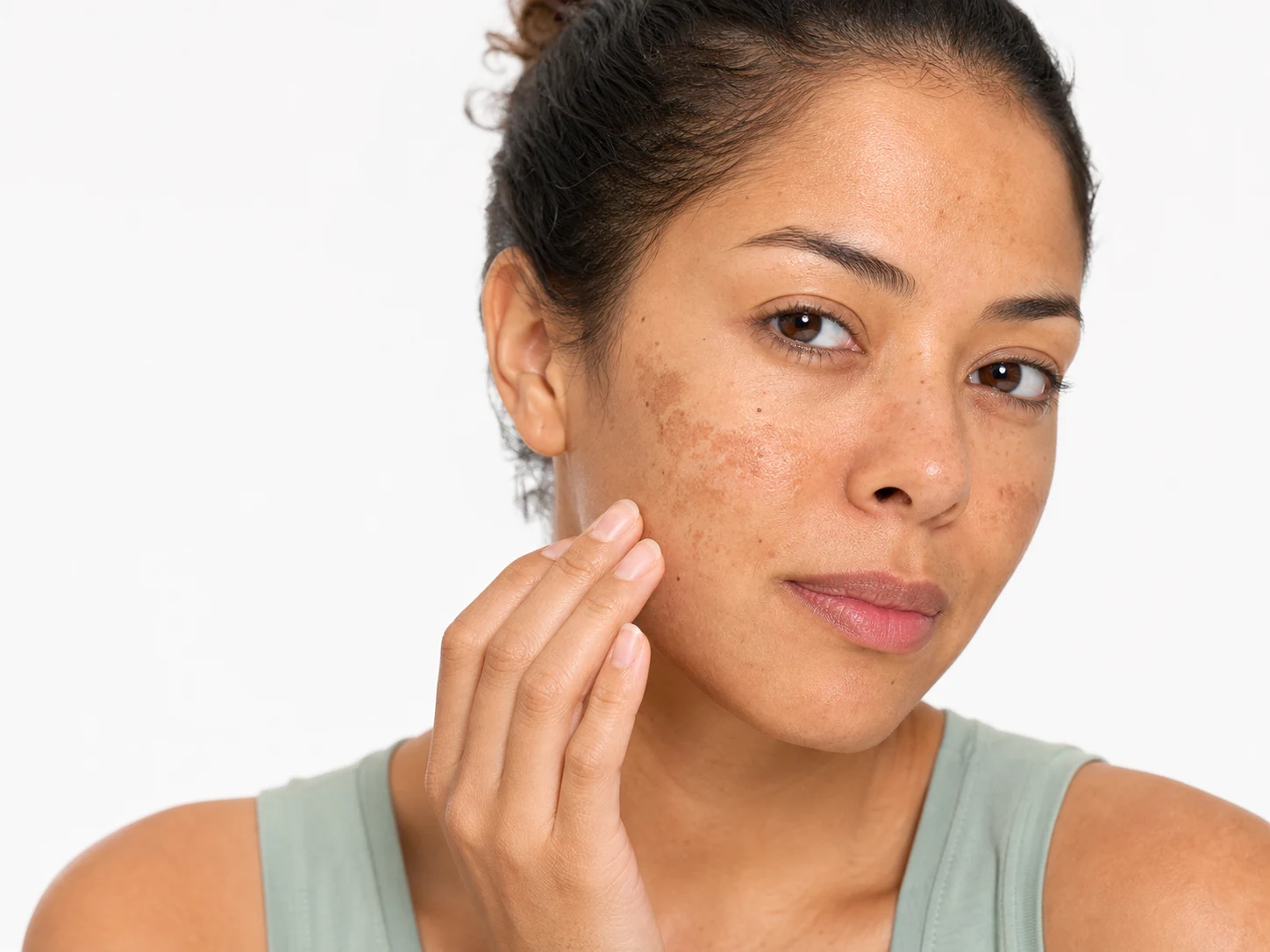
Hyperpigmentation is the darkening of skin from excess melanin.
The three main types are PIH, sunspots, and melasma.
It's caused by overactive melanocytes.
Treatment takes months of consistent effort.
Sunscreen is essential for any treatment to work.
Definition
Understanding hyperpigmentation
Hyperpigmentation is the darkening of the skin caused by excess melanin. It can appear as small patches, large areas, or even cover the entire face. The condition is the result of overactive melanocytes that produce more melanin than necessary.
- Caused by overactive melanocytes
- Results in darker patches of skin
- Can be triggered by sun, inflammation, or hormones
- Harmless but can affect quality of life
Science
The science of skin pigmentation
Melanin is produced by melanocytes in the basal layer of the epidermis. The melanin is then transferred to keratinocytes, where it provides protection from UV radiation. Hyperpigmentation occurs when this process is overactive, either due to external triggers (like UV exposure) or internal factors (like hormones).
- Melanocyte
- A cell in the basal layer of the epidermis that produces melanin.
- Keratinocyte
- The most common type of skin cell in the epidermis.
History
Understanding hyperpigmentation through history
Human skin pigmentation has evolved to protect against UV radiation. People in regions with high UV exposure have darker skin, with more melanocytes that produce more melanin. This natural variation is now understood, but hyperpigmentation as a skin concern has been documented for centuries.
- Ancient Era
- Hyperpigmentation was often linked to illness or 'imbalances' in ancient medical texts.
- 19th Century
- Hyperpigmentation began to be understood as a skin condition tied to specific triggers like sun exposure and inflammation.
- Modern Era
- Treatments including sunscreen, niacinamide, and retinoids are the standard of care.
Questions
Frequently asked questions
Is hyperpigmentation dangerous?
It's generally harmless, though some forms can be linked to skin cancer.
Can hyperpigmentation be cured?
It can be significantly improved but may require ongoing maintenance.
Is hyperpigmentation genetic?
Genetics play a role in susceptibility, but triggers like sun exposure are key.
Does hyperpigmentation only affect darker skin?
It affects all skin types but is more visible on darker skin.
References
Sources
The notes below are drawn from the evidence already cited in this guide. They are not a complete bibliography.
- Hyperpigmentation is one of the most common skin concerns globally.
- It affects quality of life, with significant psychological impact.
- Treatment options have improved significantly in recent decades.