Evidence
What the evidence shows
Normal skin type is well-defined and extensively studied.
Biological definition
Well establishedPopulation data
Extensive studiesCare guidelines
Solid evidence base
Use this section to decide
Does this advice apply to me?
Find the concern or goal closest to yours, then use the fit signal to decide how much weight to give this guide.If your goal is
Oil productionUsually relevant- Fit signal
- Often useful
Balanced
If your goal is
Moisture levelUsually relevant- Fit signal
- Often useful
Balanced
If your goal is
Product toleranceUsually relevant- Fit signal
- Often useful
High
If your goal is
Maintenance needUse caution- Fit signal
- Limited evidence
Low to moderate
Research notes already in this guide
- Normal skin type is well-defined in dermatological classification systems.
- The biological markers of normal skin function are well established.
- Population studies have documented the prevalence and distribution of skin types.
- The concept of normal skin type is consistently referenced in dermatological literature.
Expected results
Results and timeframe
Your skin type can change over time, so stay attentive to its needs.
Practical use
How to use it
Cleanse with a gentle, sulfate-free product
Use a mild cleanser once or twice daily to maintain balance without stripping the skin.
Moisturize daily
A lightweight moisturizer supports barrier function and keeps skin comfortable.
Protect with SPF every day
Sun protection is non-negotiable for all skin types, including normal.
Safety
Side effects and cautions
- Confusing normal skin type with problem-free skin
Normal skin still has vulnerabilities, particularly to sun damage, aging, and environmental factors.
- Using harsh products because you think you're not sensitive
Even normal skin type can be damaged by over-cleansing, over-exfoliation, and harsh ingredients over time.
- Assuming normal skin type never changes
Your skin type can change with age, hormones, seasons, and environmental factors.
Fit
Who should be careful
- Those with specific skin concerns requiring more targeted care
Helpful context
What else is worth knowing
Is this information for you?
Normal skin type varies slightly across different demographics.
Worth noting
Small details that can change the answer
- Sebum Balance. Normal skin type produces sebum at a rate that maintains barrier function without causing greasiness.
- Barrier Health. The moisture barrier in normal skin is intact, keeping water in and irritants out effectively.
- Product Tolerance. Normal skin type typically tolerates a wide range of products without irritation or adverse reactions.
- Age Changes. Normal skin often becomes drier with age, particularly after menopause in women and from the 40s onward.
Normal skin type is characterized by balanced oil production, good moisture retention, and minimal sensitivity.
It's not a rare or mythical state, just one end of a spectrum that includes oily, dry, combination, and sensitive skin.
Normal skin type is the easiest to care for but still requires consistent attention.
Sun protection, gentle cleansing, and moisturizing are essential for maintaining normal skin long-term.
Definition
What defines a normal skin type?
A normal skin type is defined by its balance. It produces enough oil to protect and moisturize the skin without being greasy, and it retains water effectively without being tight or flaky. The skin's natural pH is balanced, and the microbiome is healthy and stable.
- Not oily: no visible shine or frequent breakouts
- Not dry: no feeling of tightness or visible flaking
- Not sensitive: rarely reacts to products or environmental changes
- Maintains its own equilibrium with minimal care required
Explanation
Why 'normal' might not be the most helpful term
The term normal can be misleading because it implies that other skin types are abnormal, which they absolutely aren't. Oily, dry, combination, and sensitive skin are all completely normal variants. In skincare, 'normal' is really just a technical term for 'balanced' rather than a value judgment.
Science
The biology of normal skin type
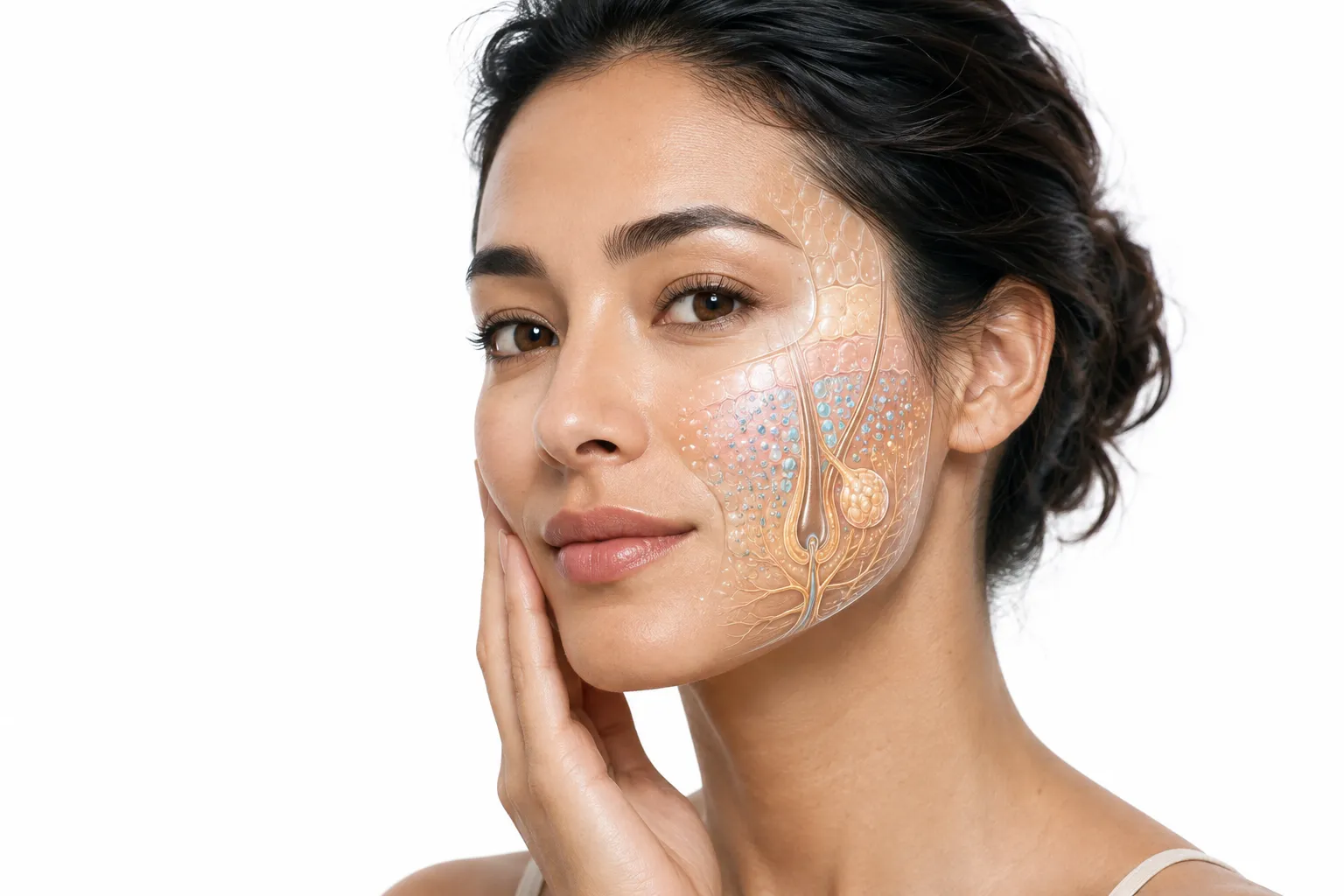
Normal skin type reflects a healthy equilibrium across multiple biological systems. Sebaceous glands produce sebum at a moderate rate, providing the necessary lipids for barrier function without overwhelming the follicles. The stratum corneum maintains optimal hydration levels through a balance of natural moisturizing factors and lipids.
- Natural moisturizing factors
- Water-soluble compounds in the skin that attract and retain moisture, keeping the skin hydrated.
- Sebaceous glands
- Oil-producing glands in the skin that maintain the skin's protective lipid barrier.
- Lipid barrier
- The fatty layer in the stratum corneum that prevents water loss and protects against environmental damage.
Questions
Frequently asked questions
Is normal skin type genetic?
Skin type is largely determined by genetics, but it can be influenced by age, hormones, environment, and lifestyle.
How common is normal skin type?
It's less common than combination skin. Many people have combination skin, where different areas of the face behave differently.
Can I change my skin to a normal type?
You can manage your skin to achieve a more balanced state, but you can't fundamentally alter your genetic skin type.
What's the difference between normal skin and balanced skin?
They're essentially the same thing. Normal skin type is the balanced state between oily and dry.
References
Sources
The notes below are drawn from the evidence already cited in this guide. They are not a complete bibliography.
- Normal skin type is well-defined in dermatological classification systems.
- The biological markers of normal skin function are well established.
- Population studies have documented the prevalence and distribution of skin types.
- The concept of normal skin type is consistently referenced in dermatological literature.