Evidence
What the evidence shows
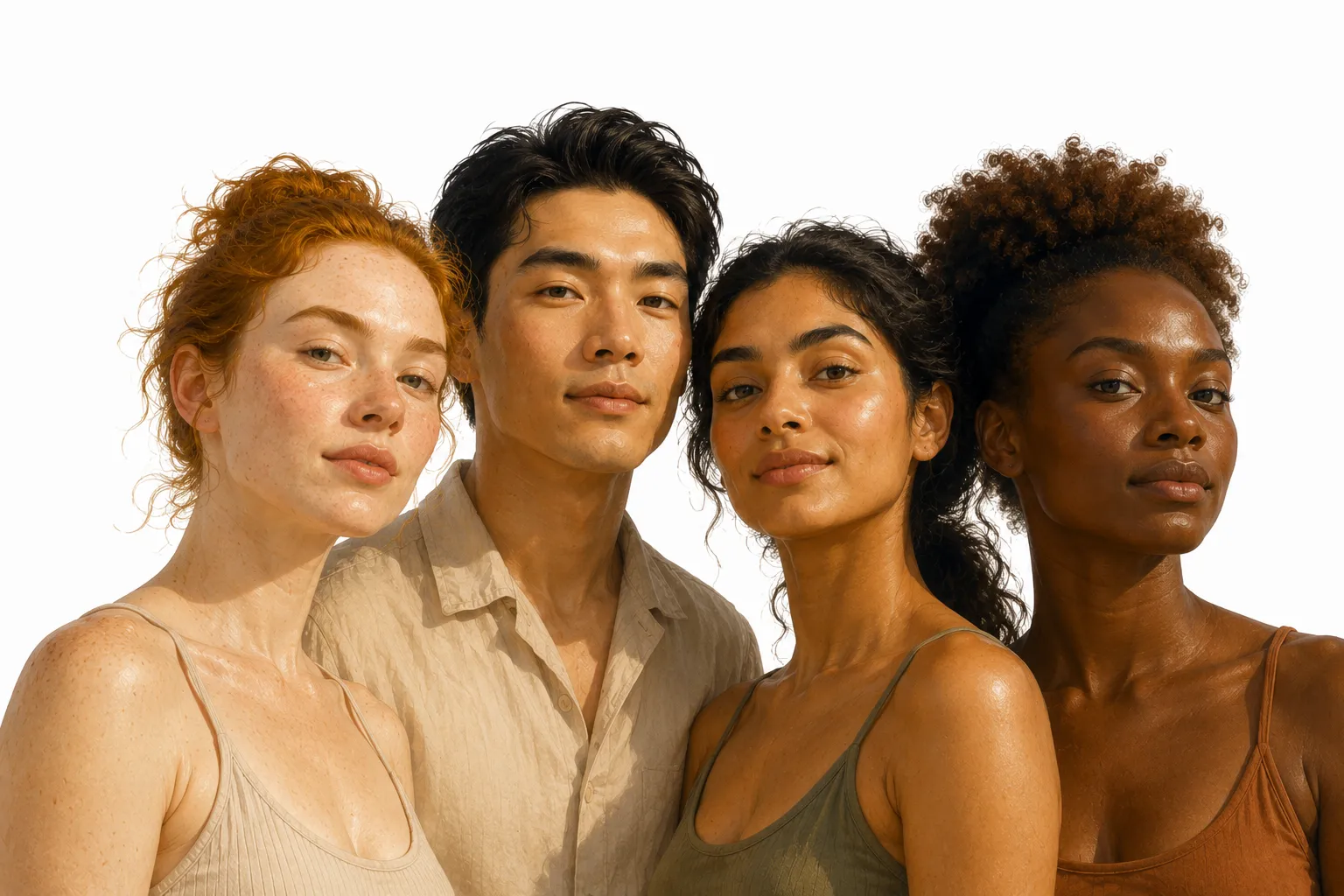
The presence of melanin is universal - it's the quantity and type that vary. Everyone has melanin; it's a fundamental part of human biology, not a feature of certain skin types.
Use this section to decide
Does this advice apply to me?
Find the concern or goal closest to yours, then use the fit signal to decide how much weight to give this guide.If your goal is
AnswerUsually relevant- Fit signal
- Often useful
Yes - all skin
If your goal is
ProducerUse caution- Fit signal
- Limited evidence
Melanocytes
If your goal is
FunctionUse caution- Fit signal
- Limited evidence
UV protection, color
If your goal is
VariationUse caution- Fit signal
- Limited evidence
Amount and type vary
Research notes already in this guide
- All human skin contains melanin - it's a universal feature.
- Melanocytes are present in all skin types.
- The amount and type of melanin vary, not the presence.
- Research confirms that melanin production is a fundamental skin function.
Explanation
How it works
The process of melanin production from melanocytes.
Melanocytes produce melanin
Specialized cells in the basal layer of the epidermis.
Melanin is transferred
Transferred to keratinocytes in the upper skin layers.
Provides protection
Melanin absorbs UV radiation and protects skin cells.
Practical use
How to use it
Understand that melanin is universal
Everyone has melanin - it's a fundamental part of skin biology.
Recognize that melanin affects your skin's needs
Your melanin level influences UV protection needs and treatment responses.
Protect your skin regardless of melanin level
All skin needs sun protection, regardless of melanin amount.
Safety
Side effects and cautions
- Assuming some people don't have melanin
Everyone has melanin - it's the amount and type that vary.
- Equating skin color with melanin presence
The presence is universal - only the quantity changes.
- Thinking melanin is only about skin color
Melanin also provides UV protection and influences aging.
Fit
Who should be careful
- Those seeking simple color-based explanations
Worth noting
Small details that can change the answer
- Universal Presence. Melanin is present in all skin types.
- Melanocytes. All skin has melanocytes that produce melanin.
- Types of Melanin. Eumelanin (dark) and pheomelanin (light) exist in all skin.
- UV Protection. Melanin provides natural UV protection in all skin.
All skin types contain melanin - it's a universal feature.
Melanin is produced by melanocytes in all skin.
The amount and type of melanin vary, but the presence is universal.
Melanin provides UV protection and determines skin color.
Everyone needs sun protection, regardless of melanin level.
Definition
What is melanin?
Melanin is a pigment produced by melanocytes in the skin. It determines skin, hair, and eye color and provides natural protection against UV radiation.
- Produced by melanocytes in the epidermis
- Comes in two main types - eumelanin and pheomelanin
- Determines skin color
- Provides natural UV protection
- Present in all skin types
Science
How melanin is produced
Melanin is produced through a process called melanogenesis. Melanocytes in the basal layer of the epidermis produce melanin in response to UV exposure and other signals. The melanin is then transferred to keratinocytes, where it provides protection. This process occurs in everyone, though the amount and type of melanin produced vary.
- Melanocyte
- The cell that produces melanin in the skin.
- Eumelanin
- The darker type of melanin that provides more UV protection.
- Pheomelanin
- The lighter type of melanin that provides less UV protection.
Benefits
Why melanin matters for all skin types
Melanin serves several important functions in all skin.
- Protects against UV damage
- Determines skin color
- Influences skin aging patterns
- Affects risk of sun damage and skin cancer
- Influences how skin responds to certain treatments
Questions
Frequently asked questions
Can someone have no melanin in their skin?
No - everyone has some melanin, though conditions like albinism involve very low production.
Does skin type affect melanin production?
Skin type (oily, dry, etc.) doesn't affect melanin production - it's separate from pigmentation.
Does melanin protect against all UV damage?
It provides some protection but isn't complete - sunscreen is still needed for all skin.
Can melanin production change over time?
Yes - it can increase with sun exposure and decrease with age.
References
Sources
The notes below are drawn from the evidence already cited in this guide. They are not a complete bibliography.
- All human skin contains melanin - it's a universal feature.
- Melanocytes are present in all skin types.
- The amount and type of melanin vary, not the presence.
- Research confirms that melanin production is a fundamental skin function.