Evidence
What the evidence shows
Heat rash doesn't need a cure - it needs conditions that allow your skin to recover. Your body is already equipped to resolve it; you just need to stop making it worse.
Use this section to decide
Does this advice apply to me?
Find the concern or goal closest to yours, then use the fit signal to decide how much weight to give this guide.If your goal is
Self-limiting?Usually relevant- Fit signal
- Often useful
Yes
If your goal is
Typical timelineUse caution- Fit signal
- Limited evidence
2-4 days
If your goal is
What you needUsually relevant- Fit signal
- Often useful
Cooling + drying
If your goal is
When to actDepends- Fit signal
- Possible fit
Signs of infection
Expected results
Results and timeframe
Seek medical attention if the rash doesn't improve after a week or shows signs of infection.
Practical use
How to use it
Remove the heat trigger
Get to a cooler environment, take off heavy clothing, and avoid activities that make you sweat.
Keep the area cool and dry
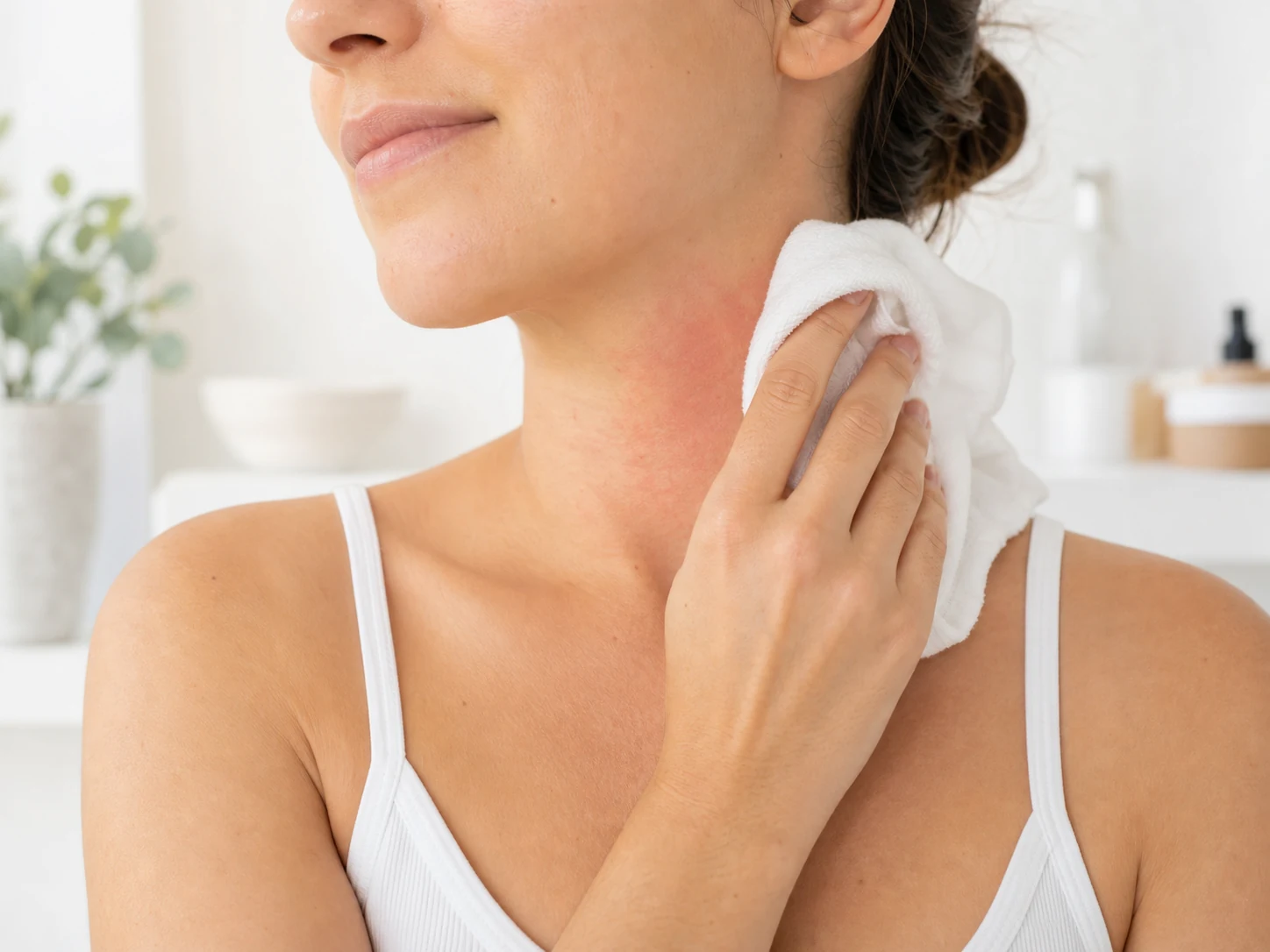
Use cool compresses, pat dry thoroughly, and allow air to reach the affected skin.
Monitor and be patient
Watch for improvement over the next few days. If it's not improving within a week, or if signs of infection appear, see a doctor.
Safety
Side effects and cautions
- Waiting for it to go away while continuing to sweat heavily
Heat rash won't clear if you keep generating more sweat. Take a break from exercise and other heat-producing activities.
- Applying thick creams or oils
Occlusive products trap heat and moisture, preventing the duct from clearing naturally.
- Ignoring signs of infection
Heat rash is self-limiting, but secondary infections are not. Don't assume everything will resolve without attention.
Fit
Who should be careful
- Cases with infection, severe symptoms, or underlying health conditions
Worth noting
Small details that can change the answer
- Self-Limiting Nature. Heat rash is medically classified as a self-limiting condition.
- Healing Timeline. Most cases resolve within 2-4 days without medical treatment.
- Natural Mechanism. The body clears blocked sweat ducts as part of normal skin turnover.
- Recurrence Risk. Heat rash can return quickly if you go back to a hot, humid environment.
Heat rash generally resolves on its own within 2-4 days.
"On its own" means without medication, but you should still cool and dry the area.
Continuing to sweat will prevent the rash from going away on its own.
You don't need special creams or medications for uncomplicated heat rash.
Definition
What does "go away on its own" actually mean?
When dermatologists say heat rash "goes away on its own," they mean that the underlying blockage will resolve without any medication or specific treatment. Your skin's natural processes - including the shedding of dead skin cells and normal sweat production - gradually clear the blocked ducts. The inflammation then subsides, and the rash disappears.
- The body is fully capable of clearing the blockage naturally
- No medication is needed for uncomplicated heat rash
- The process typically takes 2-4 days once you remove the heat trigger
Explanation
Why heat rash is self-limiting
The skin is constantly renewing itself. The outer layer sheds and regenerates approximately every 28 days, and this process naturally clears the blockages in sweat ducts. Additionally, when the skin is cooler and less sweaty, there's less friction and inflammation to keep ducts blocked. Once you stop exposing your skin to hot, humid conditions, the mechanical pressure on the ducts reduces and they begin to clear.
Benefits
What self-healing means for you
Understanding that heat rash is self-limiting can help you avoid unnecessary treatments that might actually make things worse. Here's what this means in practice:
- You don't need harsh treatments or medications for uncomplicated heat rash
- Your focus should be on creating favorable conditions for healing
- You can skip the expensive creams and just cool and dry the area
- It's generally safe to let it run its course without intervention
Risks
When heat rash doesn't go away on its own
While heat rash is typically self-limiting, there are circumstances where it persists or worsens. Be aware of these signs that may indicate you need more than just time:
- If the rash shows no improvement after 7 days of removing heat exposure
- If it worsens or spreads despite cooling and drying measures
- If you develop signs of infection: pain, swelling, warmth, or discharge
- If you experience fever or generally feel unwell
- If you have a pre-existing condition that affects your immune system or skin health
Questions
Frequently asked questions
Can heat rash go away without any treatment at all?
Yes, if you stop exposing your skin to heat and humidity, heat rash typically resolves without any specific treatment.
Does heat rash go away faster if you treat it?
Yes, simple measures like cooling the skin and keeping it dry can speed up the healing process from a few days to as little as 24-48 hours.
Can heat rash go away while you're still sweating?
It's unlikely. Heat rash needs dry, cool conditions to resolve. Continued sweating will keep the ducts blocked.
Is it safe to let heat rash go away on its own in babies?
Yes, but take extra care to keep the baby cool and dry. Babies' skin is more sensitive, and they may need help with cooling measures.