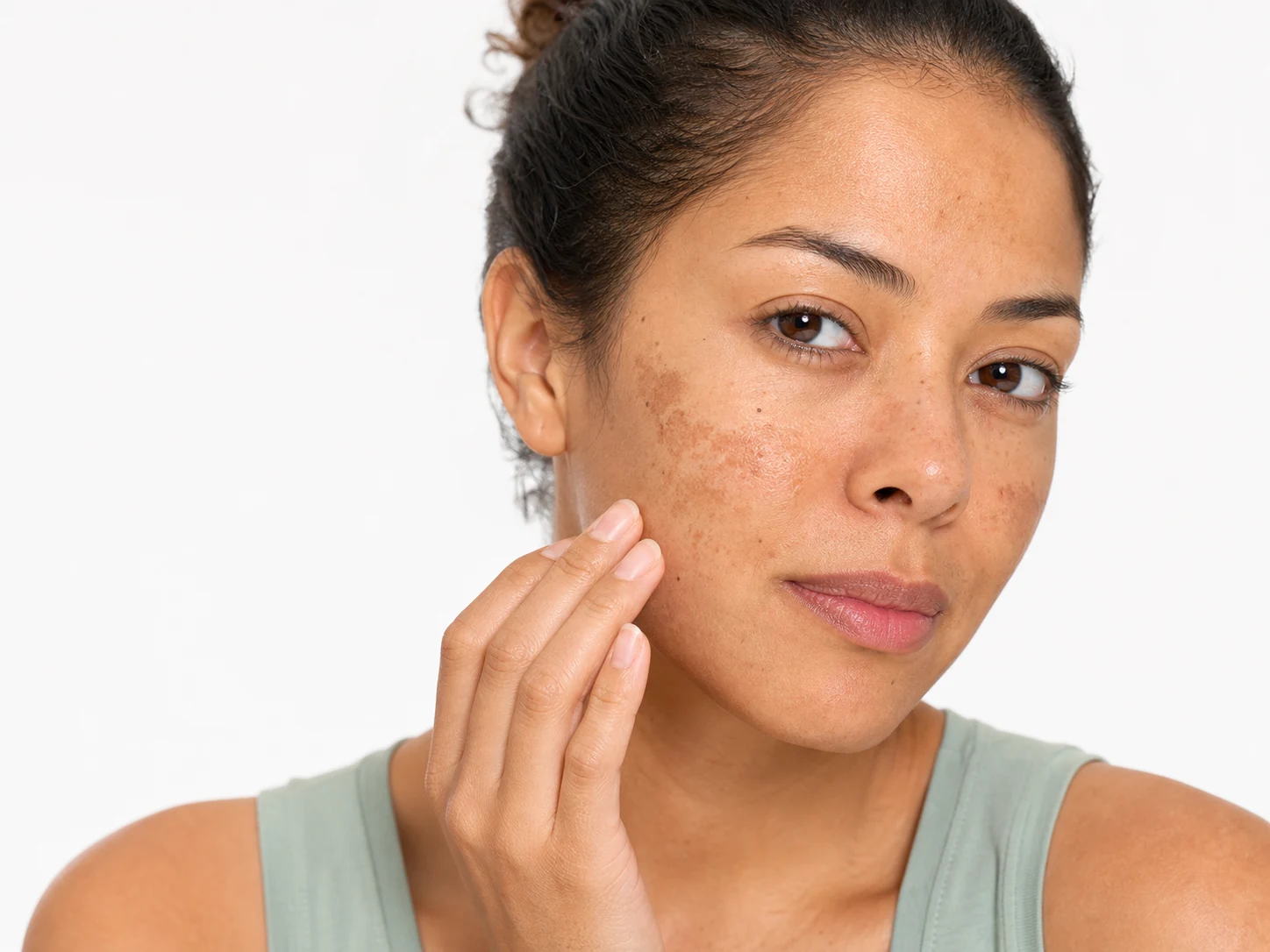
Evidence
What the evidence shows
Niacinamide is a gentle but effective treatment for hyperpigmentation. Its unique mechanism makes it suitable for long-term use without the side effects of stronger treatments.
Melanin transfer inhibition
Melanin transfer inhibitionClinical trial results
Clinical trial resultsLong-term safety
Long-term safety
Use this section to decide
Does this advice apply to me?
Find the concern or goal closest to yours, then use the fit signal to decide how much weight to give this guide.If your goal is
MechanismUsually relevant- Fit signal
- Often useful
Inhibits melanin transfer
If your goal is
EssentialUse caution- Fit signal
- Limited evidence
Sunscreen
Research notes already in this guide
- Studies show niacinamide reduces hyperpigmentation.
- Research demonstrates its effectiveness for PIH and melasma.
- Clinical trials support its use as a first-line treatment.
Expected results
Results and timeframe
Time to results: 4-6 weeks
Results take 4-6 weeks of consistent use.
Sunscreen is essential for maintaining results.
Practical use
How to use it
Use niacinamide consistently
Apply 2-5% niacinamide once or twice daily.
Apply sunscreen daily
Sun protection is non-negotiable for hyperpigmentation.
Consider combining with other treatments
Retinoids, vitamin C, and acids can enhance results.
Safety
Side effects and cautions
- Using niacinamide alone for severe hyperpigmentation
Combine with other treatments for best results.
- Skipping sunscreen
Without sunscreen, new pigmentation will form.
- Giving up too soon
It takes 4-6 weeks of consistent use to see results.
Fit
Who should be careful
- Those with very deep pigmentation that may need stronger treatments
Worth noting
Small details that can change the answer
- Melanin Transfer. Niacinamide inhibits melanin transfer by up to 60%.
- Types Treated. PIH, sunspots, melasma, and other forms of hyperpigmentation.
- Time to Results. Visible fading typically takes 4-6 weeks.
- Sun Protection. Sunscreen is essential for preventing new pigmentation.
Yes, niacinamide is effective for hyperpigmentation.
It works by inhibiting melanin transfer.
It's effective for PIH, sunspots, and melasma.
Definition
How niacinamide treats hyperpigmentation
Niacinamide is a form of vitamin B3 that works on the pigmentation process at the cellular level. It inhibits melanin transfer, reducing pigmentation without the irritation of stronger treatments.
- Inhibits melanin transfer from melanocytes
- Reduces pigmentation at the surface
- Gentle and well-tolerated
- Effective for multiple types of hyperpigmentation
Science
The science of niacinamide and pigmentation
Niacinamide reduces the activity of PAR-2 receptors and proteasome in keratinocytes. These are involved in the transfer of melanin from melanocytes. By inhibiting this process, niacinamide reduces the amount of melanin that reaches the skin's surface.
- PAR-2 Receptor
- A receptor involved in the transfer of melanin from melanocytes to keratinocytes.
- Proteasome
- A cellular complex involved in protein degradation, which plays a role in melanin transfer.
Benefits
Benefits of niacinamide for hyperpigmentation
Niacinamide offers a gentle but effective approach to treating hyperpigmentation. It's suitable for long-term use and can be combined with other treatments.
- Gentle and suitable for all skin types
- Fades multiple types of hyperpigmentation
- Supports the skin barrier
- Can be combined with other treatments
Questions
Frequently asked questions
Is niacinamide good for all types of hyperpigmentation?
Yes, it's effective for PIH, sunspots, and melasma.
How long does niacinamide take to work on hyperpigmentation?
Visible results typically take 4-6 weeks of consistent use.
Can niacinamide be combined with other hyperpigmentation treatments?
Yes, it works well with retinoids, vitamin C, and acids.
Is niacinamide safe for darker skin tones?
Yes, it's safe and effective for all skin tones.
References
Sources
The notes below are drawn from the evidence already cited in this guide. They are not a complete bibliography.
- Studies show niacinamide reduces hyperpigmentation.
- Research demonstrates its effectiveness for PIH and melasma.
- Clinical trials support its use as a first-line treatment.