Evidence
What the evidence shows
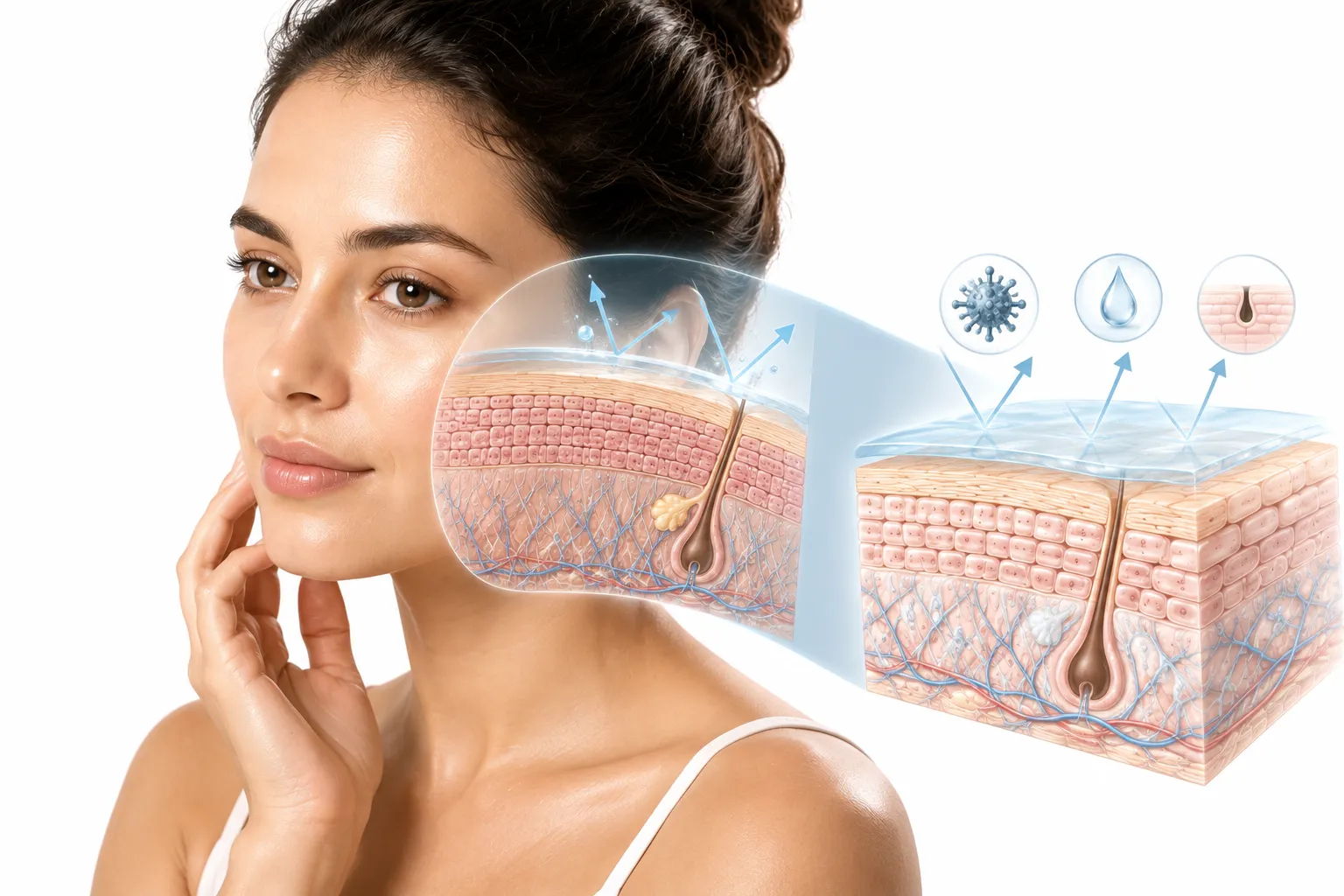
The skin barrier prevents acne primarily through two mechanisms: physically blocking bacteria from entering and maintaining a slightly acidic environment that discourages bacterial growth.
Use this section to decide
Does this advice apply to me?
Find the concern or goal closest to yours, then use the fit signal to decide how much weight to give this guide.If your goal is
Prevents Bacterial PenetrationUsually relevant- Fit signal
- Often useful
Yes
If your goal is
Maintains Healthy pHUsually relevant- Fit signal
- Often useful
Yes
If your goal is
Guarantees Clear SkinUse caution- Fit signal
- Limited evidence
No
If your goal is
Role in Acne PreventionUsually relevant- Fit signal
- Often useful
Crucial
Research notes already in this guide
- Research shows that acne-prone skin often has a compromised barrier compared to healthy skin.
- Studies demonstrate that barrier repair can help improve acne outcomes.
- The presence of a healthy barrier is associated with lower levels of inflammation in acne-prone skin.
Practical use
How to use it
Protect your barrier
Use gentle cleansers, barrier-supporting moisturizers, and avoid over-exfoliation.
Maintain a healthy pH
Use pH-balanced products (around 5.5) to support barrier function.
Support barrier repair
Incorporate barrier-supporting ingredients like niacinamide and ceramides.
Safety
Side effects and cautions
- Thinking a healthy barrier means you can never get acne
Other factors (hormones, genetics, stress) can still cause breakouts. The barrier is one piece of the puzzle.
- Over-treating acne at the expense of the barrier
A healthy barrier is essential for long-term acne prevention - don't sacrifice it for short-term results.
- Assuming acne means your barrier is damaged
Acne can occur with a healthy barrier, especially in hormonal acne.
Fit
Who should be careful
- People looking for a single solution to acne - the barrier is one of many factors
Helpful context
What else is worth knowing
What experts say about the barrier and acne prevention
Dr. Ranella HirschThe barrier is your skin's first line of defense against acne-causing bacteria. Protecting it is essential.
Dr. Ava ShambanA healthy barrier doesn't guarantee clear skin, but it's a critical part of the equation.
Worth noting
Small details that can change the answer
- Physical Barrier. The stratum corneum acts as a physical barrier, keeping bacteria on the surface of the skin.
- Chemical Barrier. The skin's slightly acidic pH (around 5.5) inhibits the growth of Cutibacterium acnes.
- Immune Defense. The barrier contains antimicrobial peptides that help control bacterial populations.
- Lipid Matrix. The lipid matrix between skin cells blocks the penetration of bacteria and irritants.
A healthy skin barrier helps prevent acne by blocking bacteria and maintaining a favorable environment.
The barrier works through physical, chemical, and immune mechanisms.
A healthy barrier doesn't guarantee clear skin, but it makes breakouts less likely.
Barrier damage is associated with increased acne severity.
Protecting the barrier is an essential part of any acne prevention strategy.
Definition
How the skin barrier prevents acne
Understanding the protective mechanisms.
The skin barrier prevents acne through physical, chemical, and immune mechanisms. It blocks bacteria from penetrating, maintains an acidic pH that inhibits bacterial growth, and contains antimicrobial compounds that help control bacterial populations.
Explanation
The barrier's role in acne prevention
The barrier has three main roles in acne prevention: physical, chemical, and immunological. Each of these mechanisms works together to keep acne-causing bacteria in check and prevent breakouts.
Benefits
How a healthy barrier protects against acne
Here's what a healthy barrier does to prevent breakouts.
- Blocks bacterial penetration - keeps C. acnes on the surface where it's harmless
- Maintains acidic pH - discourages the overgrowth of acne-causing bacteria
- Regulates moisture - prevents the dry, flaky skin that can lead to irritation and breakouts
- Controls inflammation - a healthy barrier is less reactive to triggers that can cause breakouts
- Supports healing - helps the skin recover more quickly from existing breakouts
When barrier function is compromised
- Increased sensitivity to products that were previously well-tolerated
- Excessive dryness, tightness, or flaking
- Redness or irritation that doesn't seem to have a clear cause
- Breakouts that appear alongside other signs of barrier damage
- Products that used to work for your acne now causing irritation
Questions
Frequently asked questions
If I have a healthy barrier, why do I still get acne?
Acne is multifactorial - hormones, genetics, and lifestyle all play a role. A healthy barrier reduces the risk but doesn't eliminate it.
Can a damaged barrier cause acne even without bacteria?
Yes, barrier damage can cause inflammation and reactive breakouts that look like acne even without bacterial involvement.
How long does it take for barrier repair to help acne?
Barrier repair takes 2-4 weeks, and acne improvement typically follows within 4-8 weeks.
Is a healthy barrier the most important factor in acne prevention?
It's one of the most important factors, but hormones, genetics, and lifestyle also play major roles.
References
Sources
The notes below are drawn from the evidence already cited in this guide. They are not a complete bibliography.
- Research shows that acne-prone skin often has a compromised barrier compared to healthy skin.
- Studies demonstrate that barrier repair can help improve acne outcomes.
- The presence of a healthy barrier is associated with lower levels of inflammation in acne-prone skin.