Evidence
What the evidence shows
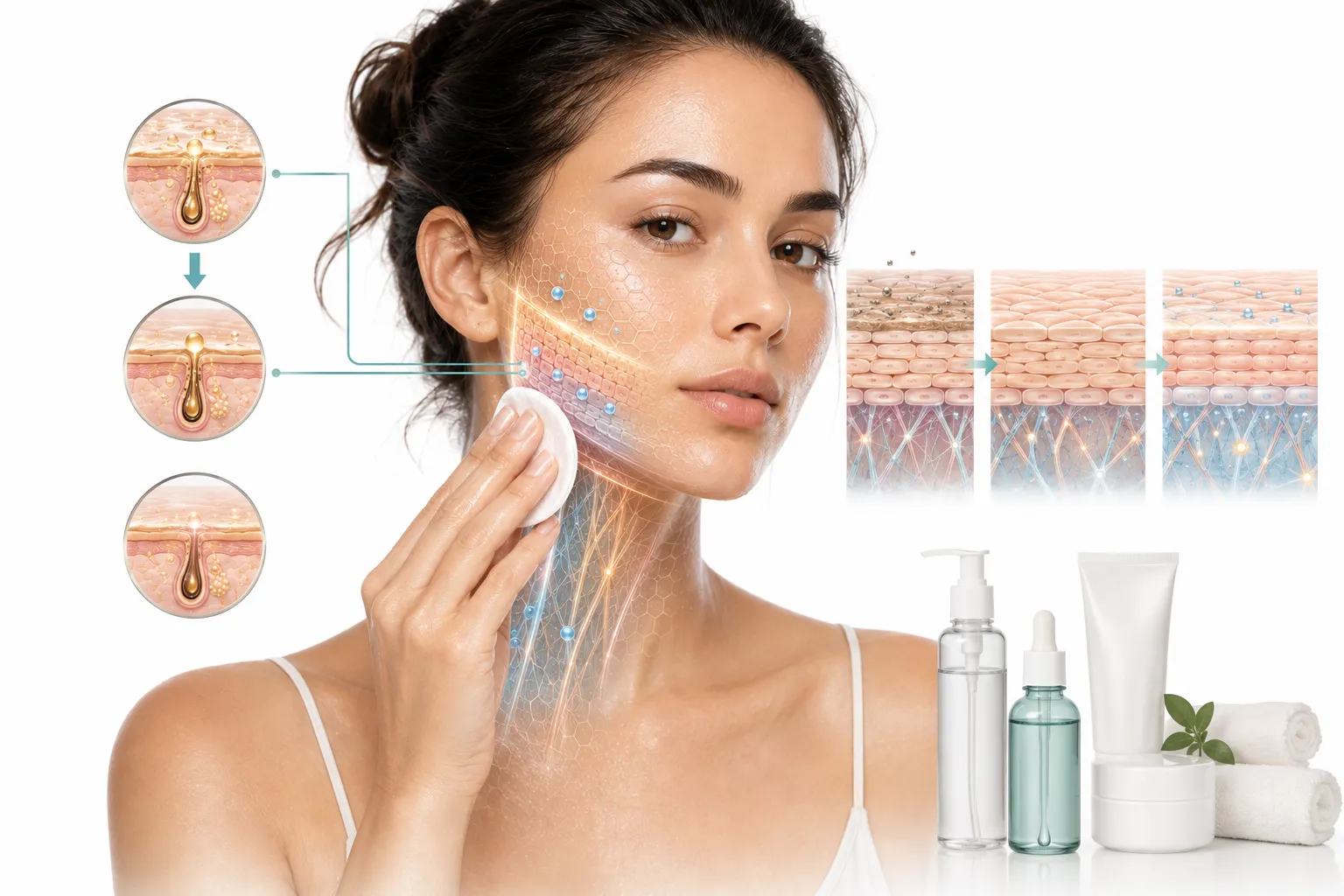
The path to less oily skin isn't more drying - it's gentler care that supports the barrier and reduces the skin's need to compensate with extra oil.
Compensation mechanism
Well establishedGentle approach
Clinically recommendedPermanent change
Not supported by evidence
Use this section to decide
Does this advice apply to me?
Find the concern or goal closest to yours, then use the fit signal to decide how much weight to give this guide.If your goal is
Realistic goalUse caution- Fit signal
- Limited evidence
Manage oil, not eliminate it
If your goal is
Best approachUsually relevant- Fit signal
- Often useful
Gentle barrier support
If your goal is
Common mistakeDepends- Fit signal
- Possible fit
Over-drying
If your goal is
TimeframeUse caution- Fit signal
- Limited evidence
4-8 weeks
Expected results
Results and timeframe
Visible changes typically take 4 to 8 weeks of consistent care.
Practical use
How to use it
Switch to a gentle cleanser
Stop using harsh, stripping cleansers that trigger compensatory oil production.
Support the barrier
Use lightweight moisturizers that support barrier function without adding oil.
Be patient and consistent
Oil regulation takes weeks - don't expect overnight results.
Safety
Side effects and cautions
- Using drying products to "fix" oily skin
This triggers compensatory oil production - the opposite of what you want.
- Skipping moisturizer on oily skin
Hydration supports the barrier and can reduce compensatory oil.
- Expecting permanent change
Skin type is largely genetic - you're managing it, not changing it permanently.
Fit
Who should be careful
- Those who expect to permanently change their skin type
Worth noting
Small details that can change the answer
- Compensation Mechanism. Over-drying the skin often triggers more oil production as a compensation.
- Barrier Connection. Supporting the skin barrier can reduce the need for compensatory oil.
- Realistic Expectation. You can manage oil production but may not change your underlying skin type.
- Time Needed. Visible changes typically take 4 to 8 weeks of consistent care.
You can't permanently change oily skin to normal - skin type is largely genetic.
However, you can significantly reduce excess oil production with the right care.
Over-drying is the most common mistake - it triggers more oil production as compensation.
Gentle barrier support is the most effective approach for managing oiliness.
Routine Flow
A routine for reducing excess oil
- 1Gentle, non-stripping cleanser
Use a mild cleanser that removes impurities without over-drying.
- 2Lightweight toner or essence
Use a balancing, hydrating toner that doesn't add oil.
- 3Barrier-supporting serum
Niacinamide can help regulate oil production while supporting barrier function.
- 4Lightweight, oil-free moisturizer
Hydrate without adding to the oiliness.
- 5Oil-free sunscreen
Protect without clogging pores.
Dos Donts
Dos and don'ts for oil management
Do
Preserves barrier lipids and prevents compensatory oil
Hydrates without adding to oiliness
Can help regulate sebum production
Visible changes take 4-8 weeks
Avoid
Triggers compensatory oil production
Damages barrier and increases oiliness
Skin produces more oil to compensate
Oil regulation takes weeks
Results Timeline
What to expect over time
- 1Week 1-2
Skin may feel different but oil production may not have shifted yet.
- 2Week 3-4
Some reduction in oiliness as the barrier begins to recover.
- 3Week 5-8
Significant reduction in oil production as compensation decreases.
- 4Week 8+
Skin may approach a more balanced state with continued care.
Explanation
Why gentleness works better than drying
When you use harsh products on oily skin, you're essentially telling the skin that it needs to produce even more oil to compensate. This is the skin's way of maintaining its barrier - when you remove oil from the surface, the skin ramps up production to restore its natural balance. Gentleness, on the other hand, allows the skin to calm down and produce only what it actually needs.
Questions
Frequently asked questions
Can oily skin become permanently normal?
Skin type is generally fixed, but you can significantly manage and reduce oil production.
Why does my skin get oilier when I use drying products?
The skin produces more oil to compensate for the stripping - it's a barrier defense mechanism.
How long does it take to see results?
With consistent gentle care, most people see changes in 4-8 weeks.
Can diet help change oily skin?
Diet can influence oil production for some people, but the primary approach is skincare.