Evidence
What the evidence shows
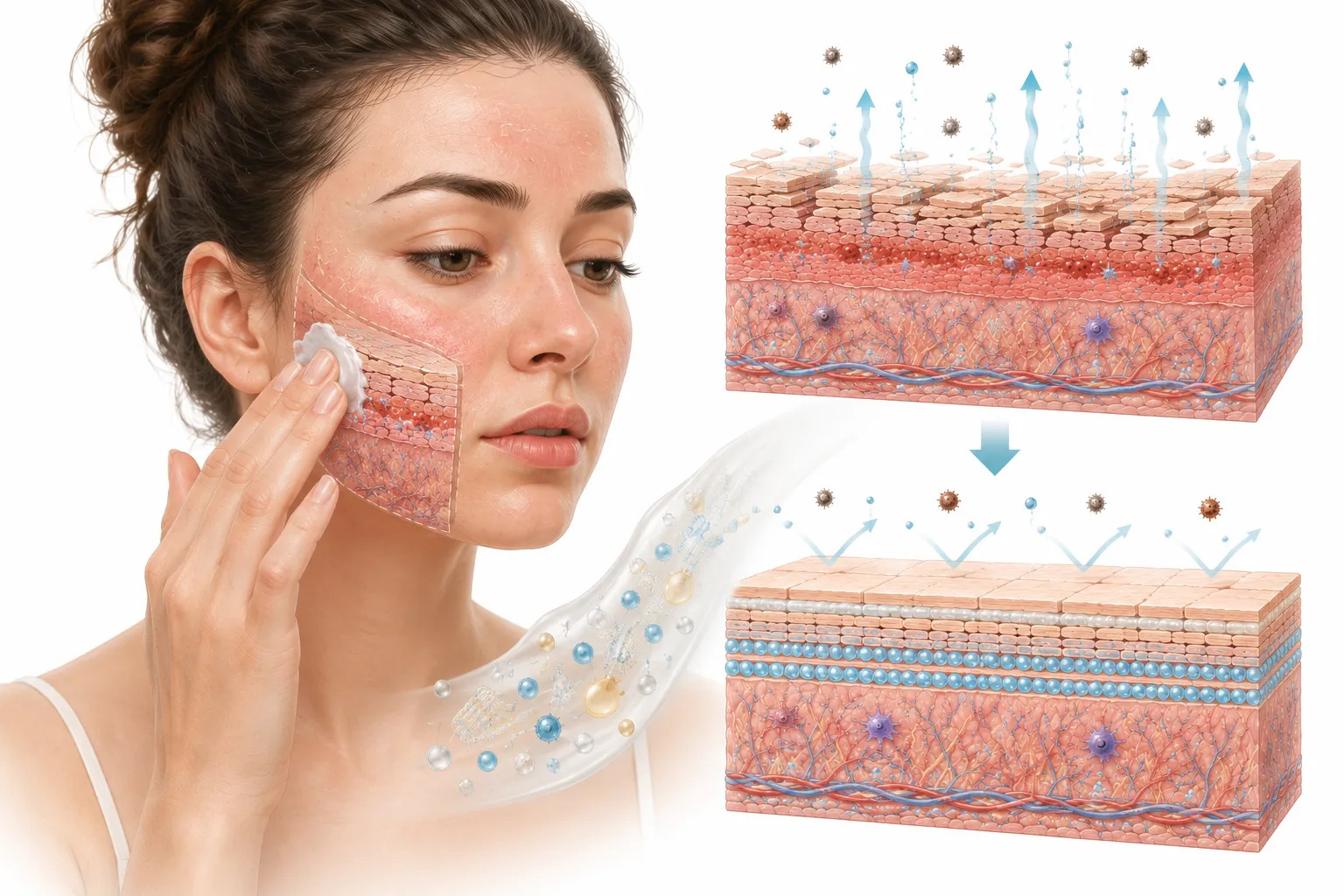
The most important part of barrier repair is stopping the damage. No amount of moisturizer will fix a barrier that's still being stripped by harsh cleansers or over-exfoliation.
Ceramide efficacy
Well establishedRepair timeline
Clinically documentedPatience needed
Essential for success
Use this section to decide
Does this advice apply to me?
Find the concern or goal closest to yours, then use the fit signal to decide how much weight to give this guide.If your goal is
Repair timeUse caution- Fit signal
- Limited evidence
2-4 weeks
If your goal is
Key ingredientsUsually relevant- Fit signal
- Often useful
Ceramides, cholesterol, fatty acids
If your goal is
Most importantUsually relevant- Fit signal
- Often useful
Stop exfoliation and actives
If your goal is
MindsetUsually relevant- Fit signal
- Often useful
Patience is essential
Expected results
Results and timeframe
Barrier repair takes 2 to 4 weeks of consistent, gentle care.
Practical use
How to use it
Remove all exfoliation and actives
Stop all exfoliating acids, retinoids, and physical exfoliation.
Switch to a gentle cleanser
Use a mild, non-stripping cleanser that doesn't foam.
Support with barrier ingredients
Use moisturizers with ceramides, cholesterol, and fatty acids.
Safety
Side effects and cautions
- Trying to exfoliate away the roughness
The roughness is from barrier damage - exfoliation makes it worse.
- Switching between multiple products
Barrier repair requires consistency, not experimentation.
- Giving up after a week
Barrier repair takes 2-4 weeks - patience is essential.
Fit
Who should be careful
- Those who want a quick fix - barrier repair takes weeks
Worth noting
Small details that can change the answer
- Lipid Replacement. Ceramides, cholesterol, and fatty acids are the key building blocks of the barrier.
- Time to Repair. Barrier repair typically takes 2 to 4 weeks of consistent care.
- Halt Damage. The most important step is stopping the activities that caused the damage.
- Patience Needed. Trying to speed up barrier repair with more products usually makes things worse.
The most important step in barrier repair is stopping the activities that caused the damage.
Use ingredients that support barrier function: ceramides, cholesterol, and fatty acids.
Avoid exfoliation, harsh cleansers, and active ingredients during repair.
Patience is essential - trying to speed up the process usually backfires.
Routine Flow
A simple barrier repair routine
- 1Gentle, non-stripping cleanser
Use a mild cleanser that doesn't foam or strip the skin.
- 2Hydrating toner (optional)
Use a simple, fragrance-free hydrating toner if needed.
- 3Barrier-supporting serum
Look for products with ceramides, cholesterol, and fatty acids.
- 4Rich moisturizer
Use a thick moisturizer with barrier-supporting ingredients.
- 5Sunscreen (morning)
Use a gentle, mineral sunscreen to protect the repairing barrier.
Dos Donts
Dos and don'ts for barrier repair
Do
Allows the barrier to rebuild without interference
Preserves remaining barrier lipids
Provides building blocks for barrier repair
Trying to speed up the process backfires
UV damage slows the repair process
Avoid
Prevents barrier from rebuilding
Worsens barrier damage
Increases the chance of irritation
Barrier repair takes time
Results Timeline
What to expect during barrier repair
- 1Week 1
Initial improvement in comfort and reduction in sensitivity
- 2Week 2
Noticeable improvement in texture and tolerance to products
- 3Week 3-4
Significant barrier recovery and improved resilience
- 4Week 4+
Barrier may be fully or significantly repaired
Research Summary
Evidence on barrier repair ingredients
Include ceramide-rich products in your repair routine
Look for products with all three components
Switch to a non-stripping cleanser immediately
Questions
Frequently asked questions
How do I know if my skin barrier is damaged?
Signs include sensitivity to products that were fine before, tightness, flaking, and redness.
Can I use hyaluronic acid while repairing my barrier?
Yes - hyaluronic acid is hydrating and generally well-tolerated during barrier repair.
Should I use a moisturizer with ceramides?
Yes - ceramides are essential for repairing barrier function.
Can I speed up barrier repair?
No - barrier repair takes time, and trying to speed it up with more products usually makes it worse.