Evidence
What the evidence shows
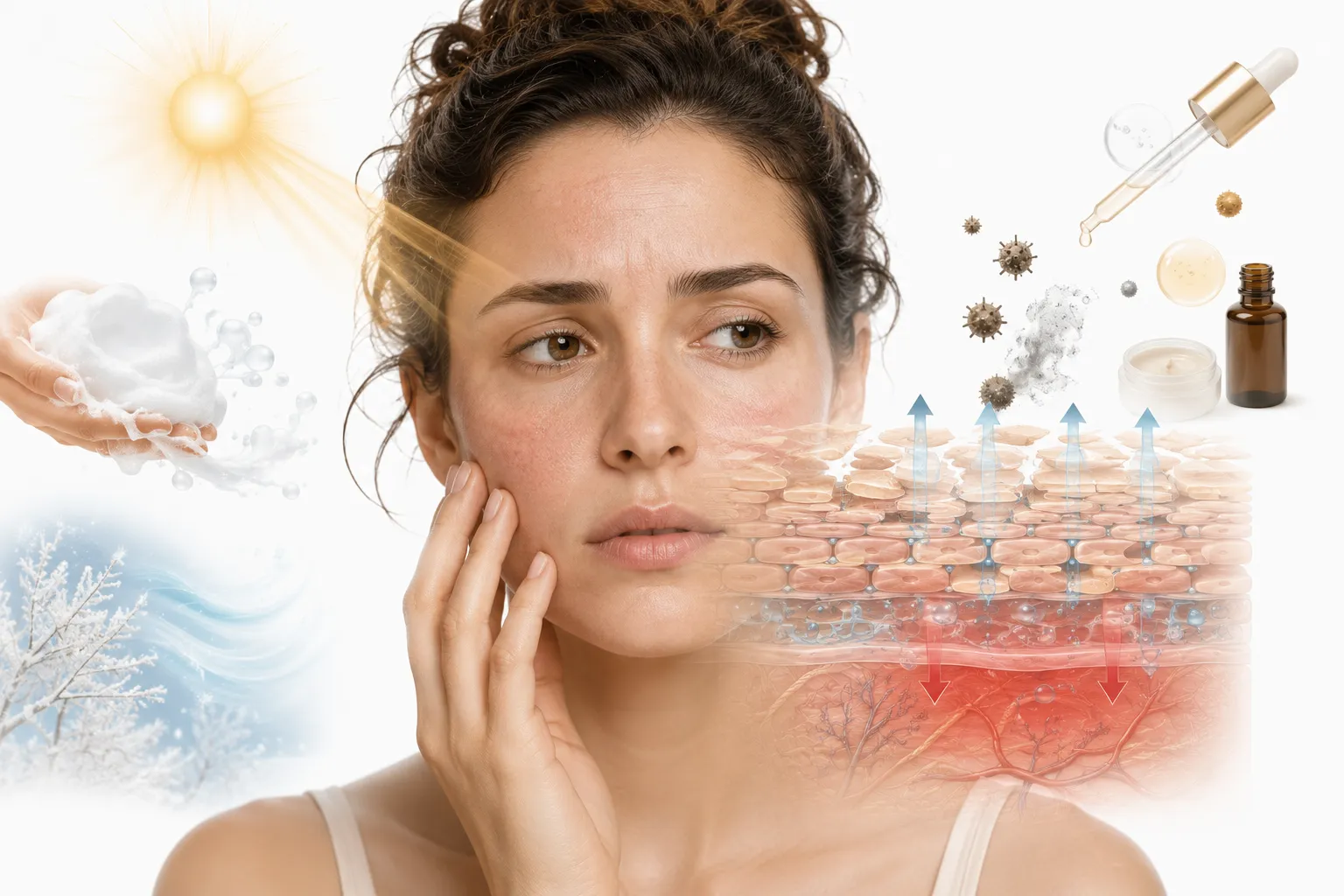
Barrier damage is rarely caused by one single dramatic event; it is much more often the cumulative effect of several mild stressors, an extra active here, a hotter shower there, stacking up until the barrier can no longer keep pace with the repair demand.
New active ingredient recently?
A common and likely cause.Increased exfoliation frequency?
Also a common and likely cause.Weather recently changed?
Can compound other factors.
Use this section to decide
Does this advice apply to me?
Find the concern or goal closest to yours, then use the fit signal to decide how much weight to give this guide.If your goal is
Most commonDepends- Fit signal
- Possible fit
Over-exfoliation
If your goal is
Also commonDepends- Fit signal
- Possible fit
Harsh cleansers, hot water
If your goal is
Compounding factorUse caution- Fit signal
- Limited evidence
Weather, stress
Expected results
Results and timeframe
A systematic review of the past few weeks is the most effective way to identify the trigger.
Practical use
How to use it
Review the past few weeks
Go through recent products, habits, and weather changes systematically.
Simplify the routine
Remove all but the essentials, a gentle cleanser and a barrier-repairing moisturizer, while you assess.
Reintroduce gradually
Once skin recovers, add products back one at a time to identify what may have contributed.
Safety
Side effects and cautions
- Adding new products while trying to figure out the cause
Simplify first, then reintroduce products one at a time to identify triggers more clearly.
- Overlooking gradual changes like increased exfoliation frequency
Small, gradual increases in active use are just as likely a cause as a single new product.
- Assuming the cause must be a single new product
Barrier damage is often the cumulative result of several smaller factors combining.
Fit
Who should be careful
- Chronic, longstanding skin conditions with unclear onset
Worth noting
Small details that can change the answer
- Over-exfoliation. Excessive use of acids, scrubs, or retinoids is one of the most common individual causes of barrier damage.
- Cleansers. Harsh, sulfate-heavy cleansers can strip natural oils that the barrier relies on.
- Water temperature. Hot water removes more of the skin's natural oils than lukewarm water.
- Compounding. Barrier damage often results from multiple mild stressors combining rather than one single cause.
Barrier damage is usually traceable to one or more specific recent changes in routine or environment.
Over-exfoliation and active ingredient overuse are among the most common individual causes.
Harsh cleansers, hot water, and cold weather commonly compound other causes.
Simplifying the routine before reintroducing products helps pinpoint the actual cause.
Explanation
Tracing the cause
A framework for identifying what triggered barrier damage.
Barrier damage usually results from the skin losing lipids faster than it can replace them. Identifying the cause typically means reviewing recent changes: new products, more frequent exfoliation, hotter showers, or a shift in weather, since these are the most common triggers.
The most common individual causes
- Over-exfoliation with acids, scrubs, or retinoids used too frequently
- A harsh, stripping, or heavily fragranced cleanser
- Prolonged exposure to hot water
- Combining too many active ingredients at once
- Cold, dry, or windy weather
- Chronic stress affecting barrier lipid production
A simple review process
- List any new products introduced in the past few weeks
- Note any changes in exfoliation frequency or active ingredient strength
- Consider recent weather or seasonal shifts
- Reflect on cleansing habits, including water temperature and cleanser type
- Consider whether stress levels have recently increased
What tends to keep barrier damage going
Some habits make it harder for a damaged barrier to recover, even after the original trigger is addressed.
- Continuing exfoliation while trying to identify the cause
- Introducing new products while troubleshooting, which muddies the picture
- Assuming the routine needs more products rather than fewer
Questions
Frequently asked questions
Can one product alone damage my skin barrier?
Yes, particularly strong exfoliants or retinoids used too frequently, though damage is often the result of several factors combining.
Why did my barrier suddenly get damaged when my routine hasn't changed?
Environmental factors like weather shifts, along with cumulative effects of gradual changes, can trigger damage even without an obvious new product.
How long does it take for barrier damage to develop?
It can develop within days with aggressive triggers like over-exfoliation, or build up more gradually over weeks with milder, compounding factors.
Can stress alone cause skin barrier damage?
Stress can contribute to barrier changes through hormonal effects, though it typically compounds other factors rather than acting entirely alone.