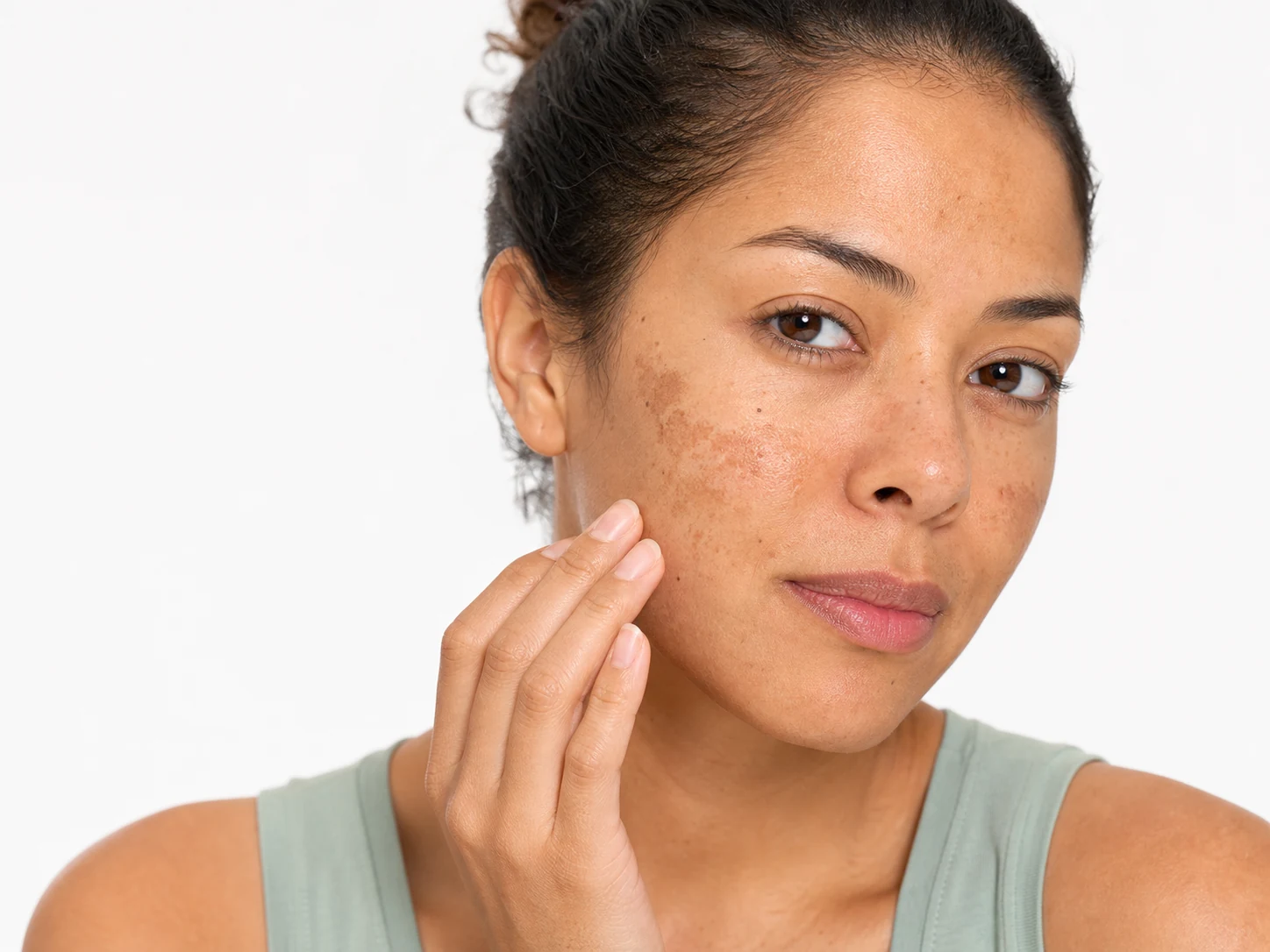
Evidence
What the evidence shows
The most effective "natural" treatments for hyperpigmentation are often standardized extracts that have been studied and standardized for potency - not unprocessed plants or foods applied directly to the skin.
Is your hyperpigmentation mild?
Natural treatments work best for mild cases.Are you willing to be patient?
Natural treatments require weeks to months of consistent use.Are you using sunscreen daily?
Sunscreen is essential for any treatment approach.Have you tried clinical treatments without success?
Natural treatments may be a complementary option.
Use this section to decide
Does this advice apply to me?
Find the concern or goal closest to yours, then use the fit signal to decide how much weight to give this guide.If your goal is
SpeedDepends- Fit signal
- Possible fit
Slow (8-16 weeks)
If your goal is
Best IngredientsUsually relevant- Fit signal
- Often useful
Licorice, vitamin C, kojic acid
If your goal is
Essential StepUsually relevant- Fit signal
- Often useful
Sunscreen
If your goal is
Evidence LevelUse caution- Fit signal
- Limited evidence
Mixed
Expected results
Results and timeframe
Patience is key - natural treatments work over weeks and months.
Practical use
How to use it
Choose standardized natural products
Look for products with standardized extracts and clear concentrations.
Apply consistently
Natural treatments need consistent daily use for weeks to months.
Use sunscreen daily
Natural or not, sunscreen is essential for pigmentation treatment.
Safety
Side effects and cautions
- Using raw lemon juice or other citrus on your face
These can cause chemical burns and worsen pigmentation.
- Expecting natural treatments to work as quickly as clinical ones
Natural treatments are slower - be patient.
- Skipping sunscreen because you're using natural ingredients
Sunscreen is essential for any hyperpigmentation treatment.
Fit
Who should be careful
- Severe cases, those wanting quick results
Worth noting
Small details that can change the answer
- Licorice Extract. Contains glabridin, which inhibits tyrosinase activity.
- Vitamin C. Plant-derived vitamin C acts as an antioxidant and melanin inhibitor.
- Kojic Acid. Derived from fungi, effective at inhibiting melanin production.
- Alpha Arbutin. Derived from bearberry, acts as a gentle tyrosinase inhibitor.
Some natural ingredients (licorice, vitamin C, kojic acid) genuinely help with hyperpigmentation.
They're generally less potent and slower than clinical treatments.
Standardized extracts are more reliable than unprocessed plants.
Sunscreen is essential regardless of whether you choose natural or clinical treatments.
Definition
What "natural" actually means in skincare
Natural skincare ingredients are derived from plant, mineral, or animal sources rather than being synthesized in a lab. However, many effective natural ingredients are processed and standardized for potency - the same way that clinical ingredients are. "Natural" doesn't mean "unprocessed" or "whole plant."
- Natural = plant/animal/mineral origin
- Standardization is important for effectiveness
- Natural doesn't automatically mean safe or effective
Benefits
Natural ingredients that work for hyperpigmentation
These natural ingredients have scientific support for their pigmentation-fading effects.
- Licorice root extract (glabridin): inhibits tyrosinase
- Vitamin C (from plant sources): antioxidant and melanin inhibitor
- Kojic acid (from fungi): tyrosinase inhibitor
- Alpha arbutin (from bearberry): gentle tyrosinase inhibitor
- Niacinamide (naturally occurring): blocks melanin transfer
Risks
Limitations of natural treatments
Natural ingredients have these limitations compared to clinical treatments.
- Generally less potent than synthetic counterparts
- Slower to show results (weeks to months)
- Can be less stable (especially vitamin C)
- Quality can vary between products
- May still cause irritation in sensitive skin
Myth Reality
Common natural hyperpigmentation myths
Lemon juice is acidic and can irritate skin, causing inflammation that worsens hyperpigmentation.
Many natural ingredients can cause contact dermatitis or irritation.
They typically take longer - weeks to months vs. weeks.
Sunscreen is just as essential - UV exposure counteracts natural treatments.
Questions
Frequently asked questions
Are natural treatments safe for all skin types?
Not necessarily - natural ingredients can irritate sensitive skin just like synthetic ones.
Can I make DIY natural hyperpigmentation treatments at home?
It's generally safer to use commercial products with standardized extracts than to make DIY treatments.
How long do natural treatments take to work?
Most natural treatments take 8-16 weeks to show visible results.
Can natural treatments replace prescription options?
For mild hyperpigmentation, yes. For severe cases, prescription treatments are more effective.