Evidence
What the evidence shows
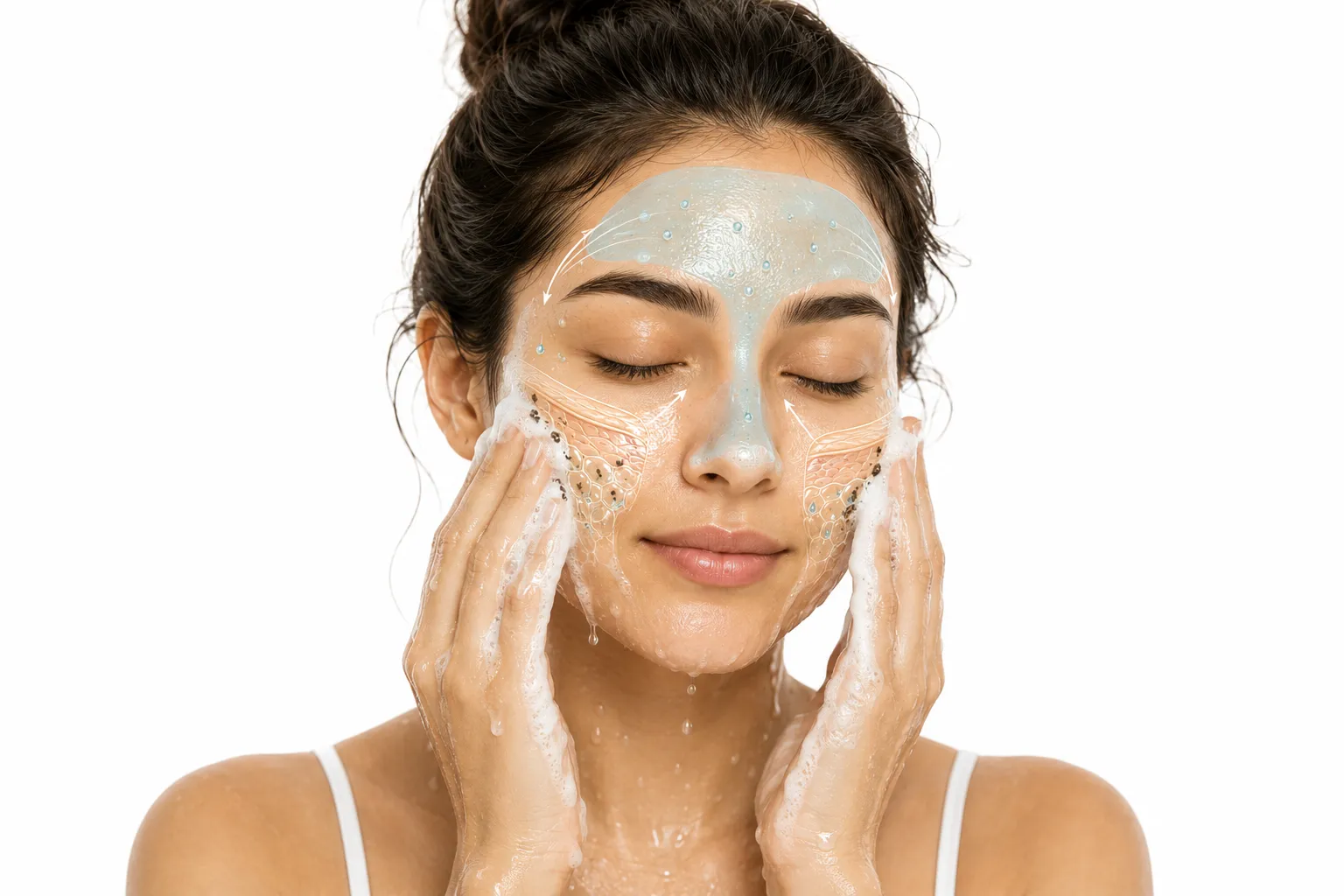
The goal of washing combination skin is to cleanse the T-zone without over-cleansing the cheeks - a balanced technique matters more than the cleanser itself.
Use this section to decide
Does this advice apply to me?
Find the concern or goal closest to yours, then use the fit signal to decide how much weight to give this guide.If your goal is
Key PrincipleUsually relevant- Fit signal
- Often useful
Zone-aware technique
If your goal is
Best CleanserUsually relevant- Fit signal
- Often useful
Gentle, pH-balanced
If your goal is
T-ZoneUse caution- Fit signal
- Limited evidence
More attention
If your goal is
CheeksUse caution- Fit signal
- Limited evidence
Gentle and brief
Research notes already in this guide
- pH-balanced cleansers are best for both dry and oily areas.
- Lukewarm water causes less barrier damage than hot water.
- Immediate moisturization after washing improves barrier health.
- Zone-specific techniques can improve overall skin comfort.
Practical use
How to use it
Use a gentle, pH-balanced cleanser
Avoid harsh, stripping cleansers.
Focus cleansing on the T-zone
Spend a little extra time on the forehead, nose, and chin.
Cleanse cheeks gently and briefly
Less attention is needed on the cheeks.
Moisturize immediately
Apply moisturizer while skin is still damp to lock in hydration.
Safety
Side effects and cautions
- Using a harsh cleanser to "control" the T-zone
This also dries out the cheeks - use a balanced cleanser.
- Washing the whole face for the same length of time
Spend more time on the T-zone and less on the cheeks.
- Skipping moisturizer after washing
Moisturizer immediately after washing prevents the cheeks from drying out.
Fit
Who should be careful
- Those who prefer a one-size-fits-all approach
Worth noting
Small details that can change the answer
- T-Zone Oiliness. The T-zone has more sebaceous glands than the rest of the face.
- Cheek Vulnerability. Cheeks have fewer oil glands and are more prone to drying out.
- pH Balance. A pH-balanced cleanser is essential for both zones.
- Quick Application. Applying moisturizer immediately after washing prevents drying.
Wash combination skin with a zone-aware technique.
Focus cleansing on the T-zone, but keep cheeks brief.
Use a gentle, pH-balanced cleanser.
Moisturize immediately after washing to prevent cheek dryness.
The technique matters as much as the product.
Definition
Understanding combination skin cleansing needs
Combination skin has different needs in different zones during washing.
- T-zone - more oil, needs more thorough cleansing
- Cheeks - less oil, needs gentle, brief cleansing
- Jawline - can vary based on individual patterns
- The challenge - balancing both zones without compromising either
Benefits
Choosing the right cleanser
The best cleansers for combination skin share these characteristics.
- pH-balanced (around 5)
- Not too stripping for the cheeks
- Not too mild for the T-zone
- Gel or creamy texture depending on preference
- Free from harsh surfactants
Questions
Frequently asked questions
Should I use a different cleanser for my T-zone and cheeks?
No - use one balanced cleanser and adapt your technique.
How long should I wash combination skin?
60-90 seconds total - more on the T-zone, less on the cheeks.
Should I double-cleanse combination skin?
Maybe - if you wear makeup, but use a gentle formula for both steps.
What temperature water is best?
Lukewarm - hot water strips barrier lipids.
References
Sources
The notes below are drawn from the evidence already cited in this guide. They are not a complete bibliography.
- pH-balanced cleansers are best for both dry and oily areas.
- Lukewarm water causes less barrier damage than hot water.
- Immediate moisturization after washing improves barrier health.
- Zone-specific techniques can improve overall skin comfort.