Evidence
What the evidence shows
Oily skin is well-defined with clear identification criteria.
Is your face shiny within 1-2 hours of washing?
Yes, across your whole faceAre your pores visibly enlarged?
Yes, especially on nose and foreheadDo you get frequent breakouts?
Yes, regularly
Use this section to decide
Does this advice apply to me?
Find the concern or goal closest to yours, then use the fit signal to decide how much weight to give this guide.If your goal is
Primary signUsually relevant- Fit signal
- Often useful
Shine within 1-2 hours
If your goal is
Visible signsUsually relevant- Fit signal
- Often useful
Enlarged pores, breakouts
If your goal is
Key needUsually relevant- Fit signal
- Often useful
Oil balance
If your goal is
Best testUse caution- Fit signal
- Limited evidence
Blotting paper test
Research notes already in this guide
- The characteristics of oily skin are well-defined in dermatological literature.
- Clinical observation confirms the signs of shine, enlarged pores, and breakouts.
- The relationship between sebum production and oily skin is extensively documented.
- The blotting paper test is a validated method for assessing oil production.
Expected results
Results and timeframe
Key signs include visible shine within hours, enlarged pores, and frequent breakouts.
Practical use
How to use it
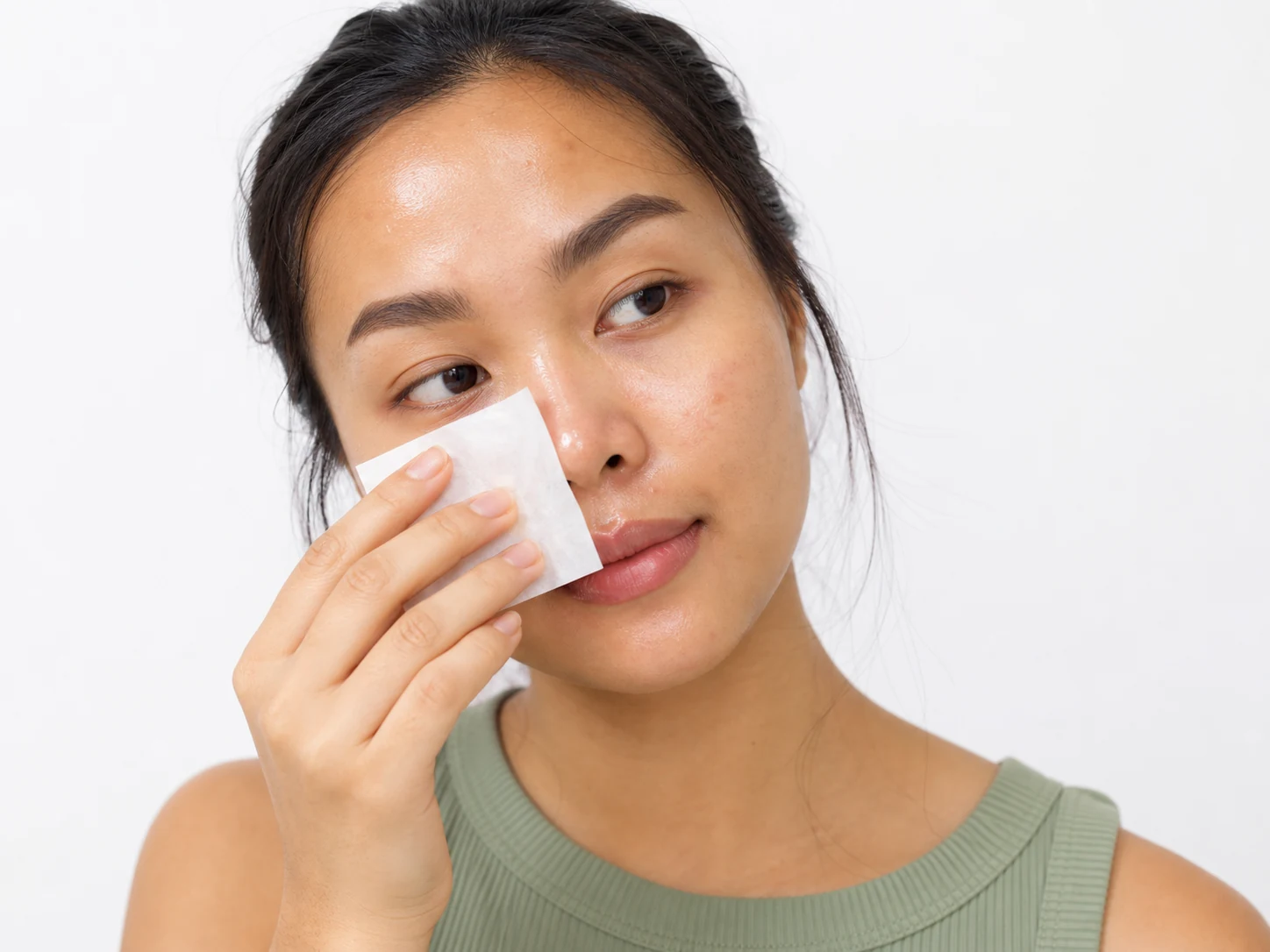
Confirm with a blotting paper test
Press blotting paper to different areas of your face, wait 10-15 seconds, and check the oil absorption.
Start a gentle, oil-balancing routine
Use a gentle cleanser, lightweight moisturizer, and targeted treatments for oil control.
Work with your skin, not against it
Accept that oily skin has advantages too. Avoid over-drying and focus on balancing rather than eliminating oil.
Safety
Side effects and cautions
- Using harsh, stripping cleansers to remove oil
Stripping your skin signals it to produce more oil. Use a gentle, sulfate-free cleanser instead.
- Skipping moisturizer because your skin is oily
Oily skin still needs moisture. Use a lightweight, oil-free formula.
- Confusing oily skin with combination skin
If only your T-zone is oily and your cheeks are normal or dry, you have combination skin, not oily skin.
Fit
Who should be careful
- Diagnosing skin conditions
Worth noting
Small details that can change the answer
- Sebaceous Gland Activity. Oily skin produces up to 3-4 times more sebum than normal skin, driven by larger and more active glands.
- Hormonal Link. Androgens (male hormones present in both sexes) are the primary drivers of sebum production in oily skin.
- Pore Size. Pores in oily skin are naturally larger to accommodate the increased volume of sebum being produced.
- Aging Advantage. Oily skin often ages slower than dry skin because natural oils keep the skin plumper and more elastic.
Oily skin is characterized by overactive sebaceous glands that produce excess sebum.
The blotting paper test is the most reliable way to confirm oily skin.
Managing oily skin requires gentle cleansing, lightweight moisturizing, and targeted treatments.
Don't confuse oily skin with combination skin - the difference matters for your routine.
Definition
What exactly is oily skin?
Oily skin is a skin type defined by excessive sebum production, resulting in a greasy appearance and enlarged pores. Sebum is the skin's natural oil, produced by sebaceous glands to lubricate and protect the skin, but in oily skin, the glands produce too much of it.
- Shiny or greasy appearance, particularly in the T-zone
- Enlarged, visible pores
- Prone to blackheads, whiteheads, and breakouts
- Makeup tends to slide off or not stay in place
- Thicker, more resilient skin texture
- Feels oily to the touch even after washing
Explanation
The 7 key signs of oily skin
Here are the most reliable indicators that you have oily skin rather than another skin type.
Benefits
How to manage oily skin once you've identified it
Managing oily skin is about working with your skin type, not fighting against it.
- Use a gentle, non-stripping cleanser (harsh cleansers trigger more oil production)
- Apply lightweight, oil-free moisturizer - your skin still needs hydration
- Use oil-controlling ingredients like salicylic acid and niacinamide
- Avoid heavy, pore-clogging products
- Don't over-wash or use harsh astringents that strip the barrier
- Blot excess oil with blotting papers during the day rather than adding powder
Questions
Frequently asked questions
Is oily skin the same as combination skin?
No. Oily skin is oily all over. Combination skin is oily in the T-zone and normal or dry on the cheeks.
Can oily skin become dry with age?
Oily skin often becomes less oily with age as sebum production decreases, but it rarely becomes dry.
Is oily skin caused by dirty skin?
No. Oily skin is a biological characteristic, not a reflection of cleanliness.
Should I use oil-free products if I have oily skin?
Yes, oil-free and non-comedogenic products are best for oily skin.
References
Sources
The notes below are drawn from the evidence already cited in this guide. They are not a complete bibliography.
- The characteristics of oily skin are well-defined in dermatological literature.
- Clinical observation confirms the signs of shine, enlarged pores, and breakouts.
- The relationship between sebum production and oily skin is extensively documented.
- The blotting paper test is a validated method for assessing oil production.