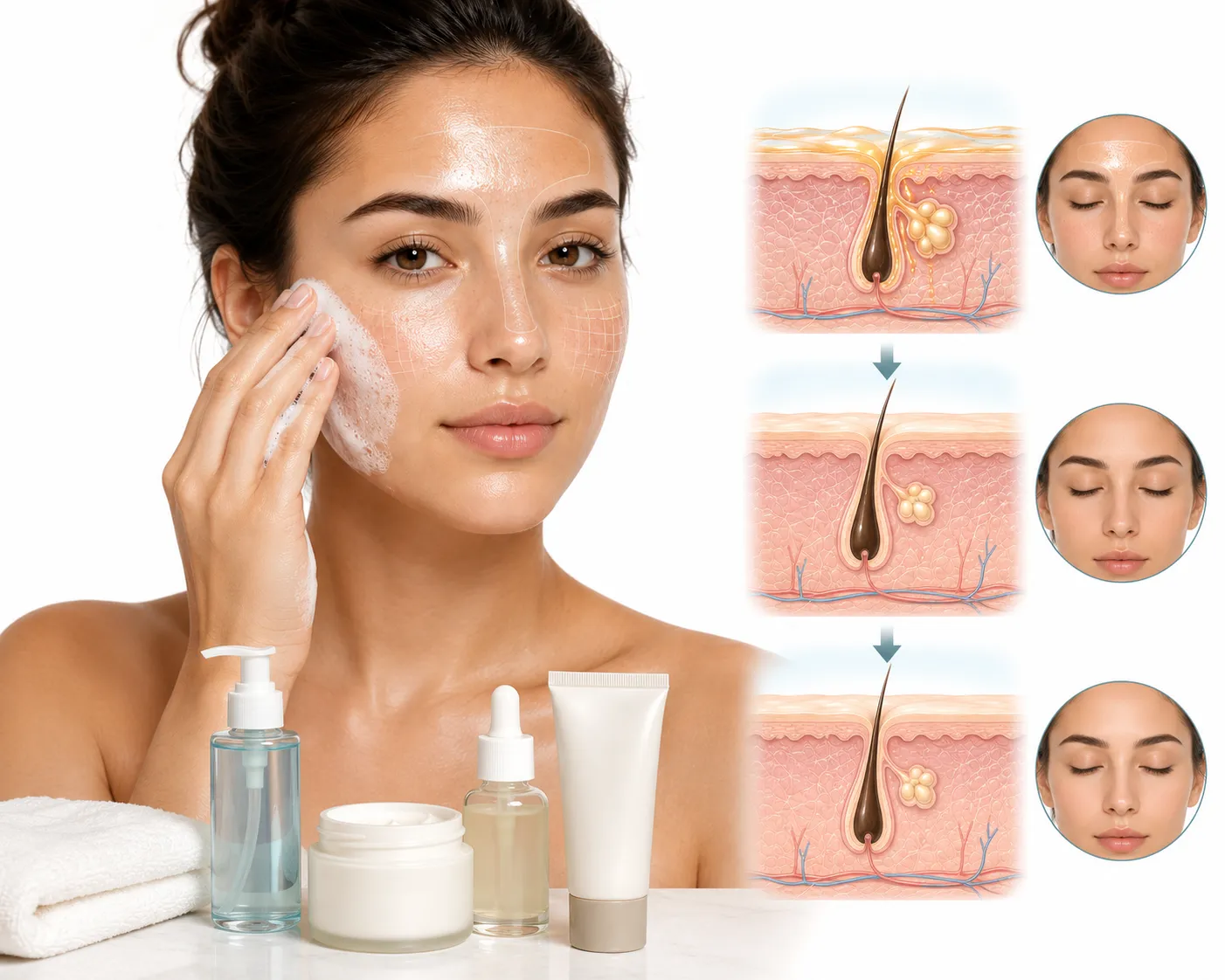
Evidence
What the evidence shows
The "fix" for combination skin is not making both zones the same - it's addressing the different needs of each zone without forcing conformity.
T-zone oily, cheeks dry?
Use different moisturizers on each zone.Combination with acne?
Use oil-free, non-comedogenic products on the T-zone.Combination with sensitivity?
Choose fragrance-free products for both zones.
Use this section to decide
Does this advice apply to me?
Find the concern or goal closest to yours, then use the fit signal to decide how much weight to give this guide.If your goal is
Core approachUsually relevant- Fit signal
- Often useful
Zonal, not uniform
If your goal is
T-zone needsUse caution- Fit signal
- Limited evidence
Lightweight, oil-free
If your goal is
Cheeks needUse caution- Fit signal
- Limited evidence
Richer hydration
If your goal is
Time to balanceUse caution- Fit signal
- Limited evidence
4-8 weeks
Expected results
Results and timeframe
Consistency over 4-8 weeks is essential for visible improvement.
Practical use
How to use it
Use a gentle, non-stripping cleanser
This works for both zones without over-drying or over-oiling.
Apply different moisturizers to different zones
Lightweight on the T-zone, richer on the cheeks.
Be patient and consistent
Visible improvement in balance takes 4-8 weeks.
Safety
Side effects and cautions
- Using a single moisturizer on both zones
Different zones need different moisturizers - lightweight on T-zone, richer on cheeks.
- Over-cleansing to deal with oiliness
This damages the barrier on the cheeks and can make oil production worse.
- Expecting overnight change
Balancing combination skin takes 4-8 weeks of consistent care.
Fit
Who should be careful
- Those who want a one-size-fits-all approach - combination skin doesn't work that way
Worth noting
Small details that can change the answer
- Zonal Difference. The T-zone has more oil glands than the cheeks.
- Different Needs. Oily zones need lightweight products; dry zones need richer hydration.
- No One-Size-Fits-All. No single product works perfectly for both zones in most cases.
- Balance Goal. The goal is balance, not making both zones identical.
Combination skin isn't a problem to be fixed - it's a condition to be managed with a zonal approach.
Use different products on different areas of your face.
The T-zone needs lightweight, oil-free products while the cheeks need richer hydration.
Gentle, non-stripping cleansers work for both zones.
Routine Flow
A zonal routine for combination skin
- 1Gentle, non-stripping cleanser
Use a mild cleanser that works for both zones without over-drying.
- 2T-zone: lightweight toner or serum
Use an oil-free, balancing product on the T-zone.
- 3Cheeks: hydrating toner or serum
Use a richer, hydrating product on the cheeks.
- 4T-zone: lightweight gel moisturizer
Apply a lightweight, oil-free moisturizer to the T-zone.
- 5Cheeks: richer cream moisturizer
Apply a richer cream to the cheeks and eye area.
- 6Sunscreen (morning)
Use a lightweight, oil-free sunscreen on both zones.
Dos Donts
Dos and don'ts for combination skin
Do
Addresses the different needs of each area
Works for both zones without over- or under-doing it
Ensures proper absorption in both zones
Both zones can change with the weather
Avoid
Each zone has different needs
Can clog pores
Even oily skin needs hydration
Can damage the barrier on both zones
Before After Expectation
Before and after with zonal care
Timeframe: 4-8 weeks with consistent zonal care
Before starting
- T-zone feels oily and greasy by midday
- Cheeks feel tight, dry, or rough
- Products that work on one zone don't work on the other
- Breakouts on T-zone, flaking on cheeks
Realistic result
- T-zone is balanced with visible oil reduction
- Cheeks are comfortable and hydrated
- Different products used on different zones
- Overall skin looks and feels more balanced
Product Comparison
Choosing products for different zones
Cleanser
Beginner friendlyBest for: Both zones need the same gentle cleanserA gentle, non-stripping cleanser works for both zones
Moisturizer (T-zone)
Beginner friendlyBest for: Lightweight, oil-free gel or lotionHydrates without clogging pores
Moisturizer (cheeks)
Beginner friendlyBest for: Richer cream with barrier supportProvides more hydration for dry areas
Sunscreen
Beginner friendlyBest for: Lightweight, oil-free sunscreenProtects both zones without causing issues
Questions
Frequently asked questions
Can combination skin become normal skin?
Skin type is generally fixed, but well-managed combination skin can feel more balanced.
Should I use different cleansers on different zones?
Usually, a gentle cleanser works for both zones - the moisturizers should be different.
Can I use a serum on combination skin?
Yes - but you may need different serums on different zones.
Does diet affect combination skin?
Diet can influence skin health, but the primary approach is a good skincare routine.