Evidence
What the evidence shows
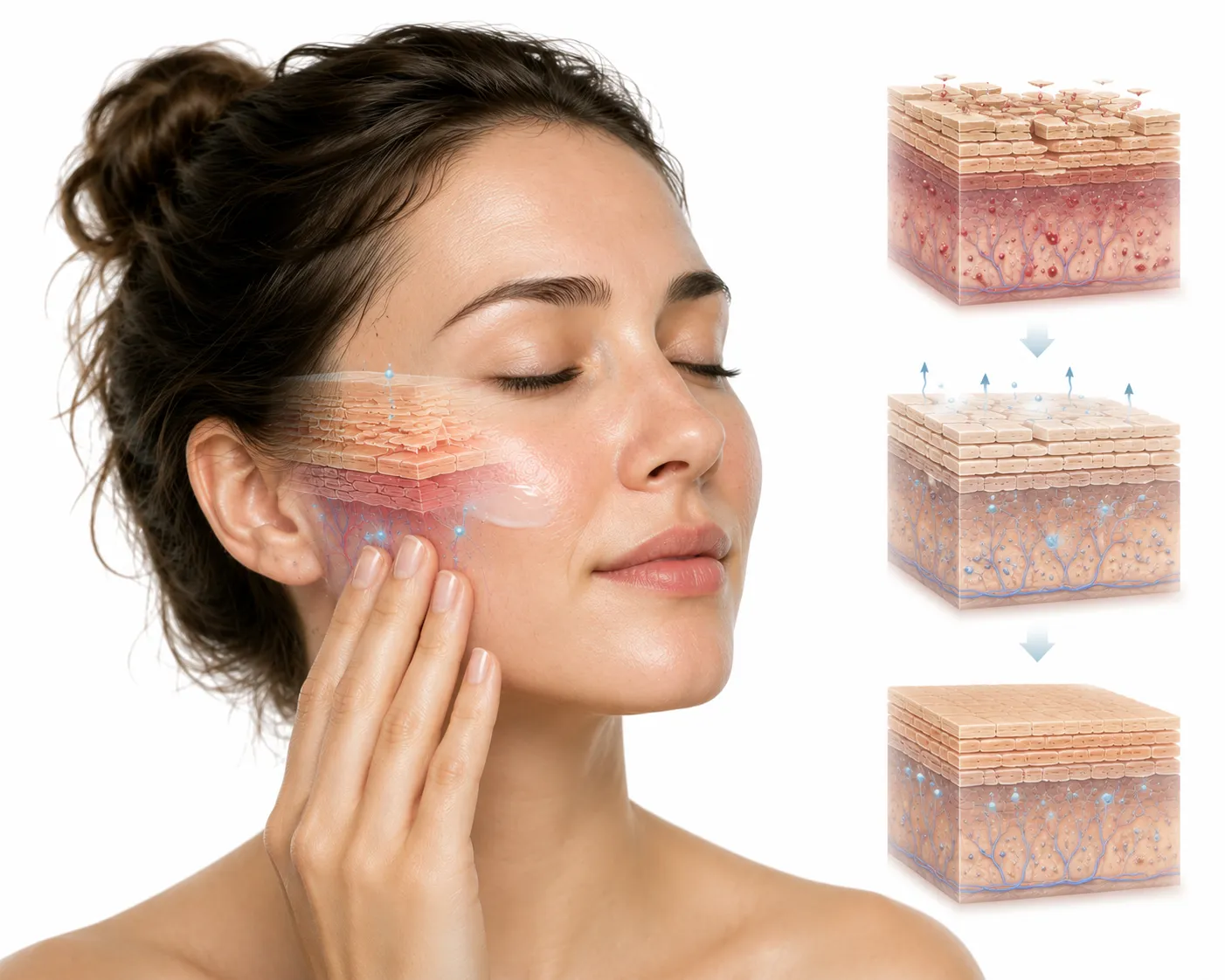
The most important thing in barrier healing is removing what's causing the damage - your skin knows how to repair itself, but it needs to be left alone to do it.
Use this section to decide
Does this advice apply to me?
Find the concern or goal closest to yours, then use the fit signal to decide how much weight to give this guide.If your goal is
Key StepUsually relevant- Fit signal
- Often useful
Stop all actives
If your goal is
EssentialUsually relevant- Fit signal
- Often useful
Ceramides + gentle cleansing
If your goal is
Time to ImprovementUse caution- Fit signal
- Limited evidence
2-4 weeks
If your goal is
Full HealingUse caution- Fit signal
- Limited evidence
Up to 3 months
Research notes already in this guide
- Ceramides are proven to restore barrier function in multiple studies.
- Gentle, non-stripping cleansing is essential for barrier recovery.
- Barrier healing takes time - studies show improvements over weeks to months.
- Consistent daily care is more effective than intensive weekly treatments.
Expected results
Results and timeframe
Be patient - visible improvement in 2-4 weeks, full healing in up to 3 months.
Practical use
How to use it
Stop all active ingredients
Pause acids, retinoids, and vitamin C completely.
Simplify to the essentials
Use only a cleanser, moisturizer, and sunscreen.
Choose barrier-supporting products
Look for ceramides, fatty acids, cholesterol, and niacinamide.
Be patient and consistent
Signs of improvement in 2-4 weeks, full healing up to 3 months.
Safety
Side effects and cautions
- Continuing to use actives "just in case"
Stop all actives - they prevent healing.
- Switching products too quickly
Give each product at least 2 weeks to work.
- Skipping moisturizer because skin is oily
All skin needs moisturizer for barrier healing.
Fit
Who should be careful
- Those expecting quick fixes
Worth noting
Small details that can change the answer
- Healing Time. The skin barrier completely regenerates every 28 days on average.
- Lipid Ratio. A healthy barrier has a 1:1:1 ratio of ceramides, cholesterol, and fatty acids.
- pH Matters. The barrier heals best at an acidic pH of 4.5-5.5.
- Patience Required. Full barrier healing can take up to 3 months.
Stop all active ingredients - the barrier needs a break to heal.
Use a gentle, non-stripping cleanser and lukewarm water.
Apply a barrier-supporting moisturizer with ceramides and fatty acids.
Use sunscreen daily - damaged skin is more vulnerable to UV damage.
Definition
What is a damaged skin barrier?
A damaged skin barrier occurs when the stratum corneum (the outermost layer) loses its structural integrity. This leads to increased water loss, sensitivity, and vulnerability to irritants.
- Tight, uncomfortable feeling after cleansing
- Stinging or burning with products you used to tolerate
- Redness, flaking, or rough texture
- Breakouts that seem to come from nowhere
- Increased sensitivity to sun and wind
Routine Flow
A simple routine for barrier healing
- 1Gentle creamy cleanser
Massage gently with lukewarm water, don't scrub.
- 2Barrier-supporting moisturizer
Apply generously to slightly damp skin.
- 3Occlusive (optional)
A thin layer to lock in moisture at night.
- 4Sunscreen (morning only)
SPF 30+, even on cloudy days.
Questions
Frequently asked questions
Can a damaged skin barrier cause acne?
Yes - a damaged barrier can trigger increased oil production and breakouts.
Can I use hyaluronic acid during barrier healing?
Yes - hyaluronic acid is a hydrating humectant that can help.
What about niacinamide?
Niacinamide is excellent for barrier healing - it supports ceramide production.
How do I know when my barrier is healed?
Your skin will feel less tight, products won't sting as much, and it will look healthier and more hydrated.
References
Sources
The notes below are drawn from the evidence already cited in this guide. They are not a complete bibliography.
- Ceramides are proven to restore barrier function in multiple studies.
- Gentle, non-stripping cleansing is essential for barrier recovery.
- Barrier healing takes time - studies show improvements over weeks to months.
- Consistent daily care is more effective than intensive weekly treatments.