Evidence
What the evidence shows
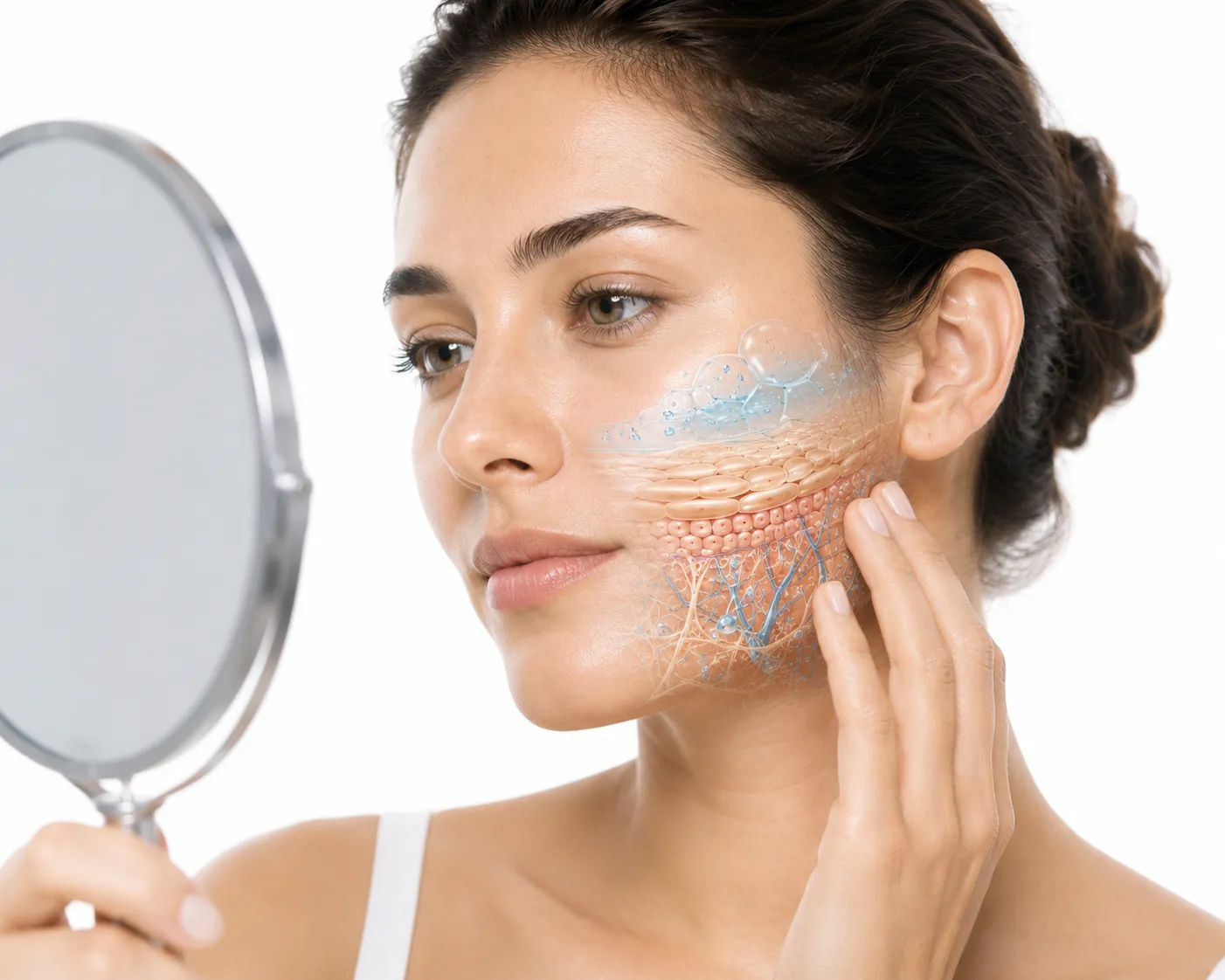
Normal skin isn't "average" - it's the biological sweet spot where sebum production and moisture retention are naturally balanced.
Use this section to decide
Does this advice apply to me?
Find the concern or goal closest to yours, then use the fit signal to decide how much weight to give this guide.If your goal is
Key SignUsually relevant- Fit signal
- Often useful
Balanced skin
If your goal is
PrevalenceUse caution- Fit signal
- Limited evidence
Rare (5-15%)
If your goal is
PoresUse caution- Fit signal
- Limited evidence
Small, barely visible
If your goal is
CareUsually relevant- Fit signal
- Often useful
Low maintenance
Research notes already in this guide
- Dermatologists use standardized typing systems to assess skin type.
- They measure sebum production, hydration, and barrier function.
- Professional assessment can confirm normal skin as a type.
- Normal skin is identified by its consistency over time.
Practical use
How to use it
Observe your skin bare-faced
Wash your face, skip products, and observe for a few hours.
Track patterns over time
Note how your skin behaves across different seasons and days.
Keep your routine simple
Normal skin doesn't need heavy intervention.
Confirm with a professional
If you're uncertain, consult a dermatologist for an accurate diagnosis.
Safety
Side effects and cautions
- Assuming normal skin is "average" or "nothing special"
Normal skin is actually rare and worth appreciating.
- Using too many products on normal skin
Normal skin needs minimal care - don't fix what isn't broken.
- Self-diagnosing normal skin incorrectly
What feels "normal" to you may actually be mild oily or dry skin.
Fit
Who should be careful
- Those who need professional confirmation
Worth noting
Small details that can change the answer
- Prevalence. Only 5-15% of adults have genuinely normal skin.
- Balance. Normal skin maintains balance without heavy product intervention.
- Pores. Pores in normal skin are small and barely visible.
- Resilience. Normal skin is more resilient to environmental changes.
Normal skin is the rarest skin type, affecting only 5-15% of adults.
It's characterized by balanced oil and moisture levels.
Pores are small, and skin is resilient to products and environmental changes.
Normal skin needs minimal care - keep your routine simple.
Professional confirmation can help if you're uncertain.
Definition
Key signs of normal skin
Normal skin has several distinct characteristics.
- Balanced oil and moisture levels
- Small, barely visible pores
- Smooth texture and even tone
- Minimal breakouts or sensitivity
- Maintains balance with minimal product intervention
- Adjusts well to environmental changes
Explanation
Why normal skin is rare
Normal skin is rare because it requires a confluence of factors: optimal sebum production, strong barrier function, and low reactivity. Any deviation in these factors pushes skin toward oily, dry, or sensitive. Most people's skin is pushed off balance by genetics, hormones, climate, or lifestyle.
Questions
Frequently asked questions
Can normal skin change over time?
It can become drier with age or shift due to hormonal changes.
Is normal skin the same as healthy skin?
Not necessarily - other skin types can be healthy if well cared for.
Can I have normal skin if I get occasional breakouts?
Yes - normal skin can still have occasional issues.
How rare is normal skin?
Only 5-15% of adults have genuinely normal skin.
References
Sources
The notes below are drawn from the evidence already cited in this guide. They are not a complete bibliography.
- Dermatologists use standardized typing systems to assess skin type.
- They measure sebum production, hydration, and barrier function.
- Professional assessment can confirm normal skin as a type.
- Normal skin is identified by its consistency over time.